Is PLA Toxic? Safety of 3D Printed Gifts at Home and With Pets
Is PLA toxic? Finished PLA prints are low-risk to touch and display. Here's what matters: printing fumes, colored additives, pets that chew and food contact.
By the Filagora team · November 25, 2026 · 9 min read
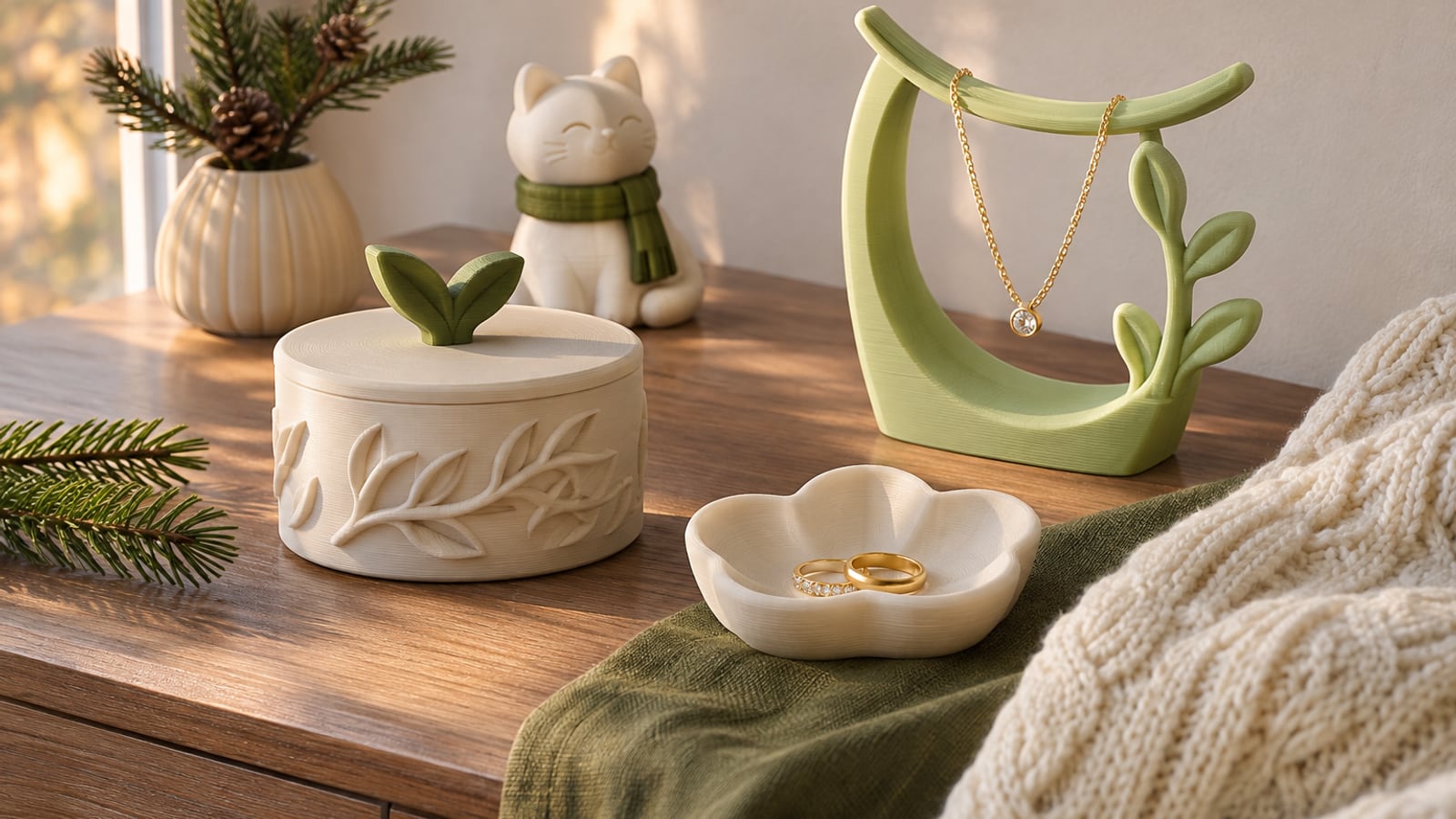
Finished PLA prints are low-risk to keep at home and handle every day. Pure PLA is described as largely non-toxic and contains no BPA. Most safety concerns come down to two things: breathing emissions while a printer is running, and putting printed plastic in your mouth or against food. A cooled figurine on a dresser or a keychain in your pocket falls into neither group.
The caveats are real, and they're specific. Colored and specialty filaments can contain additives. PLA isn't a chew toy. And it isn't food-safe as printed. Here's how each one plays out in an ordinary home.
Short answer: is PLA toxic?
No, not in the way most people mean when they ask. PLA (polylactic acid) is a plant-based plastic, and Plastic Ranger calls pure PLA largely non-toxic. It adds that context matters: eating off it, printing it, and breathing near a running printer are different situations from owning a finished object.
The base material has a good track record. PLA is used in medical sutures and implants because it's biocompatible, according to LeafScore. Roselark adds dissolvable stitches and drug-delivery systems to that list.
That doesn't make every printed gift medical-grade. LeafScore makes the same point: the additives and fillers decide whether a finished product is safe. The PLA in a stitch and the PLA in a spool of sparkly red filament share a base polymer. They don't share a recipe.
Printing vs. owning: where the real concerns are
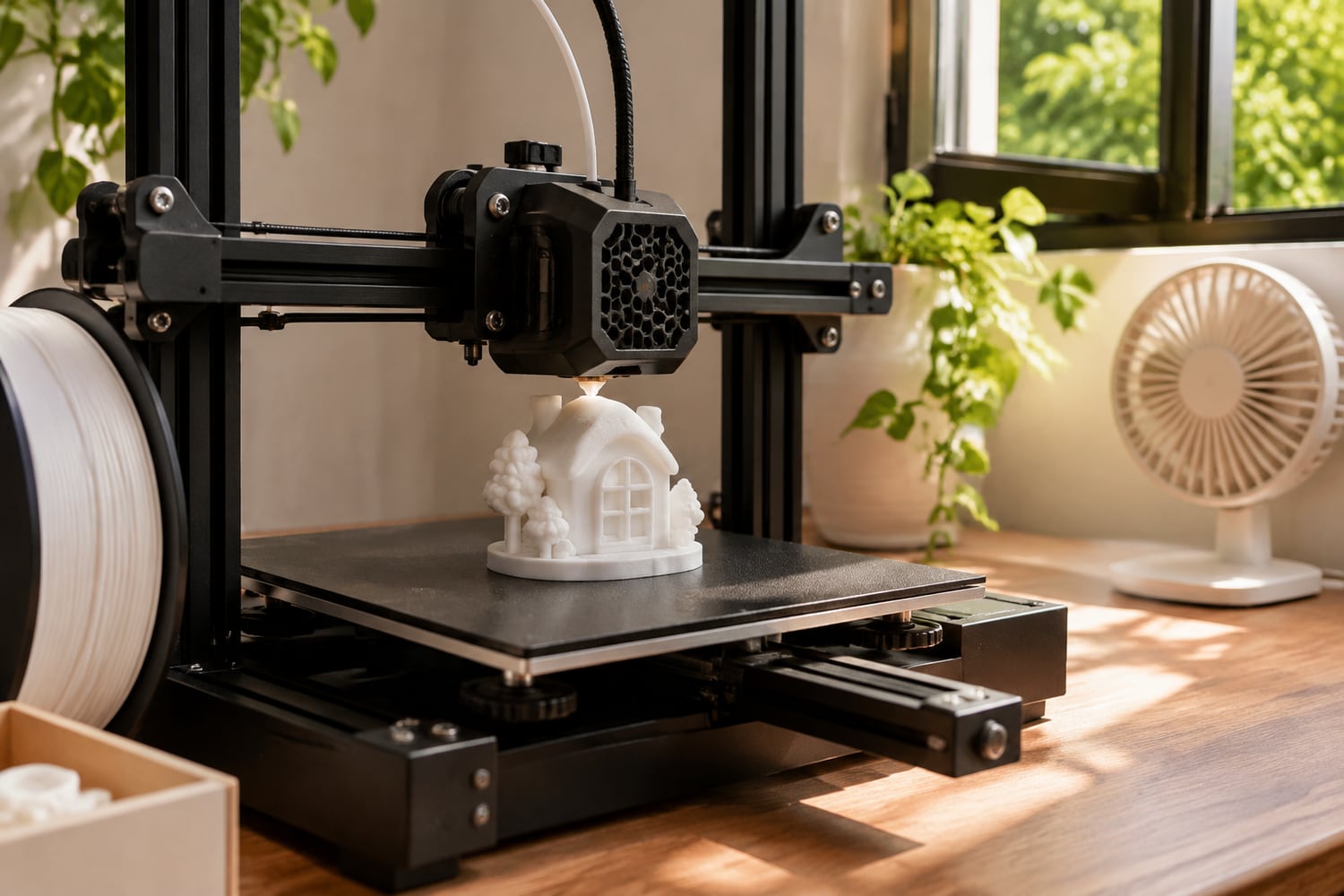
Most articles about PLA safety are written for people who run printers, and that's where the real concern sits. QIDI puts it plainly: for most home users, the worry is breathing particles and emissions during printing, not touching PLA.
When PLA is heated at the nozzle, it can release ultrafine particles and volatile organic compounds (VOCs). QIDI notes it emits fewer than ABS but still emits some, so the honest answer to "is it safe to breathe?" is "it depends." IN3DTEC says PLA prints at relatively low temperatures and doesn't smell much while printing, which is one reason it's the default home material.
If you buy a print, that heating happened in the maker's workshop. One honest limit: none of the sources we read measured emissions from a finished, cooled print. We won't claim "zero." What we can say is that every emission these sources describe happens while plastic is being melted.
If you own a printer yourself, the usual advice holds. Print in a ventilated room, don't sit next to the machine for hours, and keep it out of the bedroom.
Is PLA safe to touch?
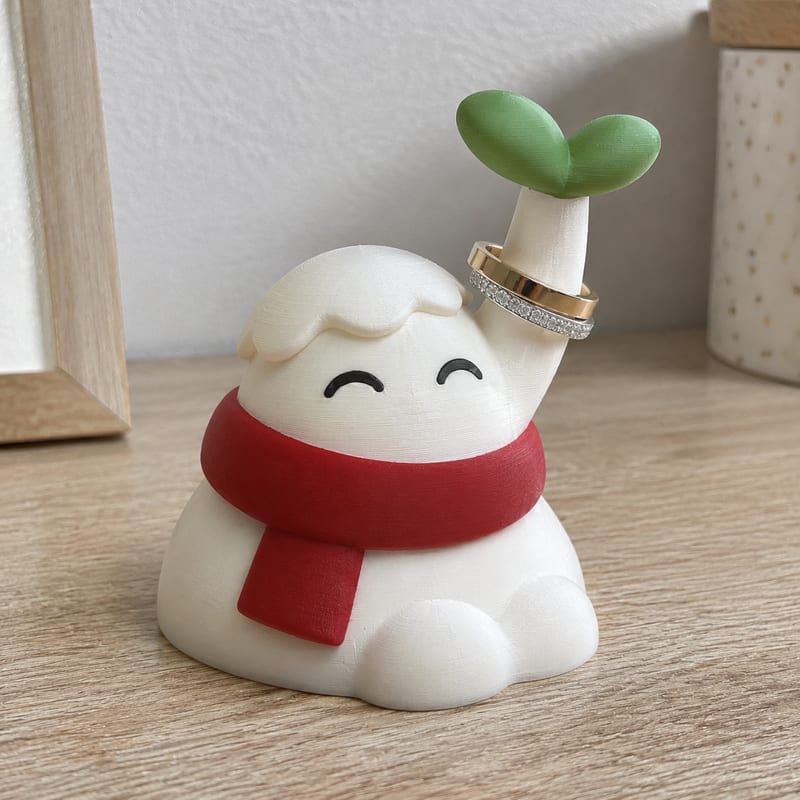
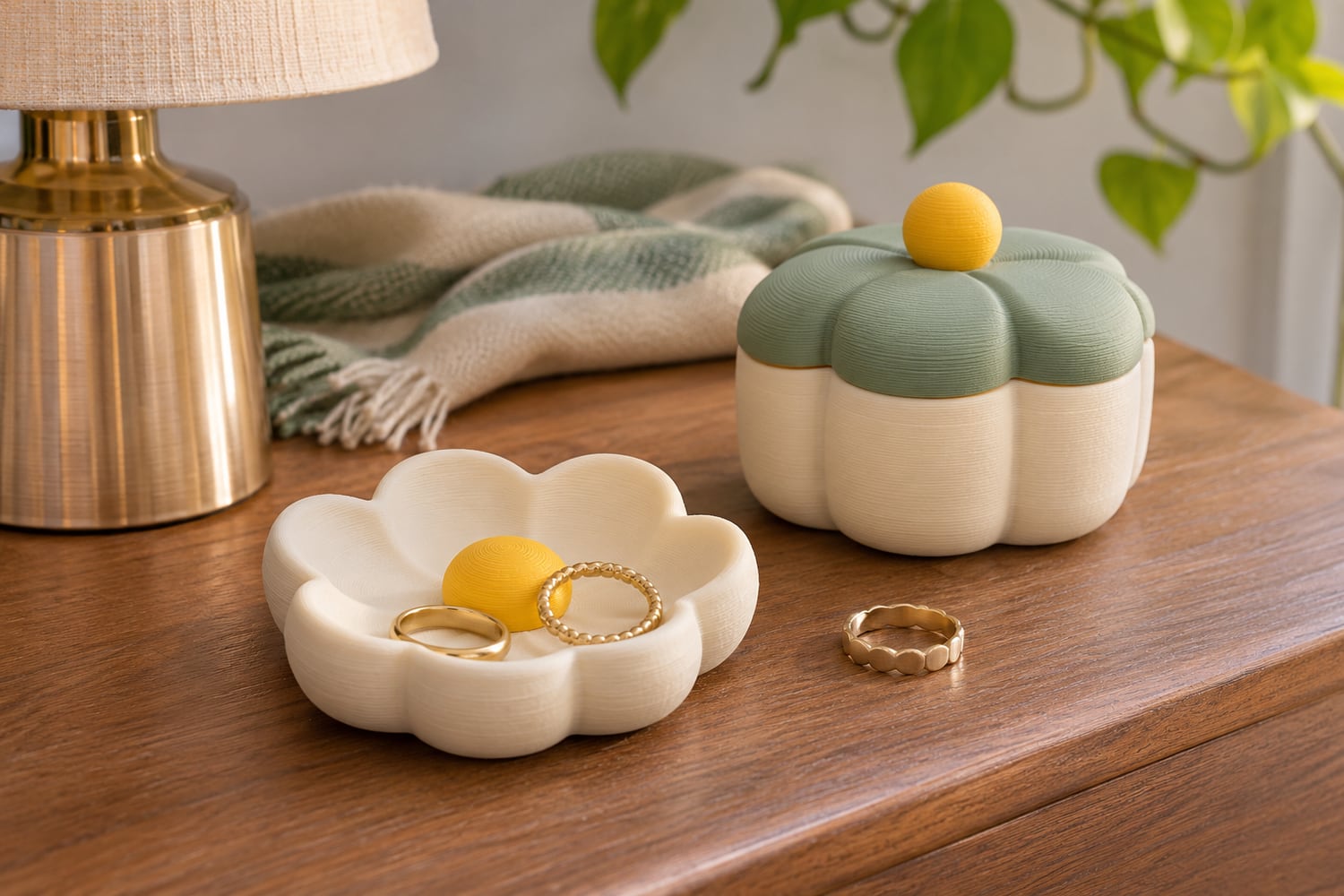
Yes. Touching PLA isn't where the risk is, per QIDI. That covers the items people actually handle: ring dishes, necklace stands, headband holders, cotton pad holders on a vanity, and keychains that live in a pocket.
A few practical points from the selling side:
- Jewelry dishes and stands. Rings and chains rest on the plastic, and your skin touches it for a few seconds at a time. A ring holder like this one on a dresser is about as low-contact as an object gets.
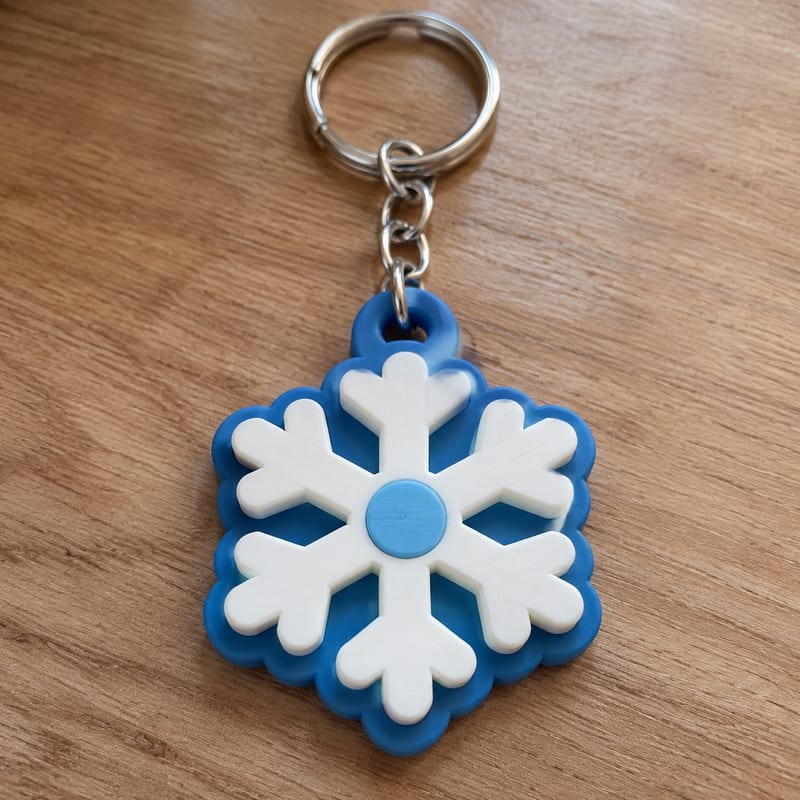
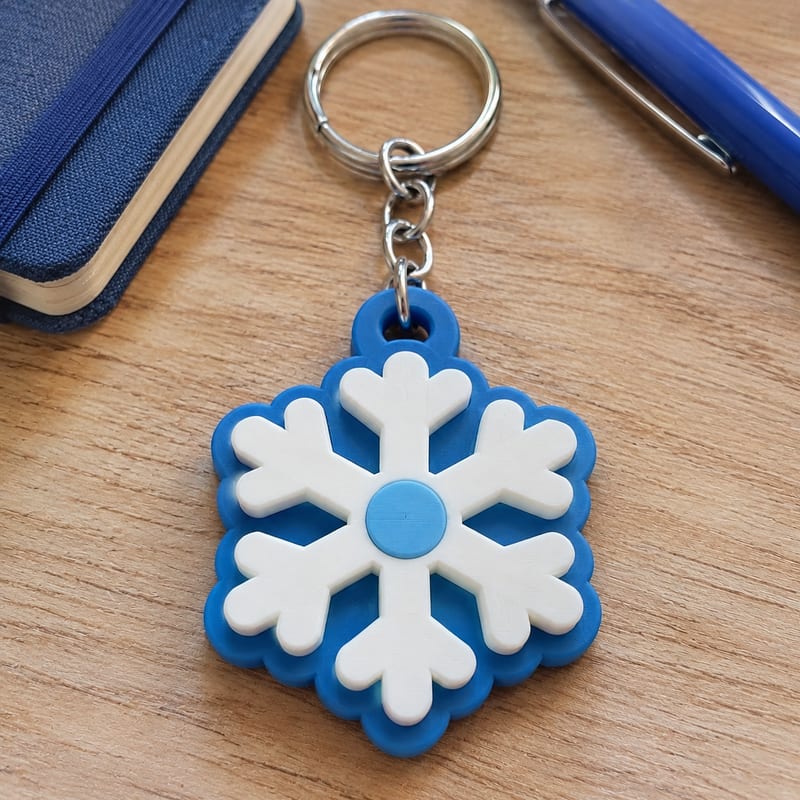
- Keychains. These get handled the most. The bigger question is wear, not safety. Our keychain durability guide covers what holds up.
- Dust and grime. Layer lines collect dust and skin oils over time. A soft brush and lukewarm water do the job. See how to clean 3D printed items.
None of our sources tested long-term skin contact or skin sensitivity. If you know you react to certain plastics or dyes, ask the maker which filament they used before you buy something you'll handle daily.
BPA, phthalates and what PLA is made of
PLA does not contain BPA, WeProFab notes. FoodDocs also describes it as free of BPA and phthalates. It adds that PLA breaks down into lactic acid, which occurs naturally in the body.
That's good news, and it's also the main reason PLA gets called "safe" online. Keep in mind that those statements describe the base polymer. They don't describe whatever colorant or filler went into a particular spool.
If you're curious what happens to PLA after it's thrown away, that's a separate question, covered in is PLA biodegradable.
Colors, glitter and additives: why "pure PLA" isn't the whole story
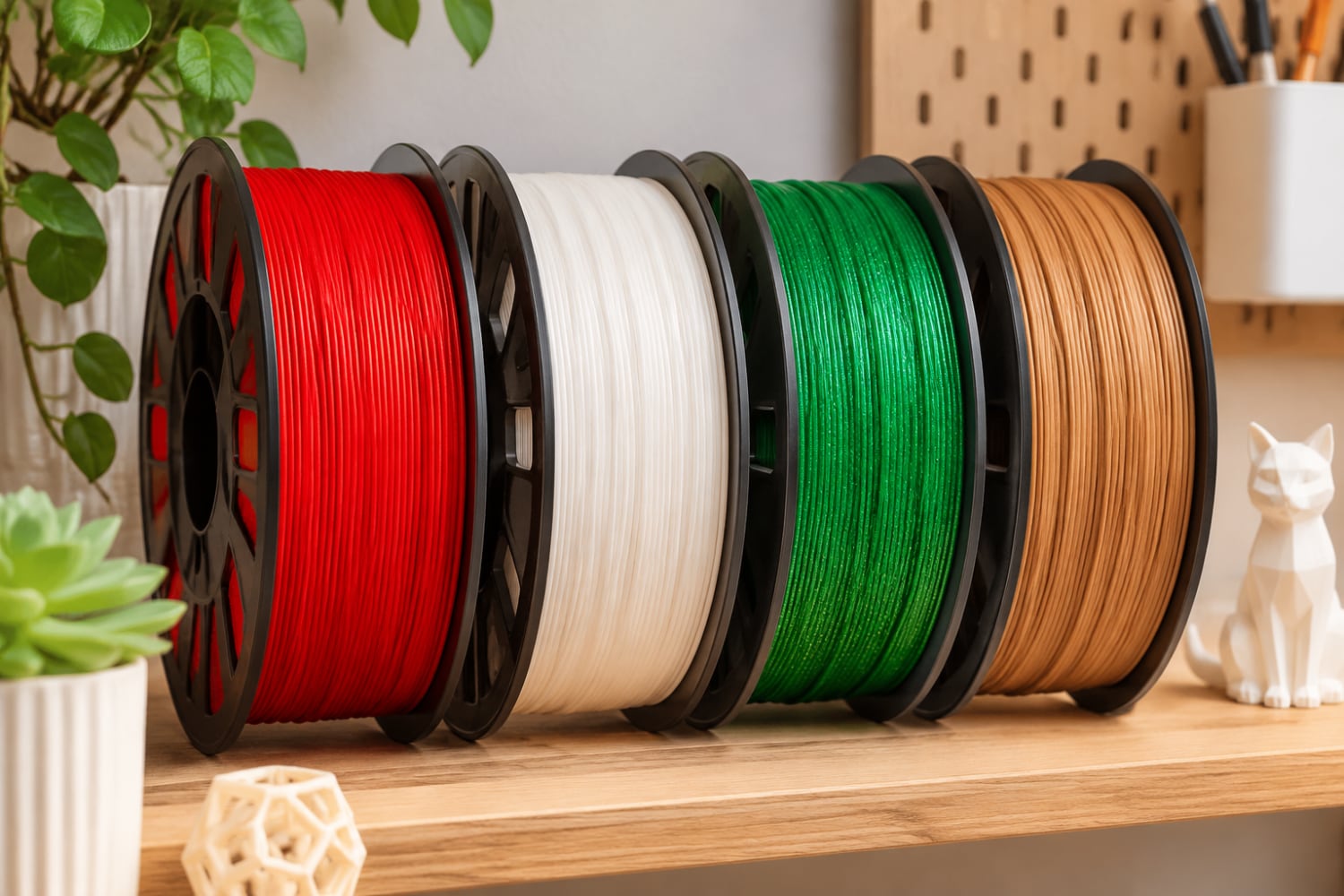
Almost nothing sold as a gift is printed in pure, uncolored PLA. Makers use colored, silk, glitter, marble, wood-fill and glow filaments, because that's what makes a piece look good.
Plastic Ranger points out that colored or composite PLA filaments may contain additives that aren't food-safe. The risk often comes from additives, colorants and conditions like high heat, not from the PLA itself.
What that means in practice:
- For shelf decor, it rarely changes anything. You're looking at it, dusting it, maybe moving it around.
- It matters when the item goes near mouths, food, or a pet that chews. In those cases you can't assume the colorant is as harmless as the base plastic.
- Ask, don't guess. A maker should be able to tell you the filament type and brand. Many filament brands publish a safety data sheet you can read.
Wood-fill is worth a separate note. It's PLA mixed with wood particles, so it looks and even smells a little like wood while printing. It's still plastic, and it still doesn't belong in anyone's mouth.
Pets: fine as decor, not something to chew
This is where online advice gets muddled, so here's the simple version. PLA is fine as decor in a home with pets. It is not a chew toy.
Roselark considers PLA safe for pets in external use, like enrichment items, hides and accessories, as long as the pet doesn't chew it. 3DPrinterly explains why chewing is the line: PLA is brittle and easy to chew through.
A second 3DPrinterly article adds the details that matter:
- Chewed PLA can break into small, sharp pieces that can hurt a dog.
- PLA isn't safe for cats that chew or swallow it.
- Some users say cats are drawn to its sweet smell.
For a real home, that translates to placement:
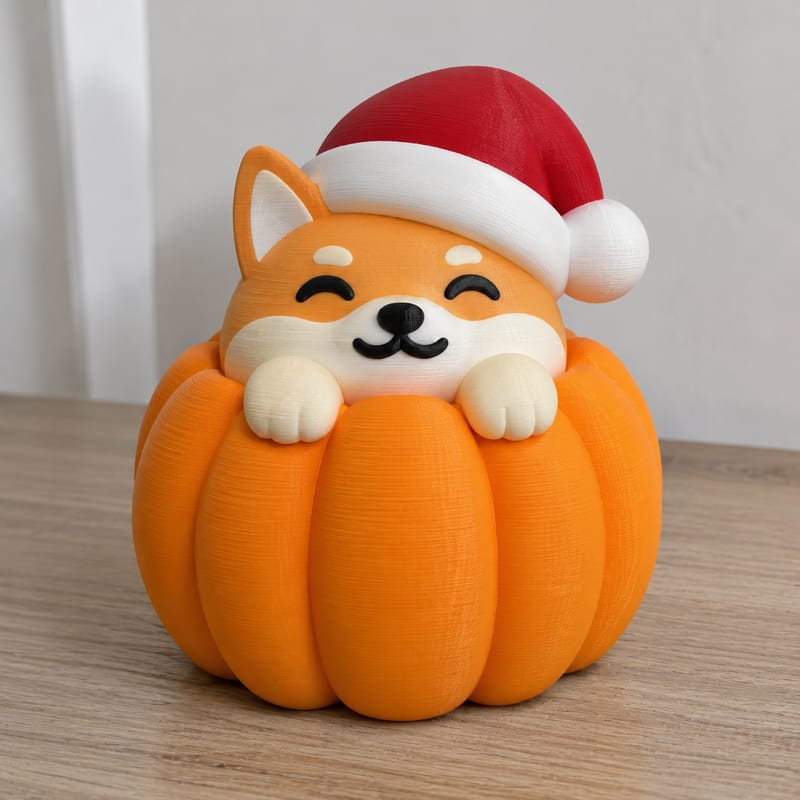
- Put figurines like this Shiba Inu holiday piece on shelves or mantels your pets don't reach.
- Skip low coffee tables if you have a dog that mouths things, or a cat that bats objects off surfaces.
- If you find bite marks or a missing chunk, remove the piece and check the floor for fragments.
Kids: decoration, not a toy
The same logic applies to young children, with less room for error. Small printed parts can break off, and children put things in their mouths.
Treat printed decor as decor, not as a toy for anyone under 12. In a nursery or a young child's room, keep it on a high shelf, never in a crib or play area. Our guide to 3D printed toys and kids goes further on small parts and durability.
Food, mouths and heat: where to draw the line
Mouths
Don't chew on, suck on, or hold PLA in your mouth. According to 3DPrinterly, manufacturers say PLA shouldn't be kept in the mouth even when the filament is labeled food-safe.
Food
Printed PLA and PETG are not food-safe by default. The layer lines on a printed surface create tiny grooves that hold food residue and bacteria, and normal washing doesn't fully clean them. On top of that, a gift is usually printed in colored filament, not the pure PLA that food-safety claims refer to.
You'll sometimes see PLA described online as "FDA approved." That's sloppy wording. The safety statements are about pure PLA resin, not the colored filament in your gift, and not a finished print with layer lines.
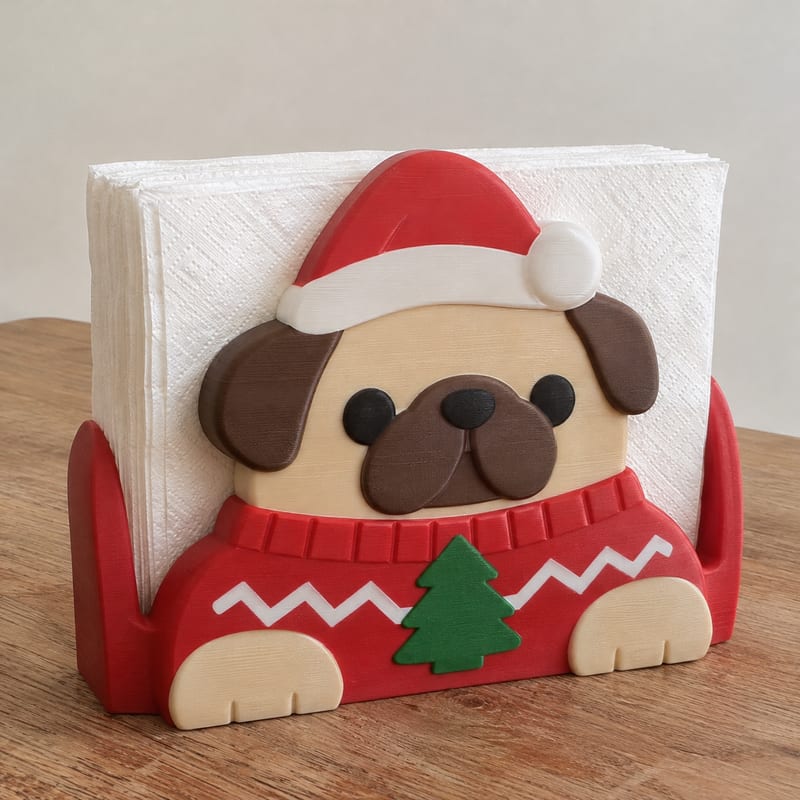
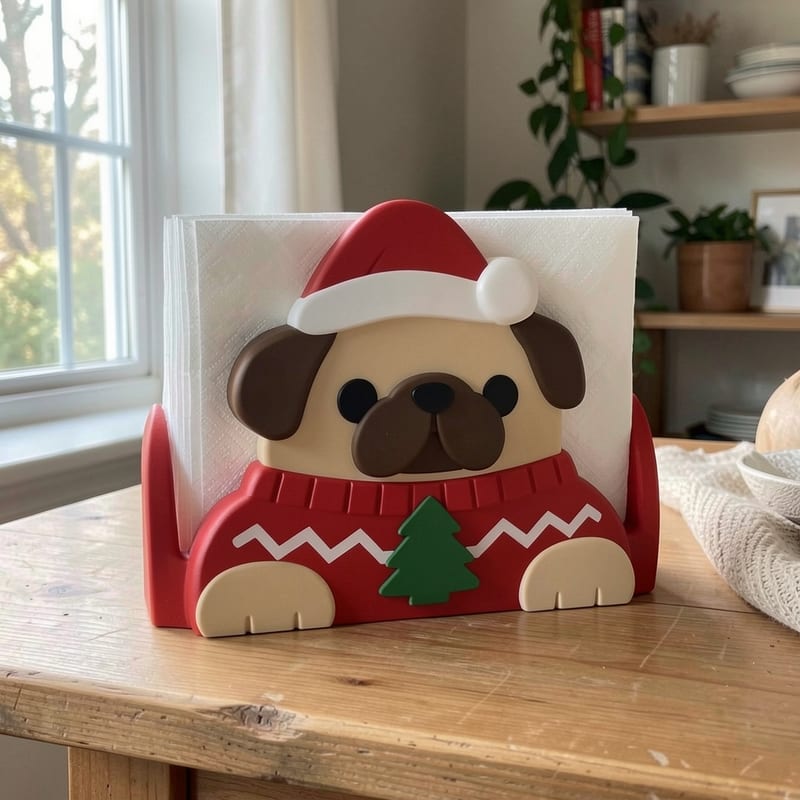
The practical line is simple: near food is fine, touching food is not. A napkin holder, a salt-and-pepper stand or a sponge caddy works well. A cookie plate, a cup or a candy dish for unwrapped sweets does not. Our food-safe buyer's guide covers the details.
Heat
PLA softens at fairly low temperatures, which is a shape problem more than a toxicity problem. Keep prints away from hot dashboards, radiators, candles and dishwashers. See will PLA melt? for placement tips, and are 3D printed coasters heat resistant for hot mugs.
Burning
Don't burn prints in a fireplace, fire pit or candle flame. Burning plastic makes smoke you shouldn't breathe, and none of our sources give a good reason to try it. For old or broken prints, see can you recycle 3D printed items.
Does a new 3D printed gift smell or off-gas?
The smell people notice is from printing. eufyMake explains that 3D printing smells because plastic is being heated. How strong it gets depends on the material, temperature and room, and long prints of 24 hours or more build up more fumes.
Creality describes PLA's odor as a mild plastic smell, typically lower than PETG's. It notes that wood-filled filaments smell like burning wood while printing.
Once a print has cooled and shipped, most people notice little or nothing. As noted above, no source we found measured off-gassing from finished prints, so we can't give you a number. If a package smells of plastic when you open it, let the piece sit in an airy room for a day. If a strong smell doesn't fade, tell the maker.
Quick reference: PLA safety by situation
| Situation | Verdict | Why |
|---|---|---|
| Shelf or mantel decor | Low-risk | Emissions in the research happen during printing |
| Jewelry dish, necklace stand, keychain | Fine to handle | Touching PLA isn't the concern |
| Bedroom or vanity | Fine | Same as above; keep it clean |
| Homes with pets | Fine out of reach of chewers | Brittle; chewed pieces can turn sharp |
| Children under 12 | Decor only, kept out of reach | Small parts and mouthing |
| Touching food | No, not by default | Layer lines hold bacteria; colorants unknown |
| In the mouth | No | Manufacturers advise against it |
| Burning | No | Dispose or recycle instead |
Questions to ask a maker before you buy
If the piece is going somewhere sensitive, like a child's room, a home with a chewing dog, or the dining table, a few questions settle most of it:
- What material is it? PLA, PETG, or a blend?
- Is it a specialty filament? Glitter, silk, wood-fill, metal-fill and glow-in-the-dark are all blends with extra ingredients.
- Which filament brand? That lets you look up the safety data sheet if you want to.
- Is it painted or coated? Paint and sealant add another material to think about.
- Are there small or glued-on parts? Relevant for pets and kids.
- Is it meant to touch food? For almost all decor, the answer should be no.
For a deeper look at the two most common materials, read PLA vs PETG.
Everything on Filagora is printed to order by individual makers, so the person who knows the filament is the person who made your piece. If you're shopping for a pet-friendly shelf or a vanity gift, browse home decor and ask before you buy if any of the questions above matter for your home.
Frequently asked questions
Is PLA safe to burn?
No. Don't burn 3D printed items in a fireplace, fire pit or candle flame, since burning plastic produces smoke you shouldn't breathe. Throw old prints away or check local recycling options instead.
Does PLA contain BPA?
No. PLA is described as free of BPA and phthalates, and it breaks down into lactic acid. Colored and specialty filaments can still contain other additives, so ask the maker if it matters for your use.
Is PLA safe for cats and dogs?
As decor kept out of reach, yes. PLA is brittle, and chewed pieces can break into sharp fragments that can hurt a pet. Some owners report cats are drawn to its smell, so don't leave prints where a cat or dog can chew them.
Can I put 3D printed decor in a nursery?
Only as decoration on a high shelf, out of reach. Printed items shouldn't go in a crib or play area or be used as toys for children under 12, because small parts can break off and end up in mouths.
Is PETG safer than PLA?
For decor, both are low-risk once printed, and neither is food-safe by default because layer lines hold bacteria. PETG typically smells stronger than PLA while printing, but that's a concern for the person running the printer, not the buyer.
Pieces from this guide
Printed to order by makers on Filagora.