How to Clean 3D Printed Items: Dusting, Washing and Bath Care
How to clean 3D printed items at home: dusting textured decor, safe water temperatures, dishwasher rules for PLA and PETG, and keeping bath pieces mold-free.
By the Filagora team · November 15, 2026 · 9 min read
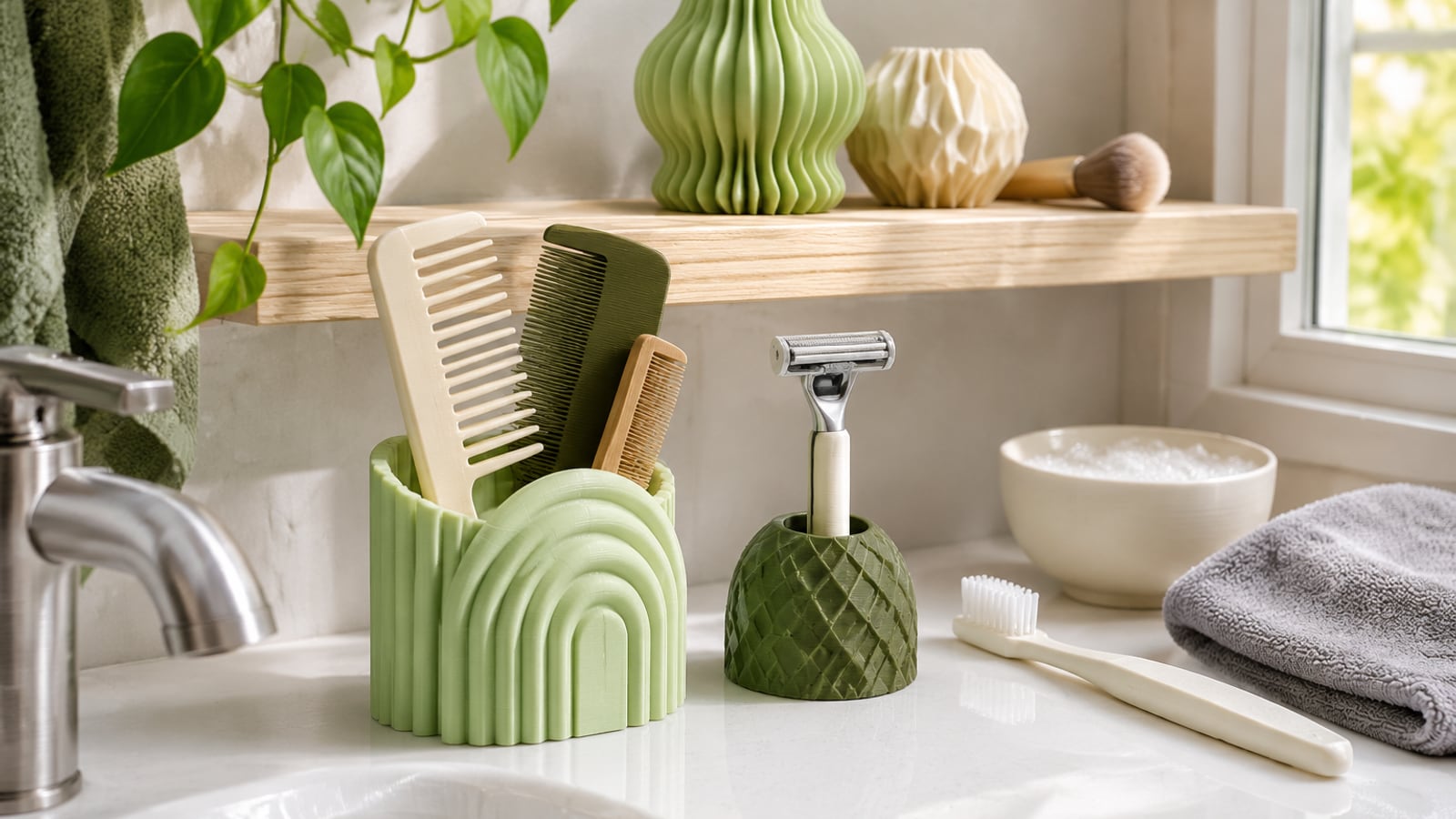
Most 3D printed items clean up with lukewarm water, a drop of mild dish soap, a soft brush and a long air dry. The two things that ruin them are heat and neglect. Hot water or a dishwasher can soften PLA, the most common printing plastic. Soap scum left sitting on a bathroom piece is what grows mold.
If you search this topic, most of what comes up is written for people who make prints. Fictiv's guide covers removing supports, sanding from about 200 to 1000 grit and applying a finish. 3D Printerly's version is also about trimming blobs and sanding. That's finishing, and the maker already did it before the item shipped. This guide is for the person who owns the desk organizer, ornament or razor stand and wants to keep it looking good.
The quick answer
For almost any printed object you own:
- Dust with a soft, dry brush or microfiber cloth.
- Wash when needed in lukewarm water with mild dish soap. Warm soapy water lifts the finger oils and dust that build up on printed parts, as makers on the KitMaker forum point out.
- Scrub layer lines and crevices with a soft toothbrush, not a scouring pad.
- Rinse and air dry completely, turned so water can drain out of any hollows.
- Skip the dishwasher, boiling water, and drying next to a heater, unless you know the piece is printed in a heat-tolerant material.
First, find out what it's made of
The material changes the rules, so check the product listing or ask the maker. Most printed home goods are one of three things.
- PLA is the everyday plastic for decor, organizers and gifts. It's rigid and holds detail well, but it softens at fairly low temperatures.
- PETG handles heat and moisture better. It's a common pick for bathroom and kitchen pieces.
- Resin prints have very fine detail and a smooth surface, so they're used for small figurines and miniatures. Resin parts are washed in isopropyl alcohol as part of making them (All3DP; KitMaker members suggest 90% or stronger). That's a production step. As an owner, you don't need to repeat it.
| PLA | PETG | Resin | |
|---|---|---|---|
| Typical use | Decor, organizers, ornaments | Bathroom, kitchen, outdoor-ish pieces | Small, detailed figurines |
| Hand wash | Yes, lukewarm | Yes, warm | Yes, gently |
| Dishwasher | No (softens around 60°C) | Often, but hedge (see below) | Not recommended |
| Humid bathroom | Fine if it stays mostly dry | Good (water-resistant) | Keep out of constant wet |
If the listing doesn't say, treat it as PLA. That's the cautious choice, and it never hurts the piece.
Dusting decor, ornaments and textured pieces
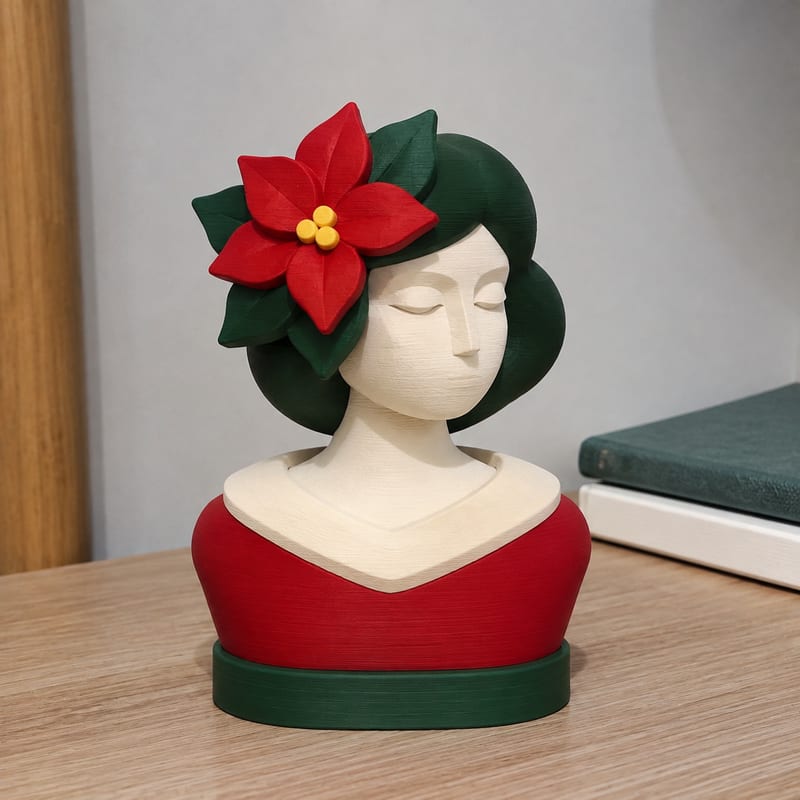
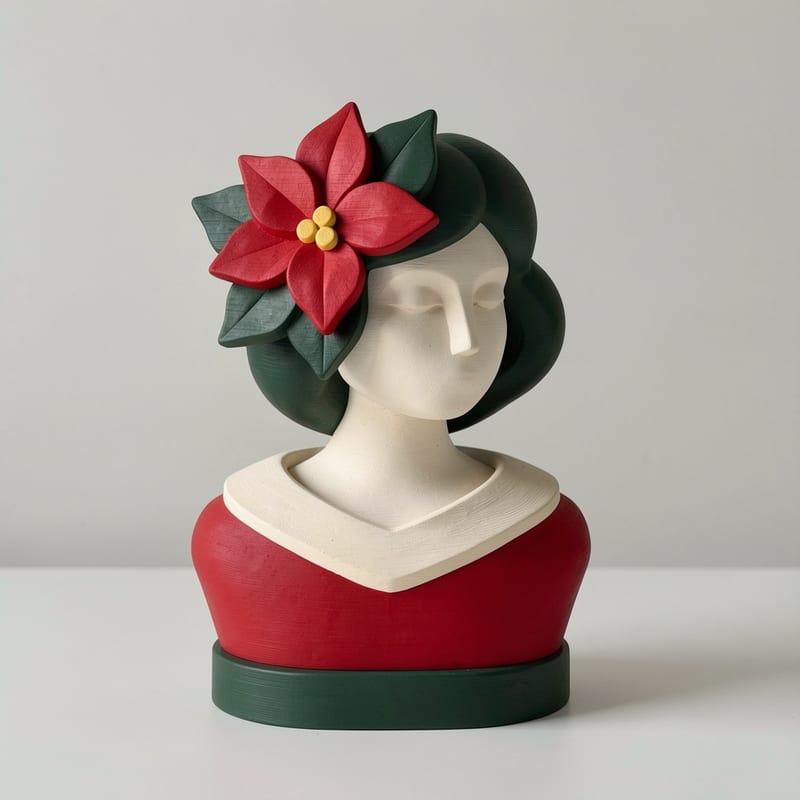
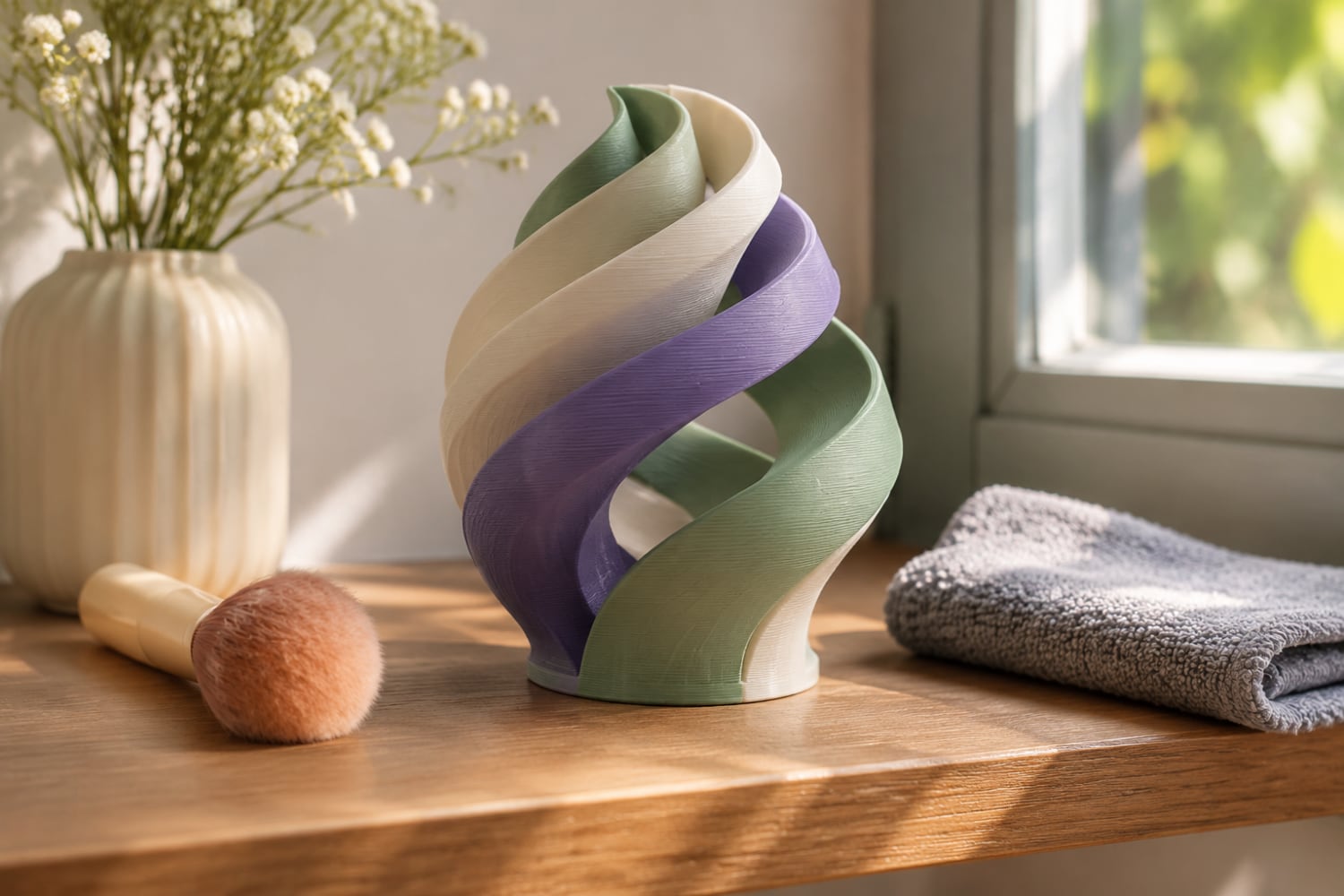
This is the cleaning job most owners actually face, and the one nobody writes about. Printed objects are built up in thin layers. The tiny ridges between layers, plus any deliberate texture like ribbing, petals or faceted ice, catch dust in a way smooth ceramic doesn't. A quick swipe with a cloth skims the high points and pushes dust deeper into the grooves.
What works best for us, from handling a lot of printed decor:
- A soft makeup brush or clean, wide paintbrush. Brush along the layer lines, not across them, so the bristles ride in the grooves and lift dust out.
- A microfiber cloth for flat faces and smooth bases. It grabs dust instead of smearing it.
- Canned air for tight spirals, lattices and the inside of hollow ornaments. Use short bursts and keep the can upright so it doesn't spray cold propellant onto the surface.
- Avoid feather dusters and fluffy cloths on detailed pieces. Thin parts can snag, and fibers get stuck in the texture.
How often depends on where it sits. A sculpture on an open shelf near a heat vent might need a brush-off every week or two. A piece in a glass cabinet can go months. If dust has turned into sticky grime, usually near a kitchen or from handling, a brush won't do it. Move on to a wash.
Holiday ornaments deserve one extra step. Dust them before they go back in the box, and make sure any washed ornament is fully dry inside before storing, so trapped moisture doesn't sit in a closed container for eleven months.
Washing by hand: water temperature and what to avoid
Lukewarm is the target, meaning comfortable on your hands. Siraya Tech notes that water above 55°C (131°F) softens PLA, and a hot tap at full blast can get close to that in some homes. Cold water is perfectly fine for PLA too, according to this overview. You lose a little grease-cutting power, so use a bit more soap.
A simple routine:
- Fill a bowl with lukewarm water and a few drops of mild dish soap.
- Dip the piece and work the surface with a soft toothbrush, following the layer lines.
- Rinse under the tap at the same temperature.
- Pat dry with a towel, then leave it upside down or on its side on a rack for several hours.
Things to avoid:
- Long soaks. A quick wash is fine. Leaving a piece submerged overnight lets water work into the gaps between layers.
- Scouring pads and abrasive cleaners. They scuff the surface and leave fibers in the grooves.
- Boiling water or a kettle rinse on PLA.
- Drying on a radiator, in the sun on a hot windowsill, or with a hair dryer on high heat. Our post on whether PLA melts near heat explains why.
Can 3D printed items go in the dishwasher?
For PLA, no. A standard dishwasher can reach about 60°C (140°F), roughly where PLA starts to soften, so pieces can deform or warp. FacFox puts it bluntly: PLA is definitely not safe in the dishwasher, and the item can crack. FacFox recommends lukewarm water with a mild antibacterial detergent instead.
PETG is where the advice gets messy. 3D Printerly says most PETG prints are dishwasher safe because the material tolerates heat better. Other sources only say it may be. Results depend on the exact filament, wall thickness and how hot your machine runs. Our take: if a piece is confirmed PETG and you really want to use the dishwasher, use the top rack and skip heated dry. Hand-washing is still the safer habit.
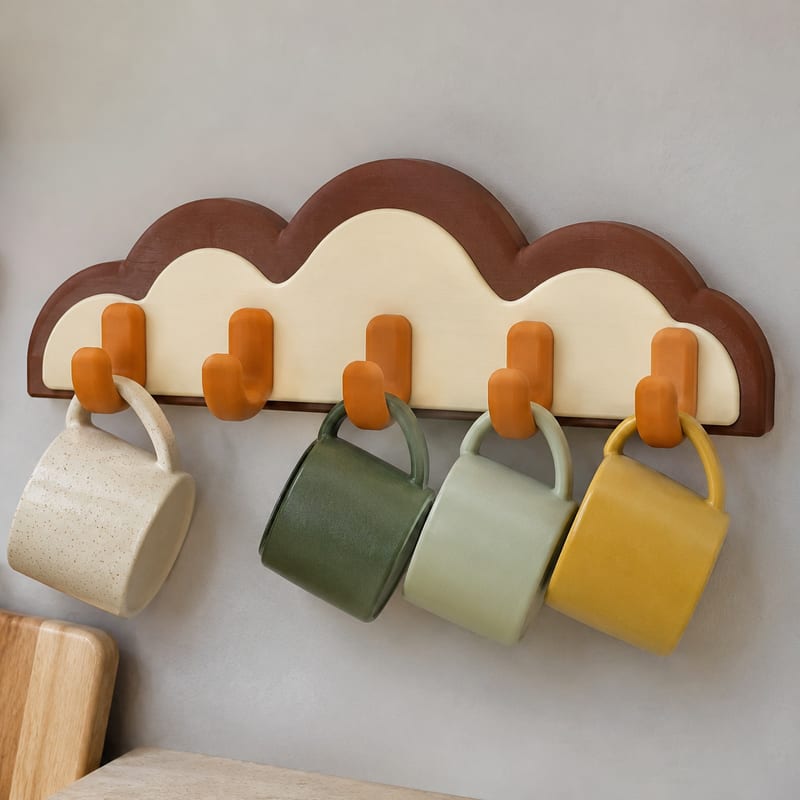
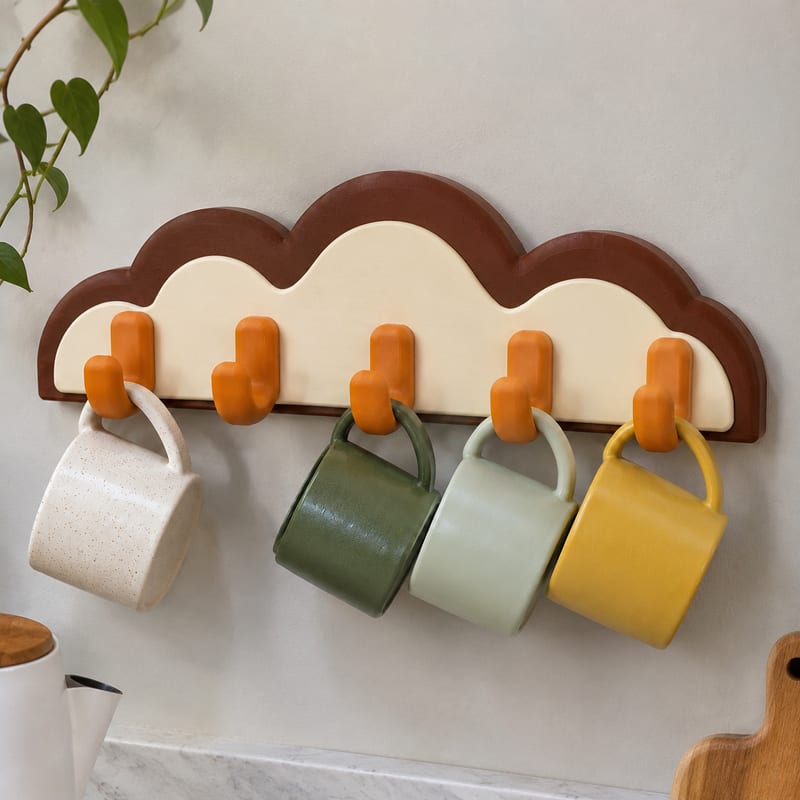
This applies to kitchen and table pieces like mug racks, napkin rings and drink markers. Wash them by hand. And remember that being washable isn't the same as being food-safe. Printed PLA and PETG aren't food-safe by default, because layer lines can hold bacteria that a wash doesn't fully reach. Our guide to food-safe 3D printed items covers what that means for kitchen gifts.
Bathroom and kitchen pieces: moisture, soap scum and mold
The common worry is that printed plastic grows mold. The plastic itself isn't the main problem. Mold grows on soap scum, as Siraya Tech explains. Bar soap is alkaline (pH 9 to 10), and shower humidity reaches 70% or more, so residue left on any surface becomes a food source.
There's a useful real-world comparison on Maker Forums. One user's PLA drain strainer showed no mold after a year, though it did get gunked up and hard to clean. A ceramic holder from a dollar store grew mold within a month. Material matters less than whether water and residue are allowed to sit.
That said, layer lines do give grime more places to cling, and the material still counts in a steamy room. Siraya says PLA works for decorative holders in dry bathrooms but can weaken over months of constant humidity, and that standing water breeds bacteria and mold quickly. PETG is water-resistant and stable in humidity.
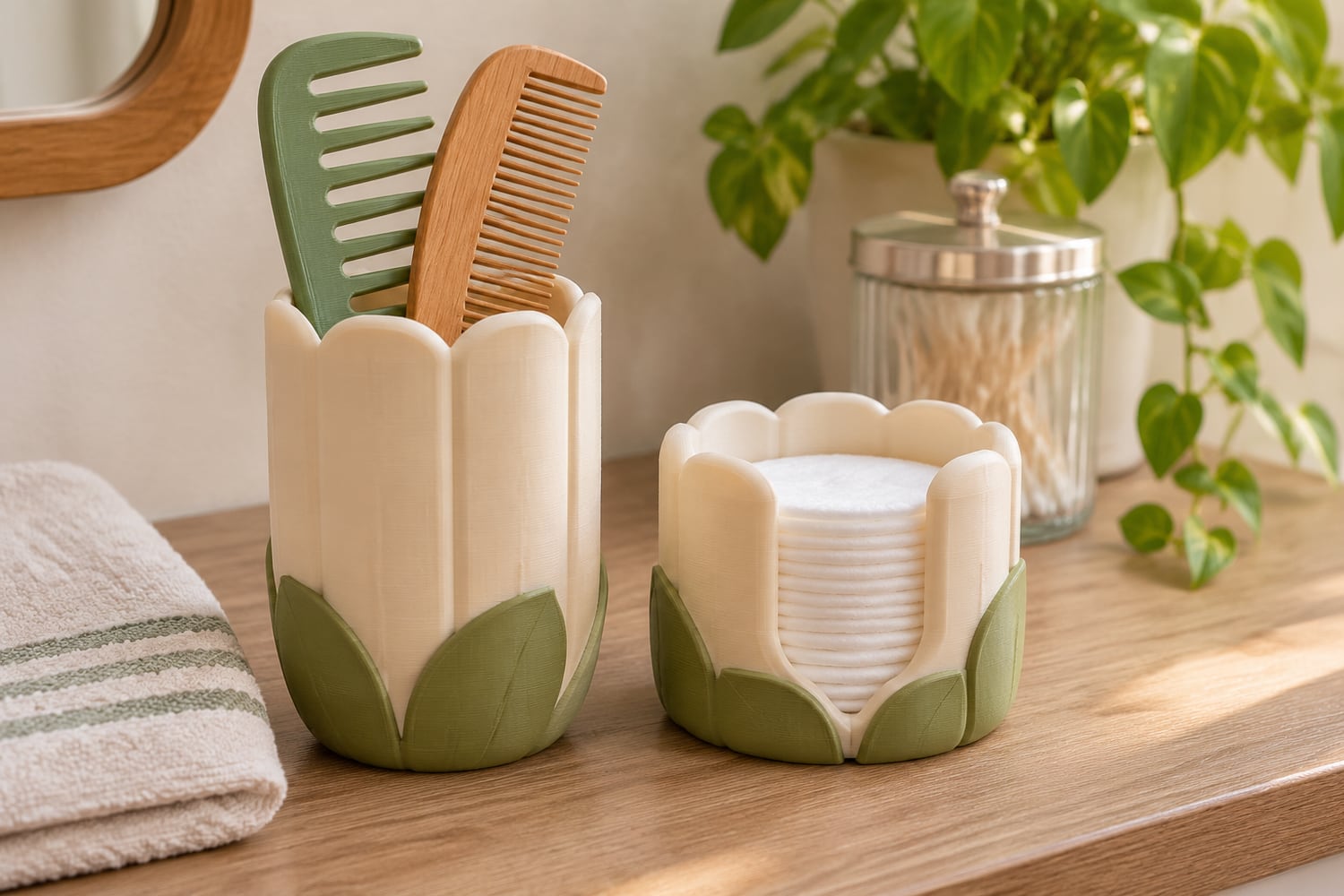
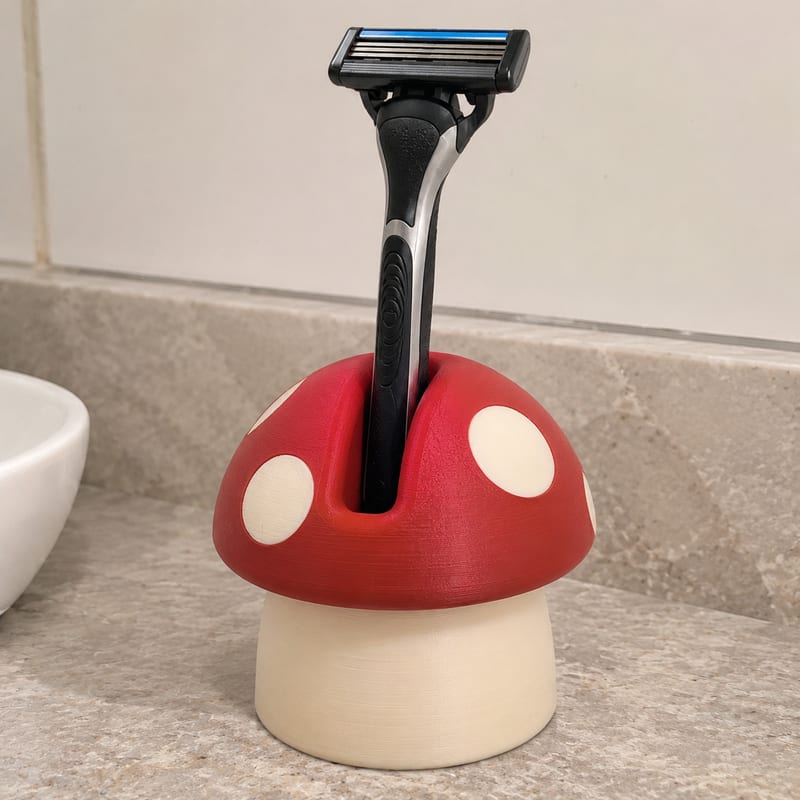
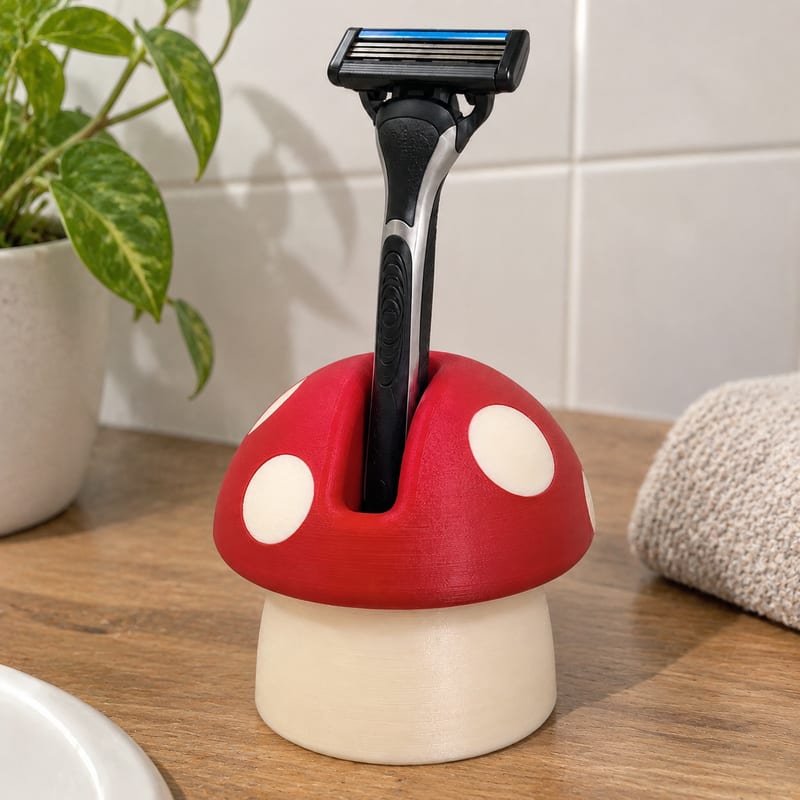
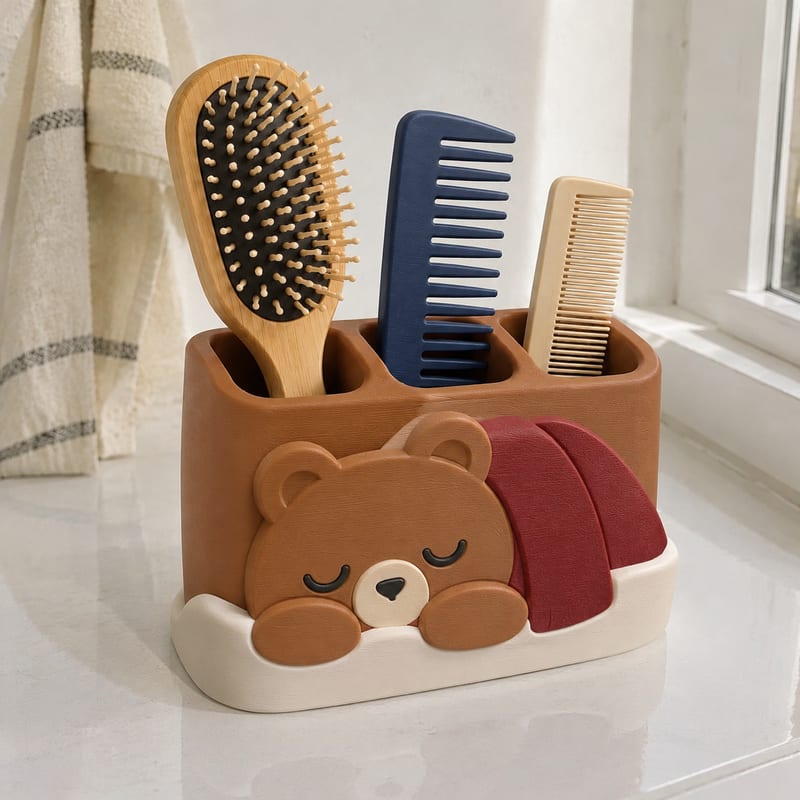
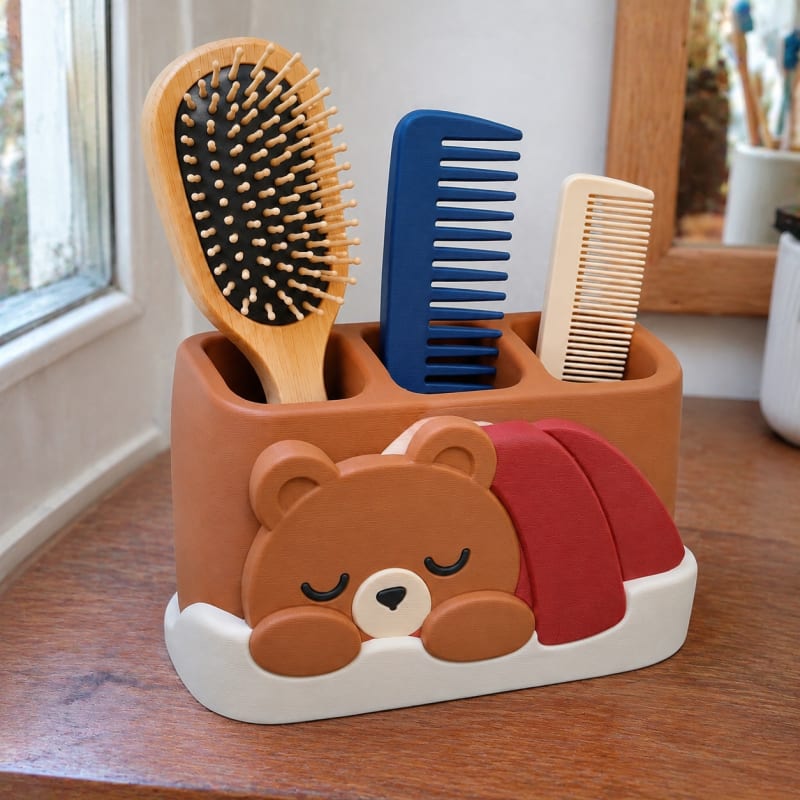
A care routine for a razor stand, comb holder or cotton pad holder:
- Keep it off wet ledges. The vanity counter beats the shower shelf or the sink rim.
- Let things dry before they go back. A wet razor dripping into a razor stand leaves a puddle in the base. Shake it off first.
- Rinse weekly in lukewarm soapy water and scrub the corners with a toothbrush. Corners are where trouble starts. Sky Rye Design points out that sharp inside corners collect water and soap.
- Tip out any standing water after each wash.
If you do spot mold, scrub it with a mild bleach solution of 1 part bleach to 10 parts water and a brush, as Techietory recommends. Rinse well and dry completely. If mold keeps coming back on a heavily textured piece, it's time to replace it, ideally with one printed in PETG or ASA, which hold up better to humidity and cleaning products.
Are 3D printed items waterproof?
Usually not completely. Most home goods are FDM prints, built up from layers of melted plastic, and tiny gaps between layers can let water through even when the plastic itself resists it. 3D Printerly makes the same point. A splash or a rinse is fine. Holding water for days is a different question.
For planters, a drainage hole and a saucer or liner make cleaning easy. Empty the saucer, wipe out soil, and rinse the pot now and then. Vases for fresh flowers need more thought. Our post on whether a 3D printed vase can hold water goes through the options.
Cleaning products: what's okay and what's risky
The sourced advice above covers dish soap and diluted bleach. For the rest, here's the house guidance we follow. These are practical recommendations, not lab results.
Generally fine:
- Mild dish soap and water, for almost everything.
- Diluted bleach (1:10) for mold spots, rinsed off afterward. Don't use it as a routine cleaner on colored pieces.
- A damp microfiber cloth for quick wipes.
Use with care:
- Rubbing alcohol. A quick wipe is usually fine on unpainted PLA and PETG. It can dull or lift paint, clear coats and decals, so test it on the underside first. On painted pieces, stick to soap and water.
- Multi-surface sprays. Spray the cloth, not the piece, so liquid doesn't pool in the grooves.
Avoid:
- Acetone and nail polish remover, which can attack some plastics and finishes.
- Oven cleaners, drain cleaners and other harsh chemicals.
- Powdered abrasive cleansers and steel wool.
A care card to include with 3D printed gifts
If you're giving a printed piece this season, a short care note saves the recipient from finding out about the dishwasher the hard way. Something like this fits on a small card:
Care for your 3D printed gift
- Dust with a soft brush. Wash in lukewarm water with mild soap.
- No dishwasher, no boiling water, no drying on a heater.
- Keep away from hot car dashboards, candles and radiators.
- In the bathroom, keep it on a dry counter and rinse off soap scum weekly.
- Decorative only. Not for serving or storing food.
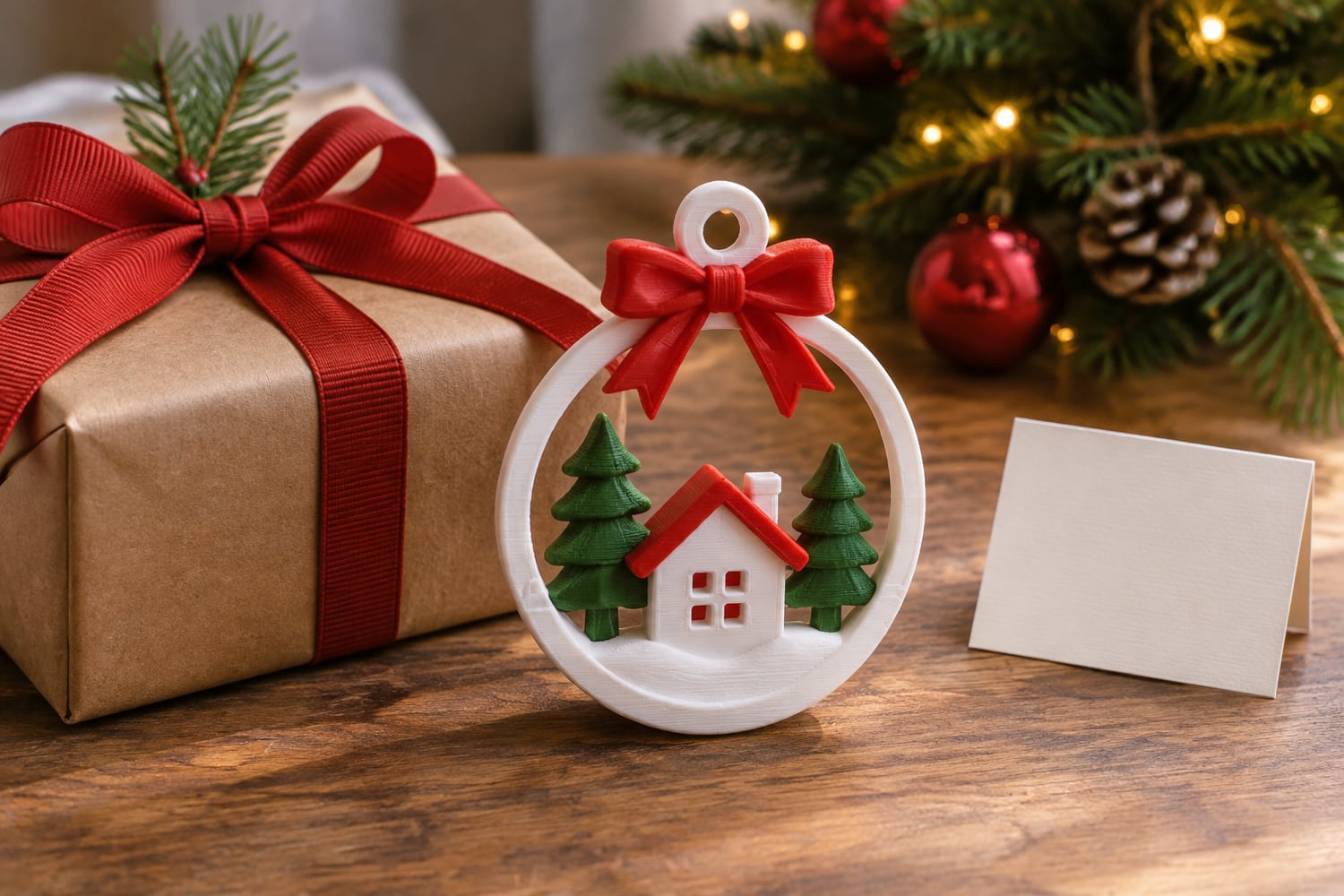
Add the material if you know it. Write PLA or PETG on the card, so they can look up the right rules later. Our guide on how long 3D printed items last is worth passing along too, since good cleaning habits are a big part of why some pieces look new for years.
Everything on Filagora is printed to order by independent makers, and you can always ask a maker which material they used before you buy. Browse the Kitchen & Bath category for pieces designed for everyday use around water.
Frequently asked questions
Can you wash 3D printed items?
Yes. Wash them by hand in lukewarm water with mild dish soap, scrub crevices with a soft toothbrush, then air dry completely. Avoid hot water above about 55°C (131°F), which softens PLA.
Is PLA dishwasher safe?
No. A standard dishwasher can reach around 60°C (140°F), roughly where PLA starts to soften, so pieces can warp or crack. PETG tolerates heat better and is often dishwasher safe, but hand-washing is still the safer habit.
Do 3D printed bathroom accessories get moldy?
Mold grows on soap scum and standing water rather than on the plastic itself. Keep printed bathroom pieces on a dry counter, rinse them weekly, and clean any mold spots with a 1:10 bleach solution and a brush.
Can you use bleach on 3D prints?
A mild solution of 1 part bleach to 10 parts water is a common recommendation for mold spots on printed bathroom pieces. Scrub, rinse well and dry completely, and don't use bleach as an everyday cleaner on colored pieces.
How do you get dust out of layer lines on a 3D print?
Use a soft makeup brush or wide paintbrush and brush along the layer lines rather than across them. Short bursts of canned air help with tight spirals and hollow ornaments. Wash the piece if the dust has turned sticky.
Pieces from this guide
Printed to order by makers on Filagora.