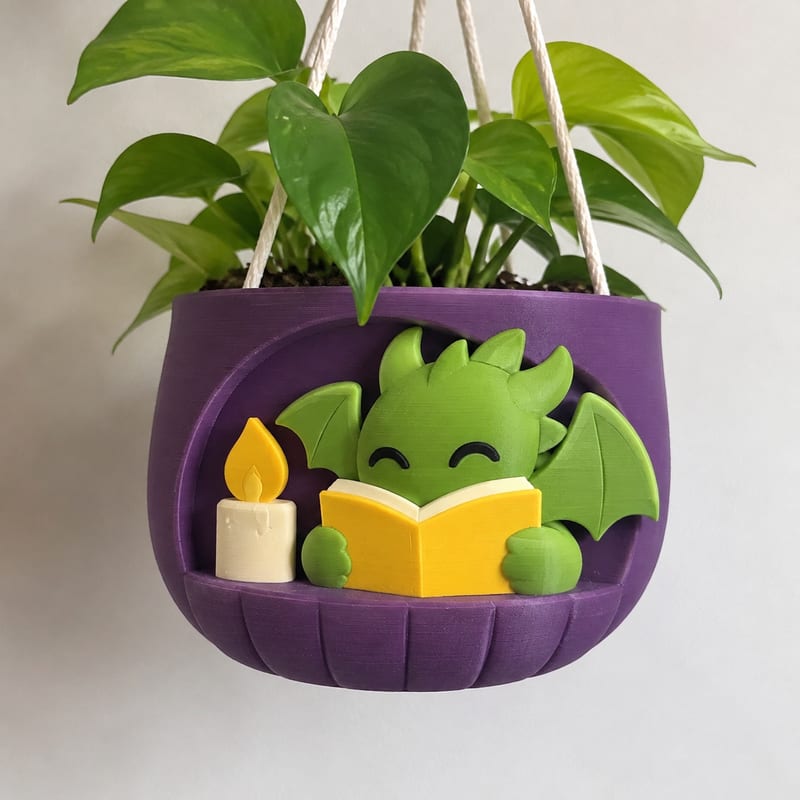
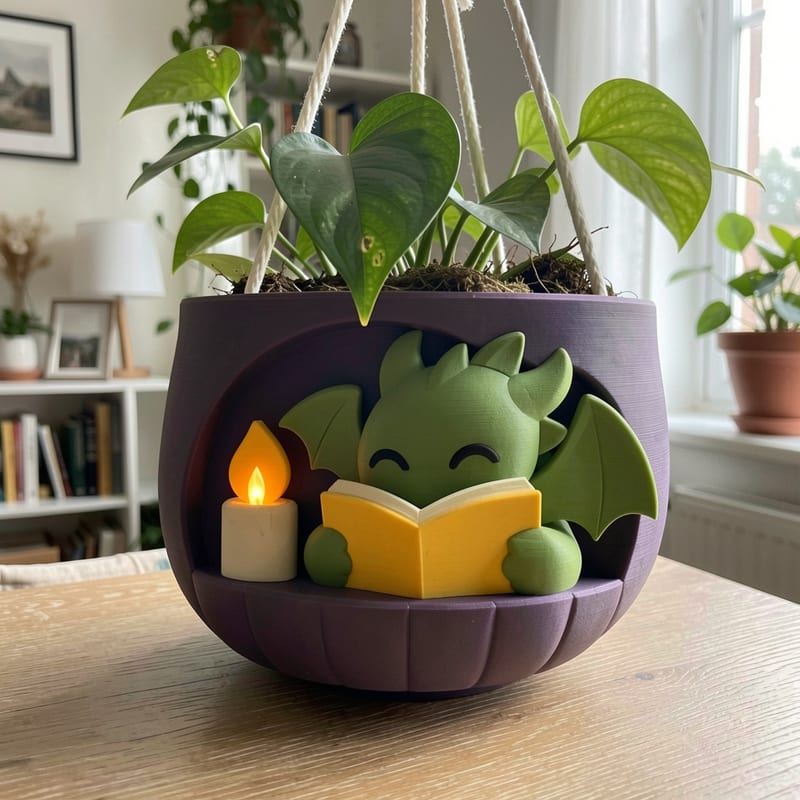
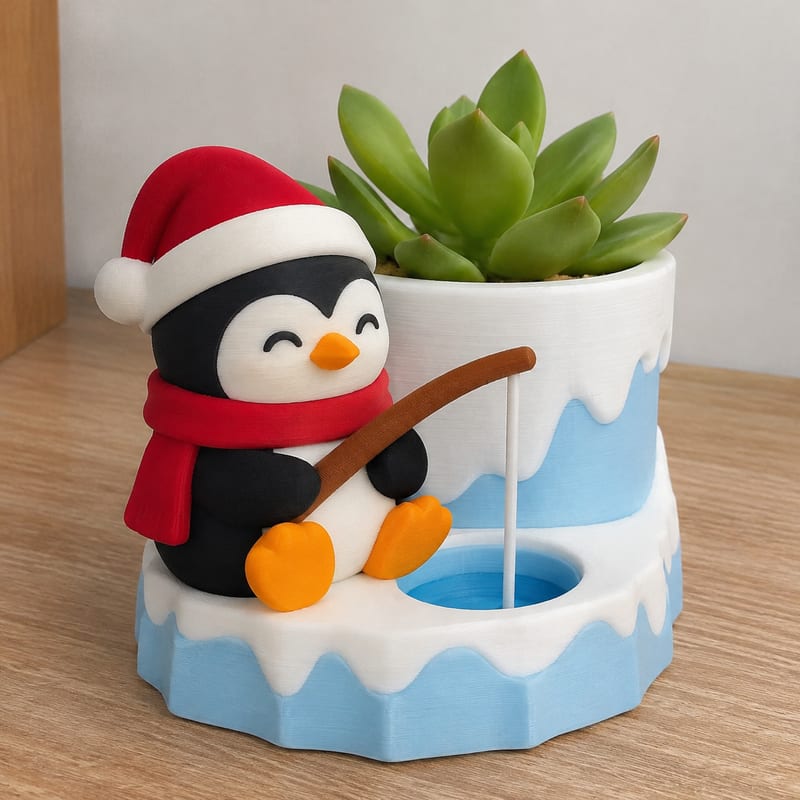
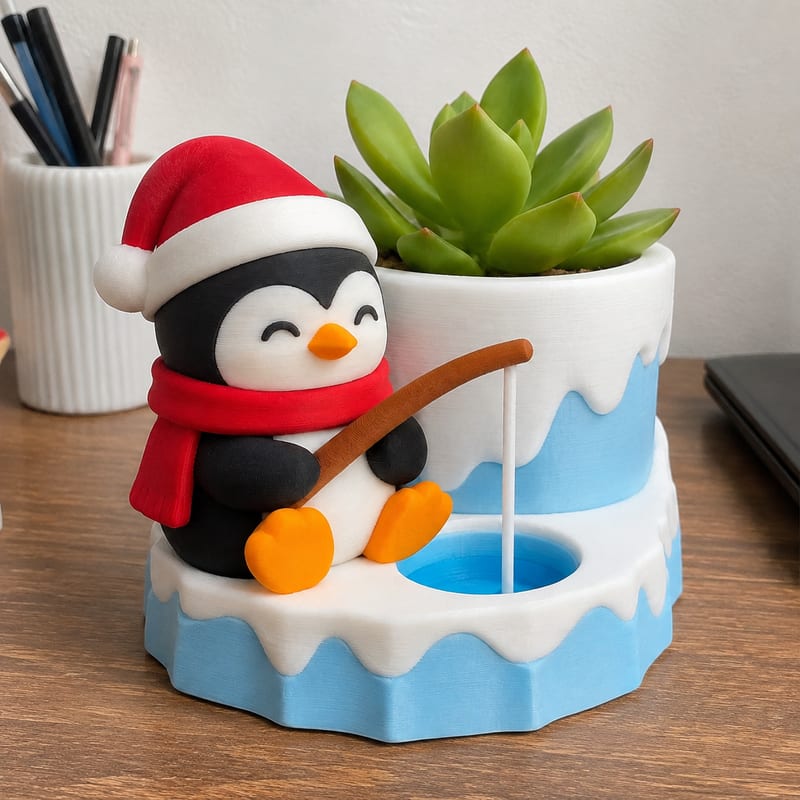
Is PLA Safe for Plants? What to Know About 3D Printed Planters
Yes, PLA is generally safe for plants. Learn what migrates into soil, how fast a 3D printed planter weakens in wet soil, and how to grow herbs in one safely.
By the Filagora team · November 26, 2026 · 9 min read
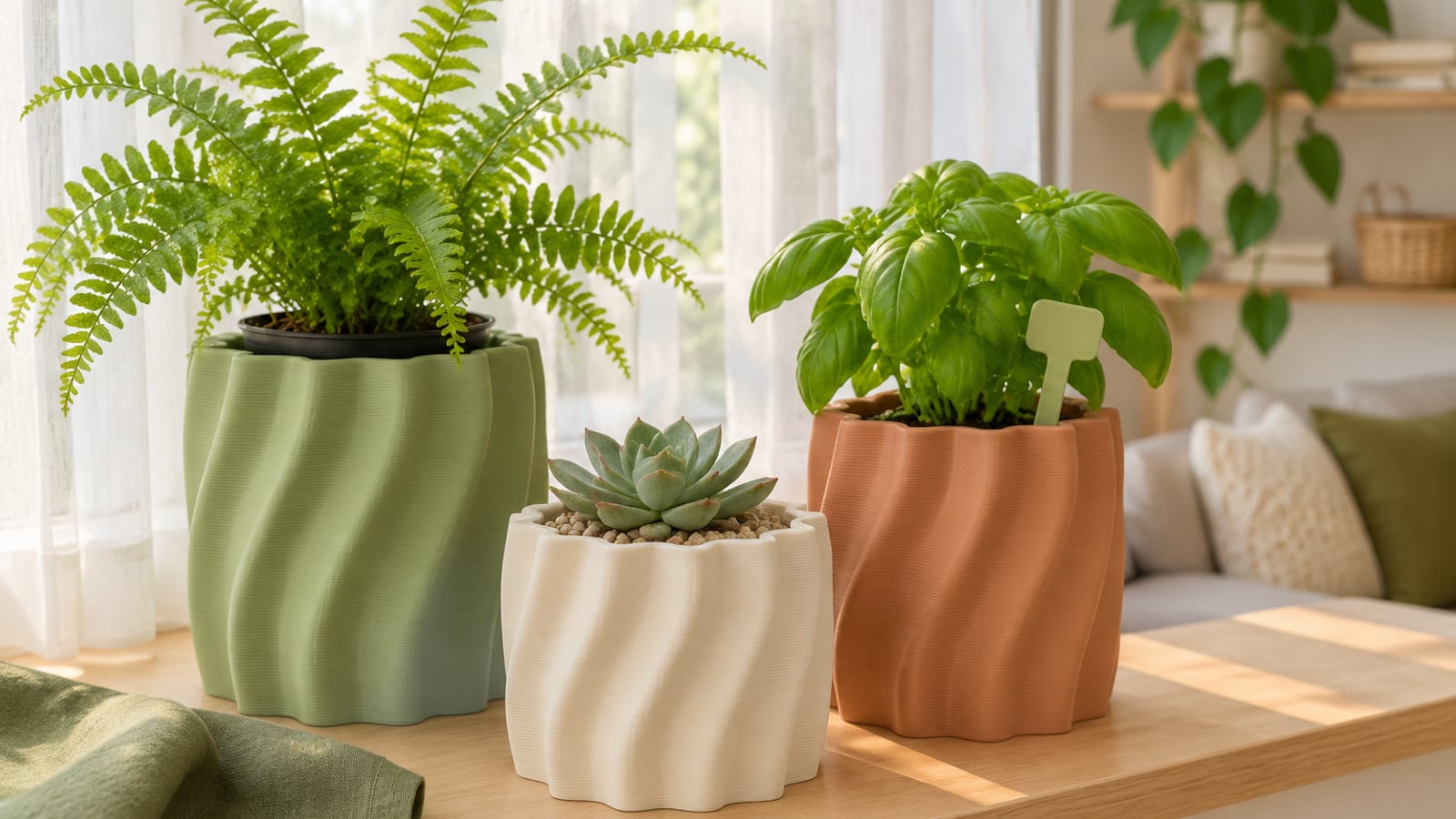
Yes, PLA is safe for plants in nearly every everyday use. The plastic is made from plant starch and is generally regarded as inert. The small amounts that migrate out of it turn into lactic acid, which Biology Insights says "poses no significant risk to the plant or the soil."
The real caveats are elsewhere: colored filament, herbs you plan to eat, and the fact that a PLA pot full of wet soil slowly loses strength over time. Here is what that means for a planter you buy, print or give.
The short answer: is PLA safe for plants?
For houseplants, succulents, ferns and air plants, a PLA planter is fine. Your pothos won't be harmed by the pot it sits in. Three things are worth knowing before you fill one with soil:
- Pigments. Pure PLA has no color. Every colored spool has additives, and not every maker lists what they are.
- Edibles. Printed PLA isn't food-safe by default, so herbs need a simple workaround (below).
- Lifespan. PLA won't rot away in a season, but warm, wet soil does weaken it. Treat it as a pot that lasts years, not forever.
What actually comes out of PLA into soil
PLA is polylactic acid, a polymer built from lactic acid. When it sits in damp soil, the compounds that migrate out are "lactic acid, lactide (the monomer the polymer is built from), and lactoyllactic acid," according to Latencot. All three are lactic-acid based, and lactic acid is something soil microbes already deal with.
Treatstock puts it more simply: "The plastic itself is shown not to leach into the soil or water but the lifespan of the project itself will be shorter." In other words, the plastic itself is not the concern for your plant. How long the pot holds up is the bigger question.
What no ranking page settles is the stuff added to the base plastic. Some sellers claim PLA has no heavy metals or toxic additives, full stop. That holds for pure PLA, but it is a claim about the base resin, not about every colored or specialty spool on the market. If you want the wider picture on PLA around the house and pets, see Is PLA Toxic?.
Colored filament, pigments and growing edible herbs
"Pure PLA is clear to milky, and every colour is pigment added to that base," notes Latencot. That's why Biology Insights advises that "gardeners should prioritize using virgin, undyed, or food-grade certified PLA filaments."
That advice is aimed at people who print their own. If you're buying, you can still act on it.
If you're buying a planter for herbs
- Ask the maker which filament they used. Brand and color are an easy question for anyone who prints planters, and some spools come with a data sheet or food-contact statement.
- Use a nursery pot liner. Keep basil, mint, chives or parsley in their plastic grower's pot and set that inside the printed planter. Soil and roots never touch the printed walls.
- Treat the printed piece as a cover pot. It is the decorative outer layer. The working pot is the cheap one inside.
Why not plant herbs directly in it?
Printed PLA isn't food-safe by default. The layer lines are tiny grooves that hold bacteria and are hard to scrub clean, and colored filaments add an unknown. Soil in a pot isn't the same as food on a plate, but the liner removes the question entirely and makes repotting easier. More detail is in our guide to whether 3D printed items are food safe.
Will a PLA planter biodegrade with wet soil?
Not in any way you'll see quickly. PLA's "biodegradable" label mostly applies to controlled composting, which we cover in Is PLA Biodegradable?. Even in lab tests, a 2025 review notes that PLA biodegradation under ISO 14855 (with oxygen) and ISO 11734 (without oxygen) "can take several months and years, respectively."
In real soil, it's slower still, but strength drops before the shape does:
- Mediterranean field burial: researchers found that PLA degradation "is slow and that it takes a long time for the material disintegration to start, even though degradation of the mechanical properties appears to start earlier." The same paper cites a study that "found only a 20% decrease in molecular weight of PLA (l-rich) plates after 20 months in soil" (Industrial Crops and Products).
- Cool climate: a 2023 study ran for one year in conditions averaging 9.4 °C and found that "tensile strength at break and thermal stability decreased for samples contained PLA."
- Warm and wet speeds it up: a one-year field study found weight loss in PLA-based materials "was notably enhanced at temperatures above 20 °C and with high water availability, while soil texture showed a minor influence."
So be skeptical of unsourced claims that a PLA pot lasts "at least a decade" before anything happens. The fair summary: it won't crumble on your shelf, but it can quietly lose strength within a year or two of constant wet soil, even when it looks unchanged. That matters most at thin rims, hanging hooks and wall tabs. For general care across printed pieces, see How Long Do 3D Printed Items Last?.
Drainage, inner nursery pots and root rot
The single best thing you can do for both plant and pot is keep soil off the printed walls. FLM's advice: "Sealing is not always required for indoor use if the planter has drainage holes and you use a separate inner pot." If you plant directly in the printed pot, "sealing the inside prevents leaks and protects the plastic from moisture damage" (FLM).
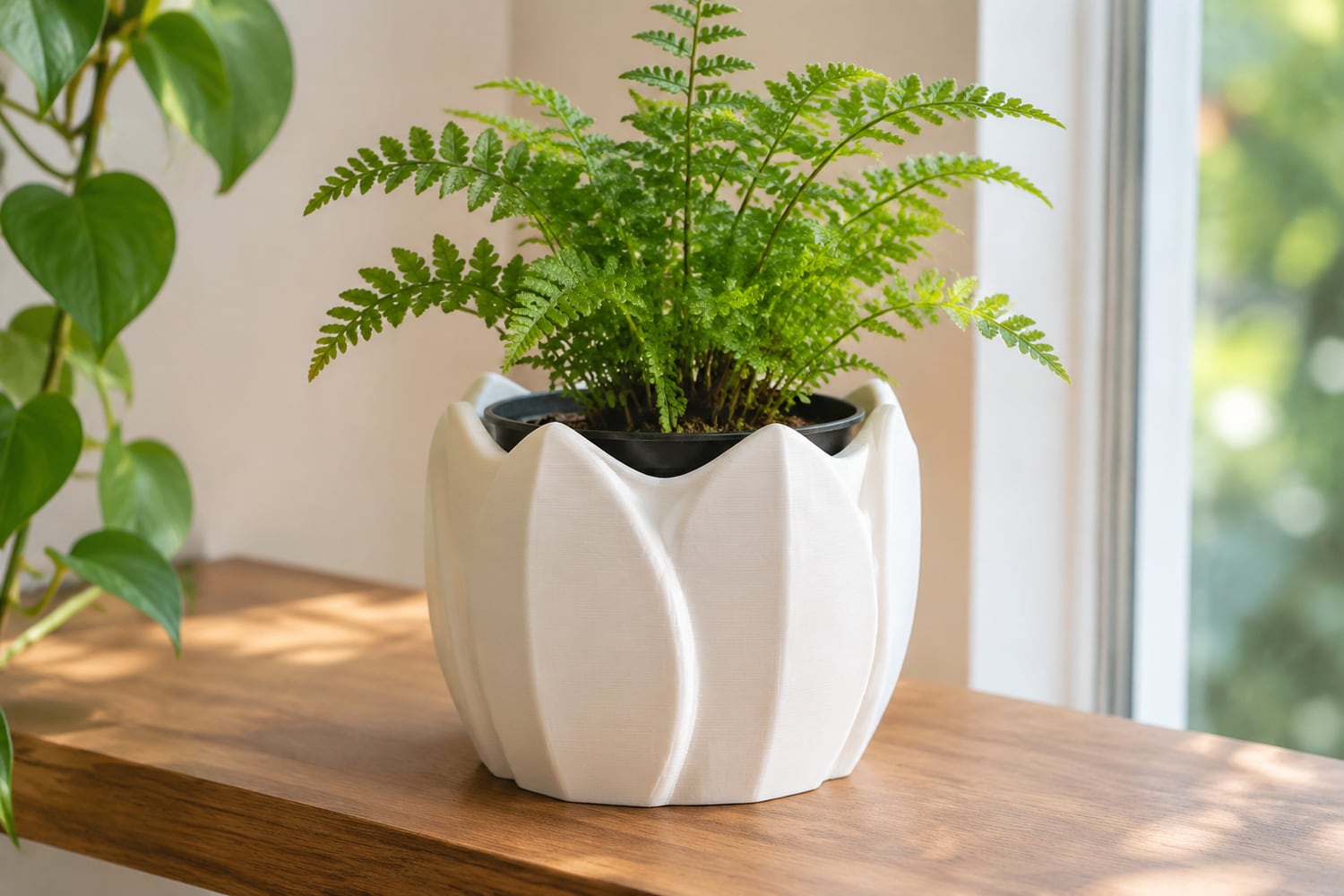
Root rot is a plant problem, not a plastic one, but the pot plays a part. PLA doesn't breathe the way terracotta does, so soil stays wet longer. A simple setup avoids trouble:
- Choose a nursery pot with holes that fits inside the planter with a little room around it.
- Lift it on a few pebbles or a small upturned lid so it never sits in runoff.
- Water at the sink, let it drain fully, then put it back.
- Tip the planter and check for standing water after the first few waterings.
If you want to know whether the printed pot itself will hold water without a liner, our post on whether a 3D printed vase can hold water explains why some prints seep.
Sun, heat and windowsills: what actually shortens a planter's life
Soil is slow. Heat and sunlight are fast.
- Heat: "PLA, in particular, has a low heat deflection temperature, often softening around 55°C (131°F)" (Biology Insights). A dark pot on a south-facing sill behind glass, or one left in a car while you shop for it, can warp. More in Will PLA Melt?.
- Sunlight: "UV exposure causes the PLA polymer chains to break down, leading to color fading, bleaching, and increased brittleness over time," per the same source. See Does PLA Fade in Sunlight? for what to expect on a bright sill.
- Winter radiators: a planter on a sill directly above a radiator is warm and wet at the same time, which is exactly the combination the 2021 field study found speeds up breakdown. Move it to a shelf a little farther from the heat.
- Outdoors: summer sun on a patio is harder on PLA than any amount of soil. Read Can PLA Be Used Outside? before you put one on the porch.
Air plants, hanging and wall planters, and plant markers
Air plants
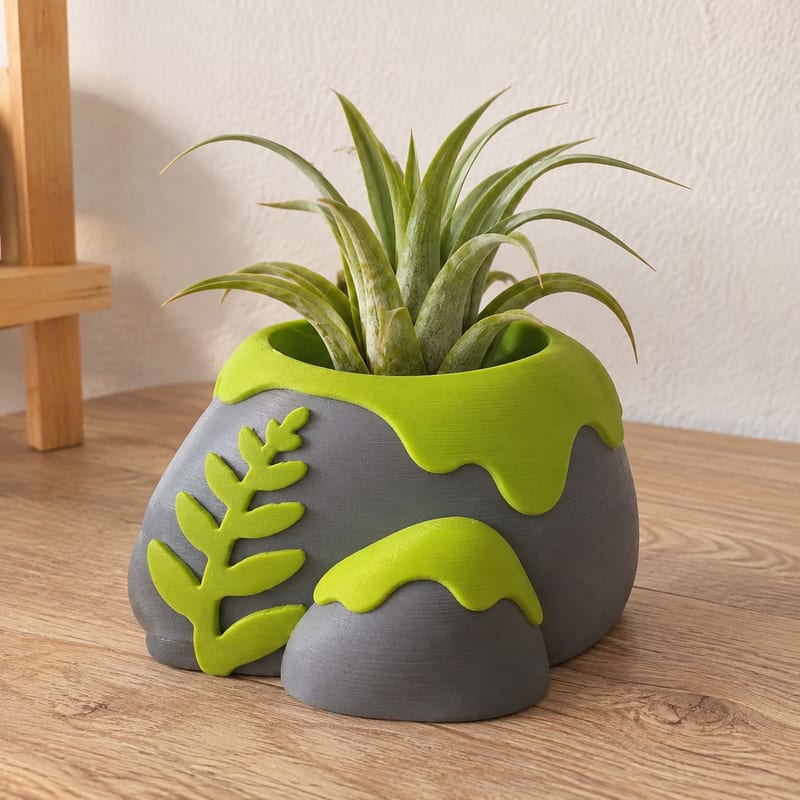
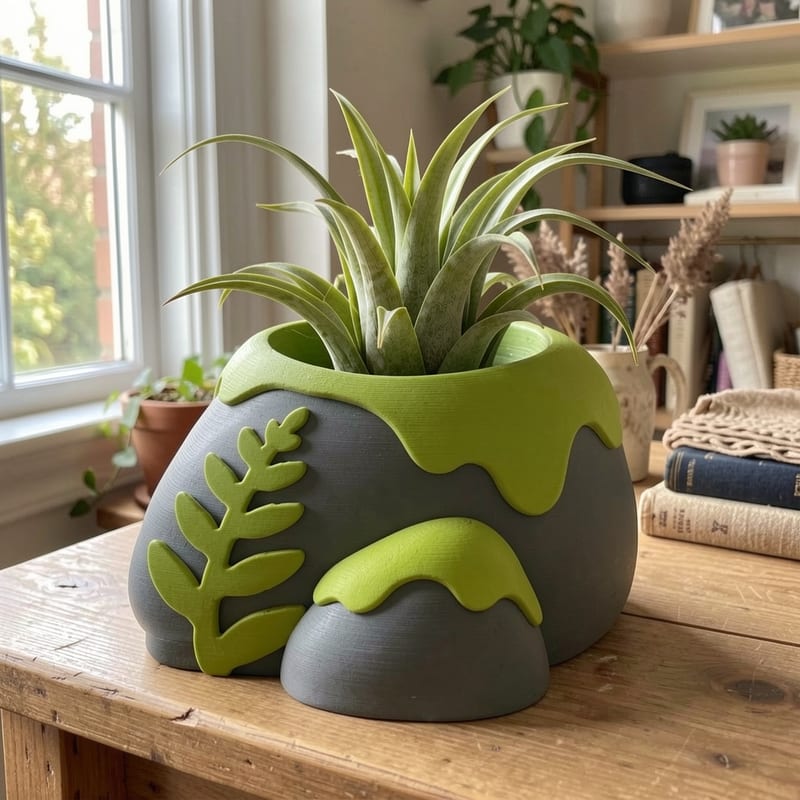
Air plants are the easiest match for PLA. There's no soil, and the plant is soaked or misted elsewhere and only goes back once it's dry, so the plastic barely sees moisture. A holder like this fern and mossy rock air plant holder can last as long as any indoor decor. Soak the plant in a bowl, shake it off, let it dry upside down, then return it.
Hanging and wall planters
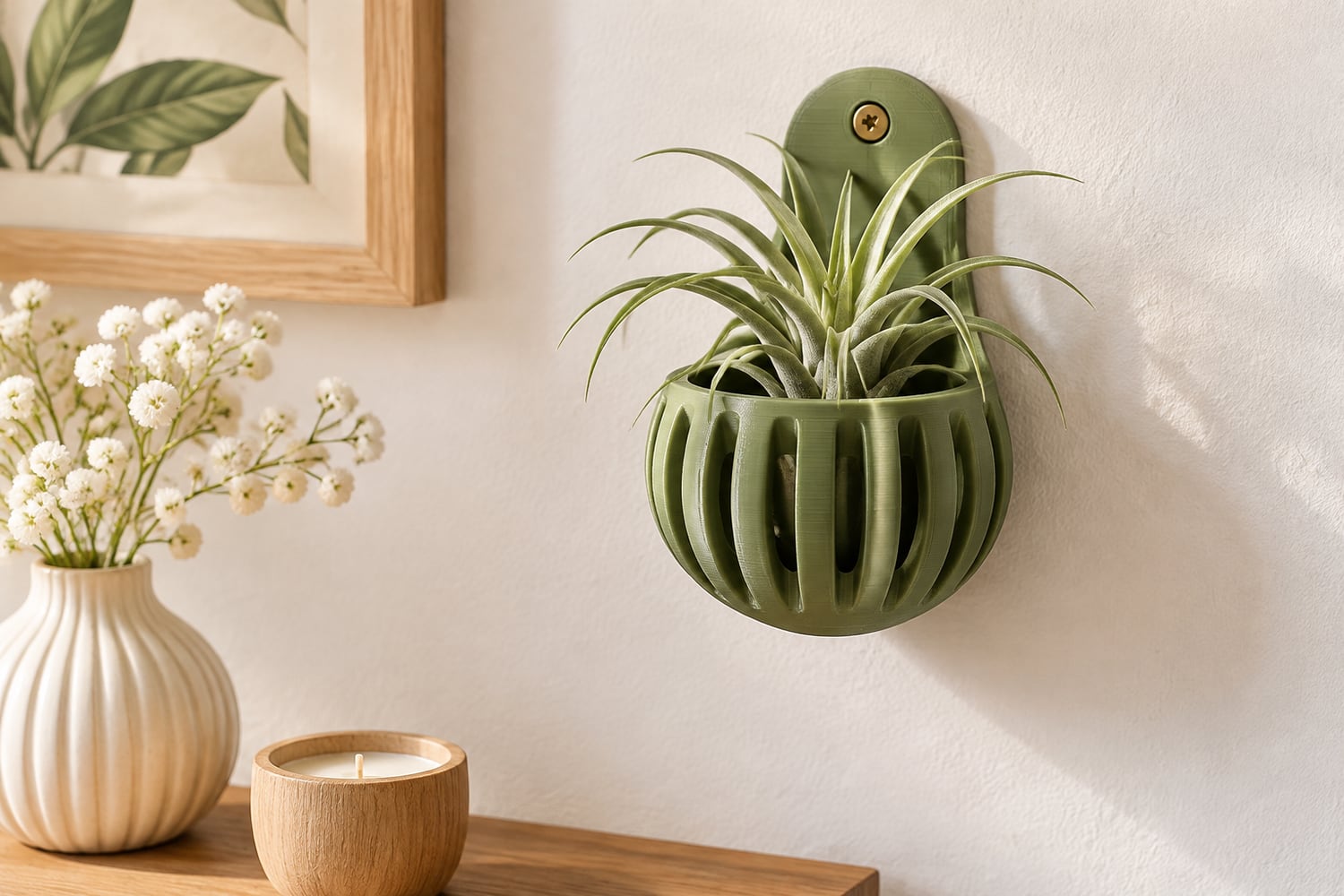
Wet soil is heavy, and in a hanging or wall planter all that weight rides on one hook or mounting tab. That's also where slow strength loss would show first. A few habits help:
- Use a light nursery pot inside and pick smaller plants.
- Take the inner pot down to water it, so drips don't stain the wall or paint.
- Once a year, look closely at the hook and tabs for fine cracks or white stress marks, and replace the planter if you see them.
Plant markers and stakes
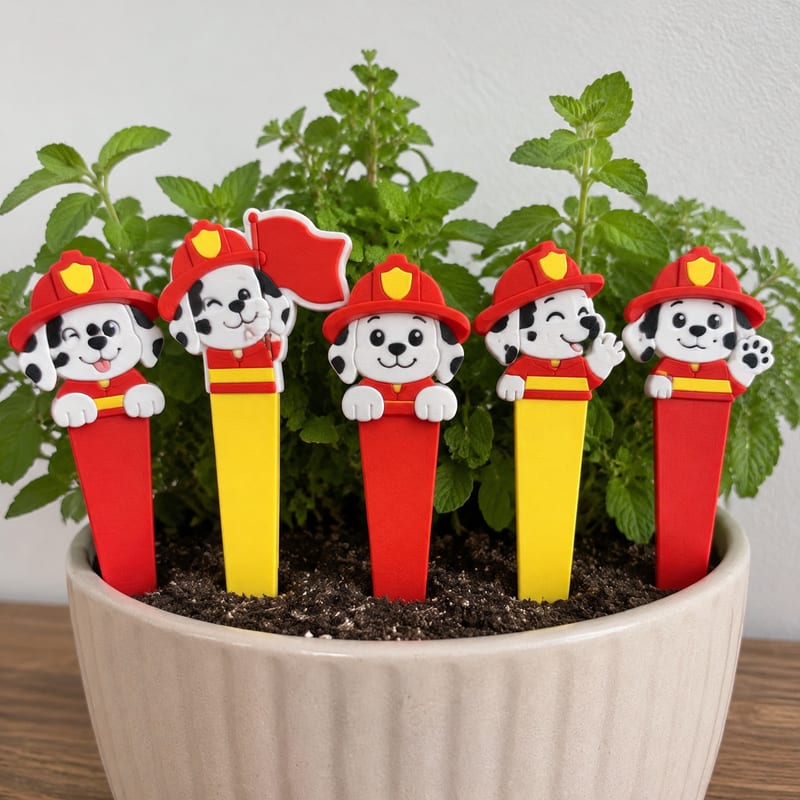
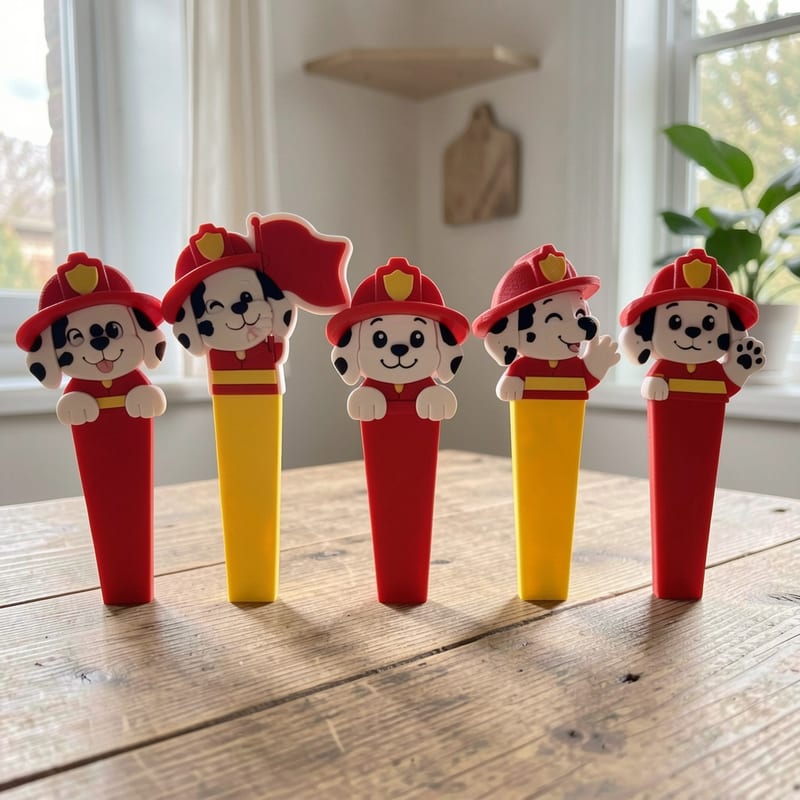
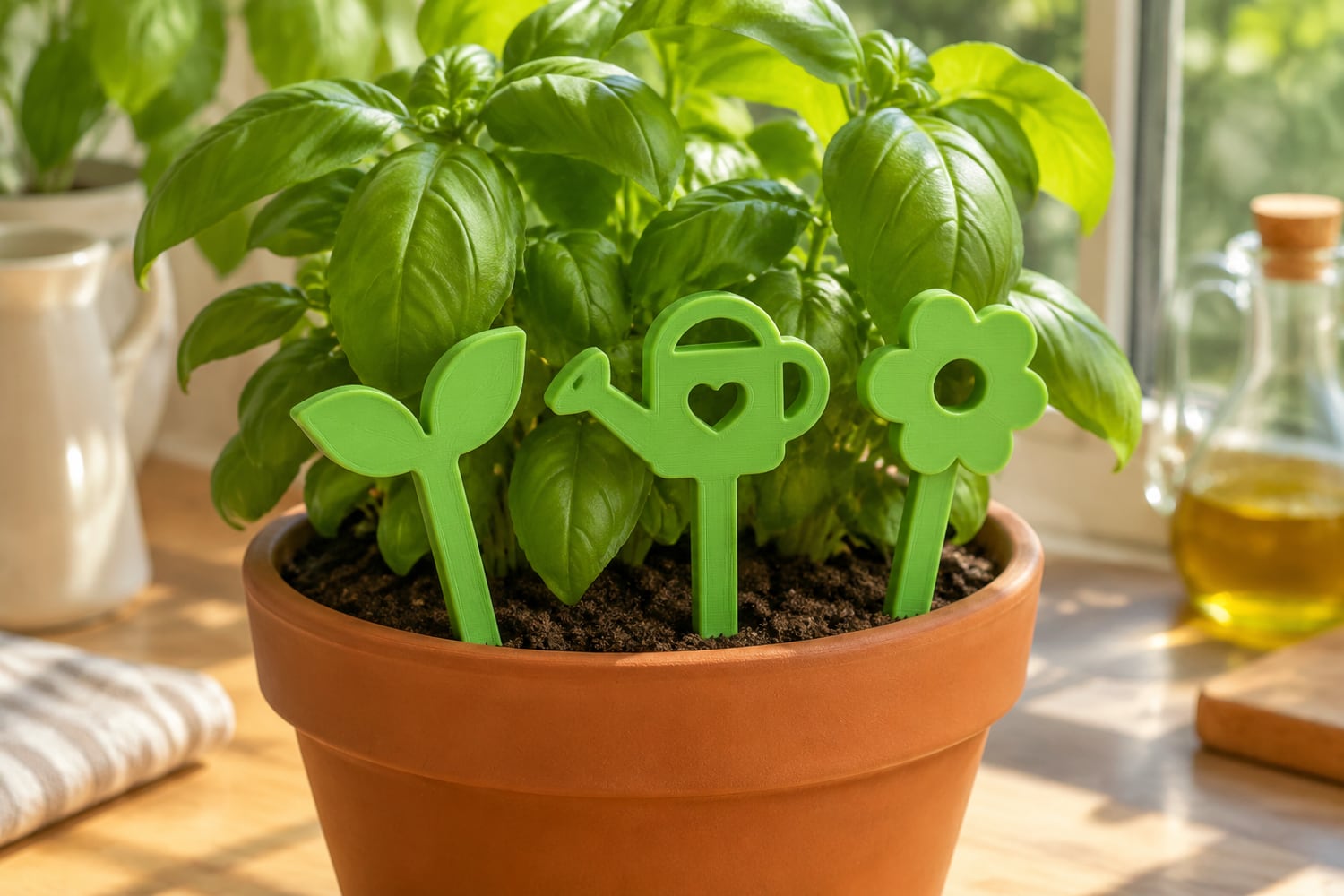
Markers live in damp soil all the time, so they get more exposure than any pot. Expect them to fade or soften first, especially outdoors or in warm greenhouse beds. Bring them indoors over winter and swap them out when they turn brittle. Sets like these 3D printed plant markers are decor, not toys, and small stakes aren't for children under 12.
PLA vs PETG vs ceramic for planters
| PLA | PETG | Unglazed ceramic | |
|---|---|---|---|
| Moisture | Holds moisture longer; suits ferns and thirsty plants (FLM) | Holds moisture like other plastics | Wicks water through its walls; suits succulents (FLM) |
| Knocks and drops | Flexes instead of cracking (FLM) | Tough, slightly flexible | Chips or breaks |
| Heat | Softens around 55°C / 131°F | Handles heat better than PLA | Not an issue |
| Long-term in wet soil | Slowly loses strength | "More chemically resistant, offering greater longevity" (Biology Insights) | Lasts indefinitely if not broken |
| Shapes and detail | Very detailed, many colors | Detailed, fewer matte finishes | Limited by molds |
For most indoor plants in a liner, PLA is perfectly good. If you want a planter for direct planting that sits in wet soil for years, PETG is the sturdier choice. Our PLA vs PETG guide covers the trade-offs in more depth.
Giving a planter as a gift: care-card tips
Houseplants and planters are a popular holiday gift, and a short care card answers the questions above before they come up. Things worth including:
- Material: PLA, plus the filament brand and color if the maker shared it.
- Planting: keep the plant in its nursery pot inside the planter and water at the sink.
- Herbs: grow edibles in the liner, not directly in the printed pot.
- Placement: indoors, away from radiators, hot sills behind glass and parked cars.
- Cleaning: wipe with a damp cloth and mild soap; no dishwasher. See How to Clean 3D Printed Items.
- Hanging pieces: check the hook or tabs once a year.
The short version for the card: safe for plants, happiest with a liner, keep it cool.
If you're shopping for one, Filagora's makers print planters to order in many shapes and sizes. Browse the vases and planters collection and ask the maker about filament if you're planning to grow herbs.
Frequently asked questions
Is PLA safe for plants?
Yes, for nearly all indoor uses. PLA is generally regarded as inert, and what migrates out breaks down into lactic acid, which poses no significant risk to plants or soil. The main caveats are unknown pigments in colored filament and growing edible herbs directly in the pot.
Can you grow herbs in a 3D printed planter?
Yes, but keep them in a plastic nursery pot set inside the printed planter. Printed PLA isn't food-safe by default because layer lines hold bacteria, and colored filaments add unknowns, so a liner keeps soil and roots off the printed walls.
How long does a PLA planter last with wet soil?
It won't visibly rot for years, but field studies show PLA loses strength within about a year of soil burial, faster above 20 °C and in very wet conditions. Using an inner pot and keeping it away from heat and direct sun extends its life considerably.
Do 3D printed planters need drainage?
The plant needs drainage, so use a nursery pot with holes inside the planter. PLA holds moisture longer than terracotta, so standing water raises the risk of root rot and also wears on the plastic.
Is PETG better than PLA for planters?
For pots that sit in wet soil long term or see more heat, yes. PETG is more chemically resistant and handles heat better, while PLA is fine for indoor planters used with a liner.
Pieces from this guide
Printed to order by makers on Filagora.