Can You Recycle 3D Printed Items? What to Do With Old Prints
Most 3D printed items can't go in your home recycling bin. Why PLA and PETG get rejected, which mail-in options exist, and how to keep pieces out of landfill.
By the Filagora team · November 18, 2026 · 9 min read

In most places, no. A finished 3D printed item shouldn't go in your home recycling bin. PLA and PETG, the two plastics most printed decor and gifts are made from, can be recycled in theory. Your local curbside service almost never accepts them in practice. There are a few routes that work, though. For a buyer, the best one is usually the simplest: keep the piece in use, or pass it on.
This guide is for people who own or are about to give a 3D printed object, not for people who own a printer. Most recycling advice online is about failed prints and spool waste. Here we cover what happens to a bookend, a jewelry box or a tabletop tree when you're done with it.
The short answer: recyclable in theory, not in your bin
The word "recyclable" gets used in two very different ways. One meaning is that the material can be reprocessed by someone, somewhere, with the right equipment. The other is that your recycling service will take it from the bin outside your house. Most 3D printed items meet the first meaning and fail the second.
Some pages answer "yes, PLA is recyclable" and stop there. Technically that's true. Chemical processes like hydrolysis or alcoholysis can break PLA back down into lactic acid, its original building block (Biology Insights). But that happens at specialized facilities, not at the plant your curbside truck drives to.
What "#7 Other" means and why recycling centers reject PLA
Plastics are sorted using resin identification codes, the numbers 1 to 7 inside the little triangle. Under that system, both PLA and ABS fall into Type 7, "Other," which municipal programs don't typically process (Earth911, citing All3DP). Almost every other filament, including nylon and polycarbonate, also lands in Type 7 (All3DP).
There are a few practical reasons the bin route fails:
- The equipment isn't set up for it. Materials recovery facilities aren't built to sort or reprocess PLA alongside common plastics like PET (drink bottles) and HDPE (milk jugs) (Biology Insights).
- It can spoil good plastic. PLA melts at a much lower temperature than those plastics. If it's mixed in by accident, it can contaminate the whole batch during reprocessing (Biology Insights).
- Machines can't tell it apart. Sorting equipment at most facilities can't reliably distinguish PLA from conventional plastics. So it gets rejected outright or ends up in landfill anyway (ScienceInsights).
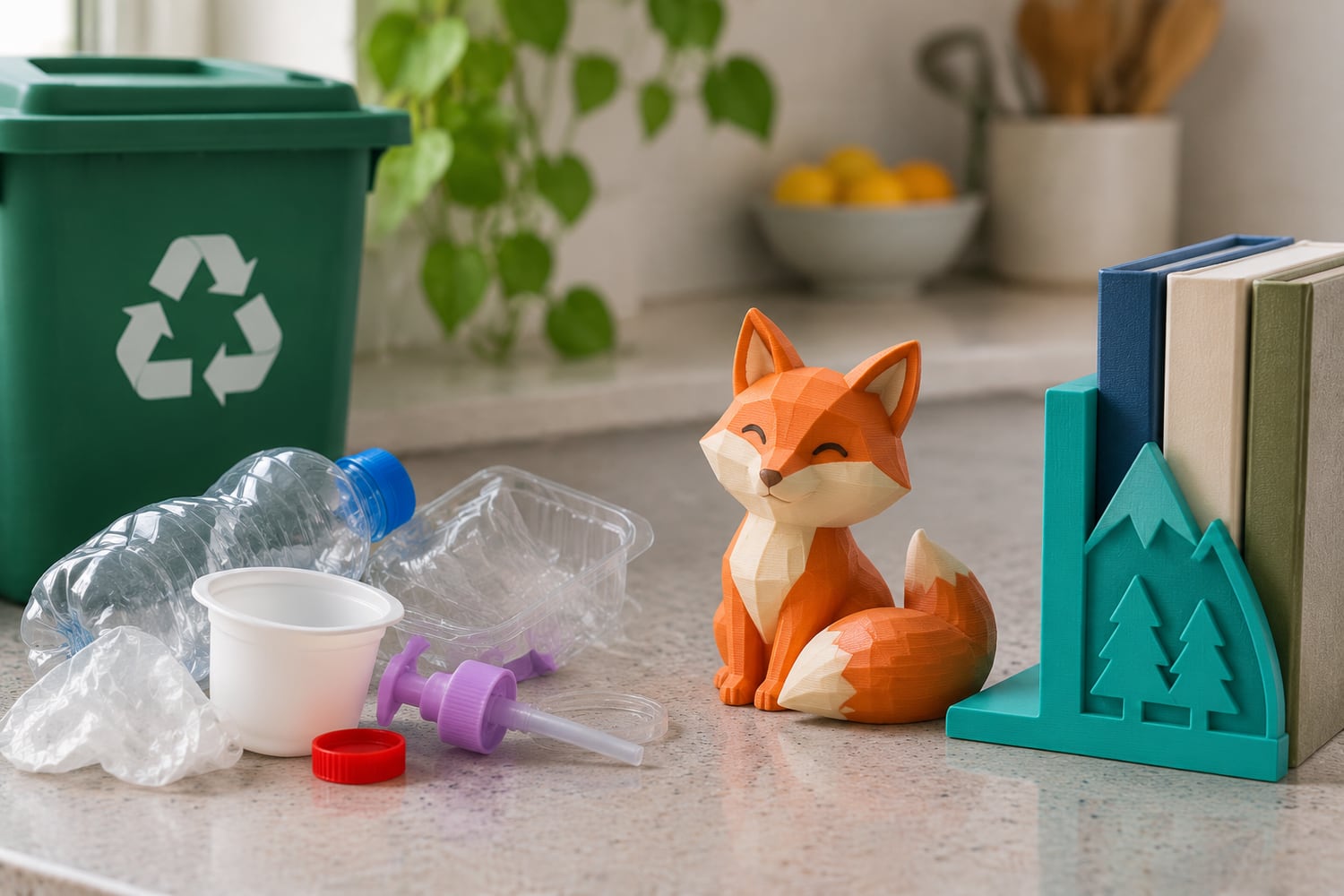
There's also a problem the recycling guides rarely mention. Printed items almost never carry a resin code. A mass-produced plastic bottle has the number molded into the base. A printed bookend usually doesn't, so neither you nor a sorting line knows what it's made of.
PETG, ABS and other materials: does anything go curbside?
Not reliably. PETG is a close cousin of PET, the plastic in water bottles, so it sounds like it should be accepted. One filament supplier describes its PETG as fully recyclable. All3DP reports that it can contaminate PET recycling streams instead (Earth911). Similar names don't mean the plastics can be processed together.
HP notes that some recovery facilities do pick up #7 plastics curbside. Even then, printed parts would need to be marked with a resin code. HP's advice is to ask your facility directly (HP). And accepted plastics can vary between countries, or even between neighborhoods in the same city (All3DP).
If you're not sure which material your piece is, our PLA vs PETG guide explains how they look and behave differently.
The compost myth: why your garden heap won't break PLA down
PLA is made from plant starches and is often called biodegradable. That leads many people to toss old prints on the compost pile. It doesn't work.
PLA needs prolonged high heat to break down. A backyard compost pile rarely stays above 60°C (140°F) for long (ScienceInsights). Industrial composters can manage it. Your garden heap will mostly just store a plastic object for years.
Landfill is no better. Only about one percent of PLA degrades in a landfill after 100 years (ScienceInsights). You'll find some advice online that says PLA only breaks down in industrial composters, then suggests home composting a few paragraphs later. The first part is the accurate one. We go deeper on this in Is PLA Biodegradable? What It Means for 3D Printed Gifts.
Options that actually work
If you really do need to get rid of a printed piece, these routes give it a real chance of being reprocessed.
Mail-in programs
TerraCycle sells a 3D Printing Materials Zero Waste Box. It accepts ABS, ASA, PS, HIPS, PP, PE, PET, PETG, PC ABS, nylon and TPU. PLA items go in a separate Biodegradable Plastics box (TerraCycle). These boxes make the most sense for a household or a group pooling items. Check the current listing for pricing and accepted materials before ordering, since both can change.
Maker take-back schemes
Some makers and filament companies run their own collection. One example is Printerior Designs. You order a PLA or PETG collection bin, fill it with failed prints or scrap, and ship it back with an included prepaid label (Printerior Designs). These programs are built for printer owners. Still, a finished item made from the right plastic is the same material. If you bought from an independent maker, ask whether they collect old pieces or know someone local who does.
Makers have plenty of their own waste to deal with too. Failed prints account for more than 80% of 3D printing waste (Dassault Systèmes). Makers who recycle are usually set up to collect PLA or PETG anyway.
Ask your local service
Call or check the website of your city, council or local recycling center. Ask specifically about PLA, PETG and unmarked #7 plastics, not "plastic" in general. If they say no, or can't give a clear answer, the item goes in general trash, not the recycling bin.
| Option | PLA | PETG | Effort | Best for |
|---|---|---|---|---|
| Home recycling bin | Almost never | Almost never | Low | Nothing printed, unless your service confirms it |
| Backyard compost | Doesn't break down | No | Low | Not suitable |
| Mail-in box | Separate biodegradables box | Yes | Medium | Several items at once |
| Maker take-back | Depends on program | Depends on program | Medium | Pieces from a maker who collects |
| Keep, reuse, regift | Yes | Yes | Lowest | Almost every finished item |
US vs UK/EU: check locally, otherwise it's general waste
In the US, acceptance depends on your municipality and its recovery facility. A few take #7 plastics, most don't. Unmarked printed parts are a long shot anywhere.
In the UK and Europe the picture is similar. The Association of Plastic Recyclers lists PLA packaging as failing conventional recycling requirements. Kitech's advice is that PLA belongs in residual waste unless your local authority explicitly says it accepts EN 13432-certified PLA (Kitech). A home-printed decoration won't carry that certification.
The rule is the same everywhere. When in doubt, keep printed plastic out of the recycling stream. One wrong item can do more harm in the recycling bin than in the trash.
The best option for a buyer: keep, reuse, regift
Every recycling route above uses energy, shipping and processing. Keeping a piece in use avoids all of that. For finished decor and gifts, the ranking looks like this:
- Keep using it. A well-made printed piece lasts years indoors. Our guide on how long 3D printed items last covers heat, sunlight and care.
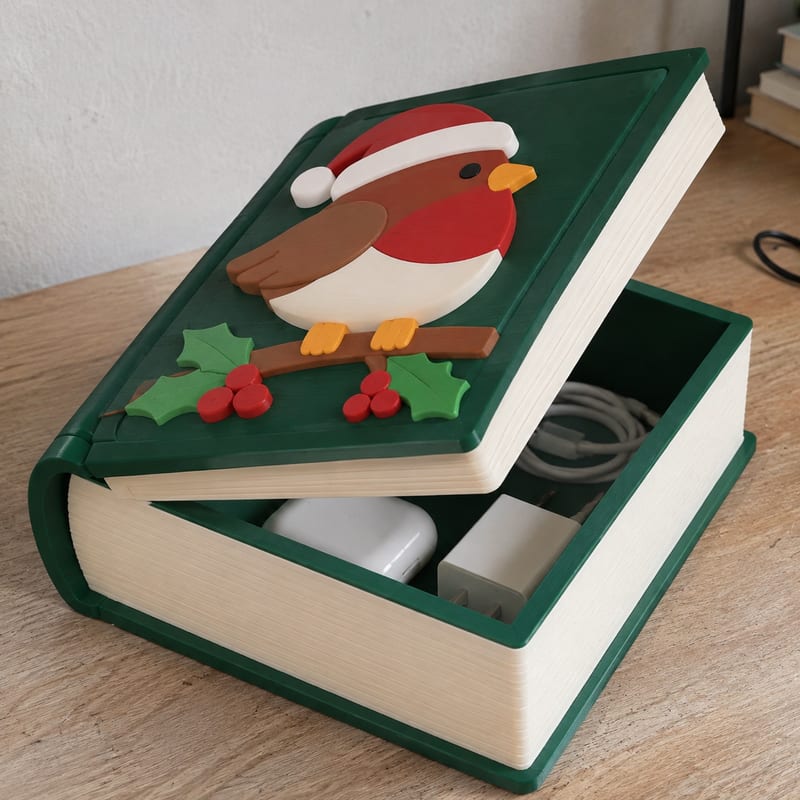
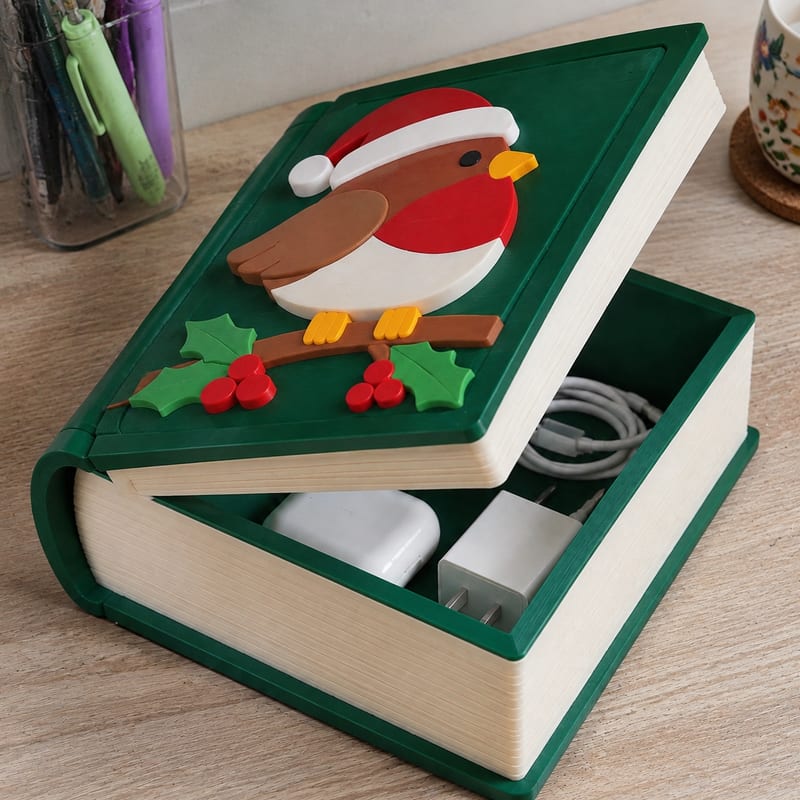
- Repurpose it. A jewelry dish becomes a key tray. A pencil cup holds makeup brushes. A tabletop centerpiece moves to a shelf.
- Regift or donate it. Clean it first (see how to clean 3D printed items) and pass it to someone who'll use it. Thrift stores, community swaps and local buy-nothing groups all work.
- Return it to the maker. Only if they run a take-back program.
- Mail-in recycling. Worth it for a batch of items.
- General trash. The honest last resort when nothing else applies.

Buy pieces made to last
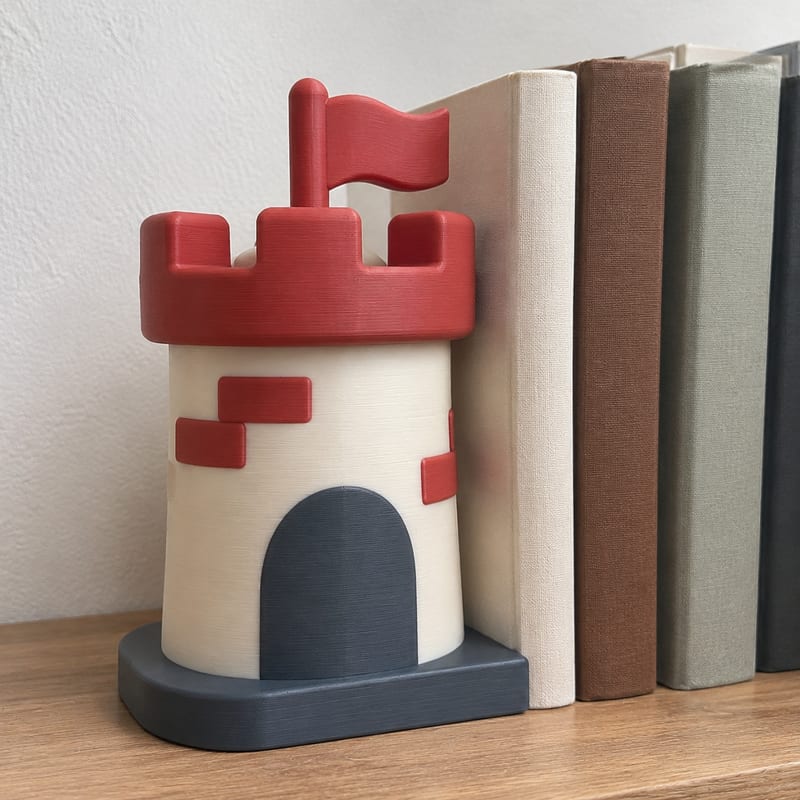
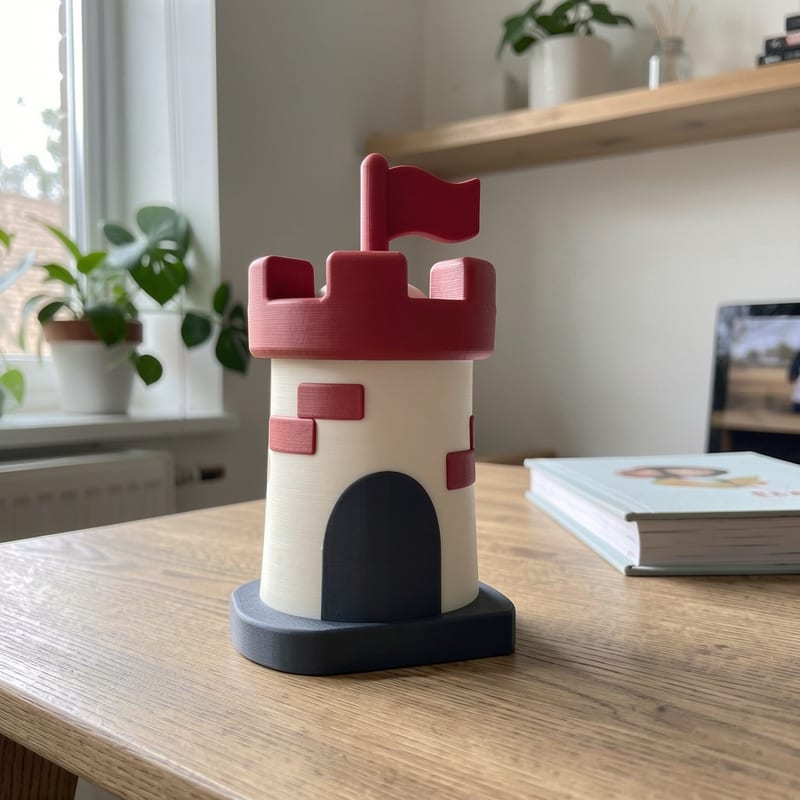
If you're buying 3D printed gifts with this in mind, choose sturdy, useful objects over novelty items that get tossed after a week. Thick walls, solid bases and a clear everyday job all help. A bookend like the Brick Castle Tower Bookend will be holding books long after a party favor is gone.
Store seasonal decor, don't replace it
Holiday decor is where throwaway habits add up. A printed piece that gets wrapped, boxed and brought out again each December has a far better footprint than decor bought new every year. Pack printed pieces in a cool, dry place, away from attics that get hot in summer. PLA can soften with heat, as our post on whether PLA melts explains. Battery-powered pieces like the Dove Silhouette Tabletop Christmas Tree store easily. Just take the batteries out first so they can't leak over the off-season.
Tricky cases: unlabeled, painted and electronic pieces
How to tell what an item is made of
Printed items rarely have a resin code. Check the original product listing or your order confirmation first. If neither says, ask the maker. Most makers know exactly which filament they used. Write it on a small sticker under the base so you, or whoever gets the piece next, know later.
Painted or coated pieces
Paint, varnish and glue add more materials to plastic that's already hard to recycle. Treat painted pieces as keep-or-regift items. Don't put them in the recycling bin, and don't send them to mail-in programs unless the program says coated parts are fine.
Pieces with batteries, LEDs or magnets
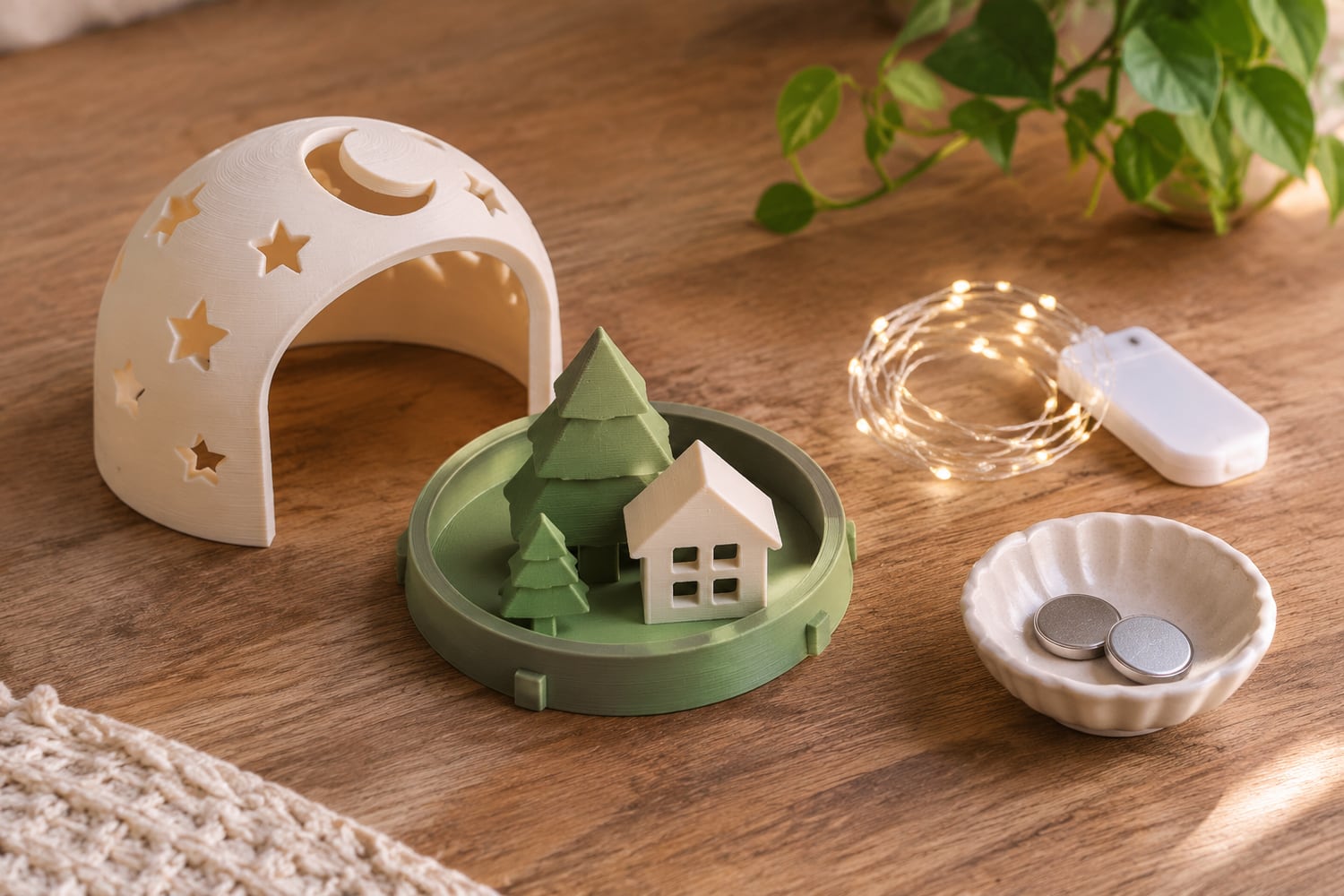
Remove batteries and any LED strips or wiring before you do anything else. Batteries and small electronics go to battery and e-waste collection points under your local rules, never in household recycling or trash. Pull out metal parts like magnets or screws where you can, too.
A note on kitchen pieces
The same rules apply to printed dish brush holders, napkin holders and coasters. If you're repurposing one, remember printed PLA and PETG aren't food-safe by default. Layer lines can trap bacteria, so don't turn an old organizer into something that touches food. Our guide to whether 3D printed items are food safe explains why.
The bottom line
You can recycle some 3D printed items, but rarely through your home bin. PLA and PETG are typically #7 or unlabeled, and most facilities reject them. Compost piles and landfill won't break PLA down in any useful timeframe. Mail-in boxes and maker take-back programs are real options for batches of plastic. For a single finished piece, keeping it, repurposing it or passing it on is almost always better.
If you're shopping for gifts, the makers on Filagora print to order, so nothing sits in a warehouse waiting to be discarded. Browse Home Decor for pieces meant to stay on the shelf for years, and ask the maker which material they use before you buy.
Frequently asked questions
Can I put 3D printed PLA in my recycling bin?
Usually not. PLA falls under resin code 7, "Other," which most municipal programs don't process, and it can contaminate other plastics if mixed in. Unless your local service explicitly says it accepts PLA, put it in general waste or use a mail-in program.
Is PETG recyclable with regular plastic bottles?
No. Even though PETG is related to PET, All3DP reports it can contaminate PET recycling streams. Specialist mail-in programs, such as TerraCycle's 3D printing box, accept PETG instead.
Can I compost 3D printed PLA at home?
Not effectively. PLA needs prolonged high heat to break down, and backyard compost piles rarely stay above 60°C (140°F) for long. It needs an industrial composting facility.
How do I know what plastic my 3D printed item is made of?
Printed items rarely carry a resin code. Check the original product listing or order confirmation, or ask the maker, who will know which filament they used.
What should I do with a 3D printed decoration that has batteries or LEDs?
Remove the batteries and any electronics first and take them to a battery or e-waste collection point. The plastic body can then be kept, regifted, or disposed of like any other printed piece.
Pieces from this guide
Printed to order by makers on Filagora.