PLA vs PETG: Which 3D Printed Material Suits Your Home?
PLA vs PETG for buyers: which 3D printed material holds up in bathrooms, hot cars, sunny porches and desks, plus PLA+, resin and what to ask a maker.
By the Filagora team · November 16, 2026 · 9 min read
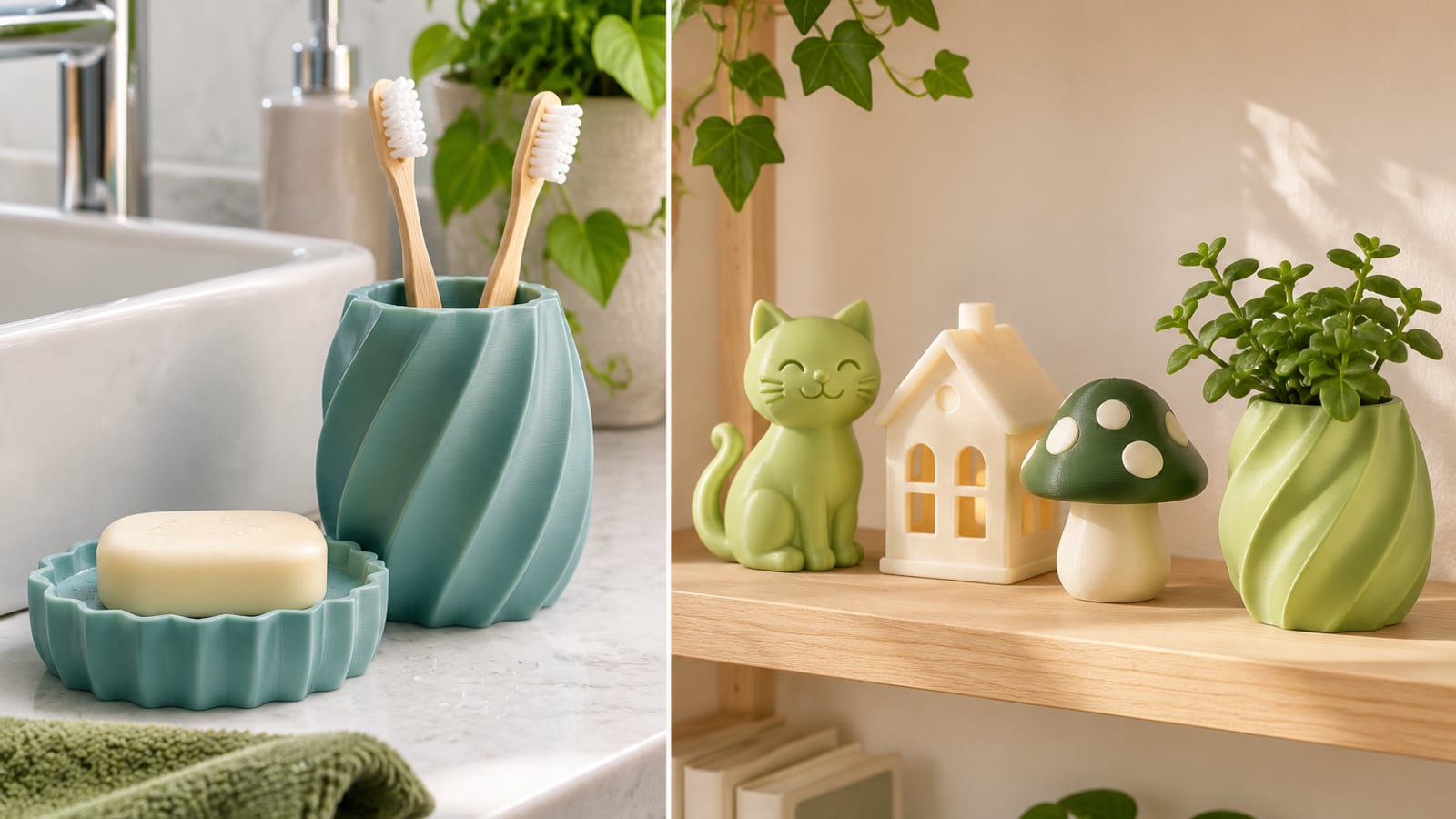
For most indoor decor, desk pieces and display figurines, PLA is the right material, and it's the one you'll see most often in listings. For anything that lives somewhere hot, wet or sunny, or gets dropped and flexed, PETG is usually the better buy. Neither is food-safe by default, and neither is a forever material for full outdoor sun.
That's the verdict. The rest of this guide explains why, room by room, and what to ask a maker when a listing doesn't say which plastic it uses.
PLA vs PETG: the short answer
- Choose PLA for shelf decor, figurines, desk organizers, wall art and gifts that stay indoors at normal room temperature. It gives the crispest detail and the widest color choice.
- Choose PETG for bathrooms, sink areas, cars, sunny windowsills, seasonal porch decor and parts that bend or take knocks.
- Look beyond both for long-term outdoor pieces in strong sun (ASA is the material made for that) or for tiny, very detailed miniatures (resin).
What PLA and PETG are, and why sellers name them in listings
Both are plastic filaments. A 3D printer melts the filament and lays it down in thin layers, one on top of the next, until the object is built. That layering is why you can often see fine horizontal lines on a printed piece.
PLA is a plant-based plastic and the default material for most home and small-shop printing. If you want the background on what that means for disposal, our post on whether PLA is biodegradable covers it. PETG belongs to the same plastic family used in many drink bottles, modified to print well.
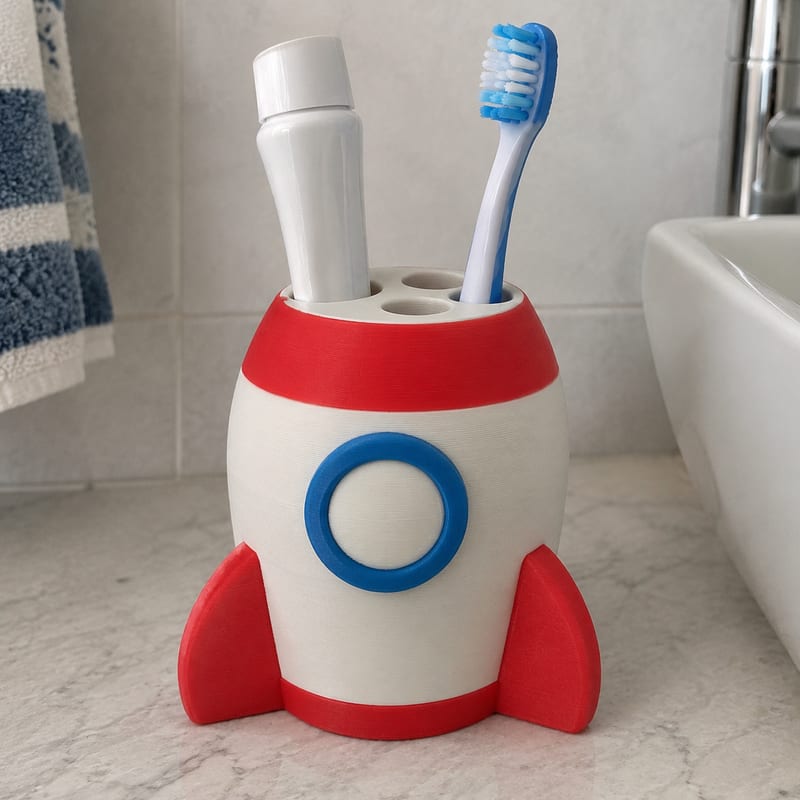
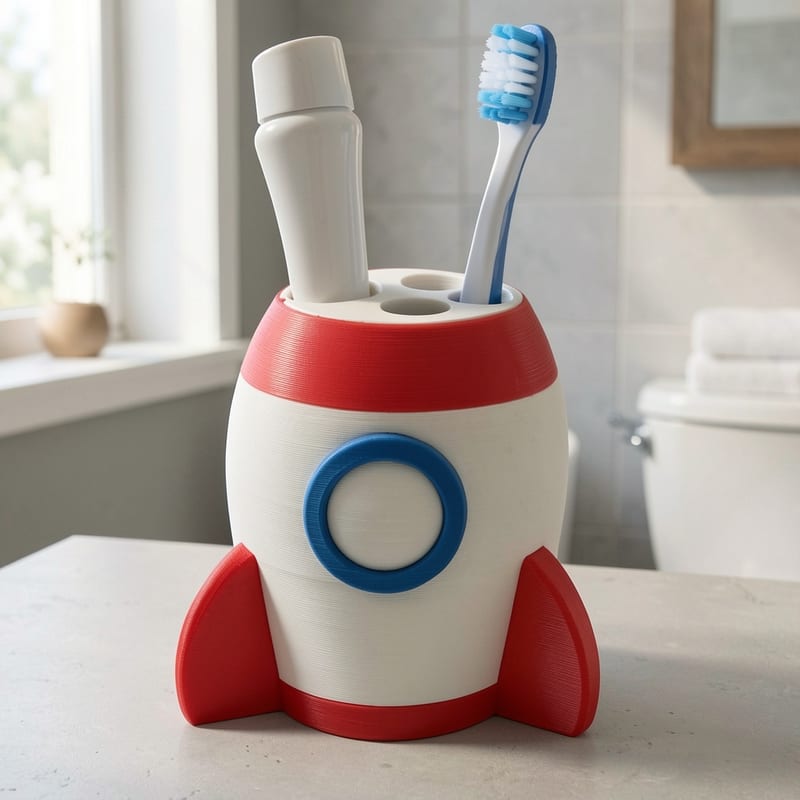
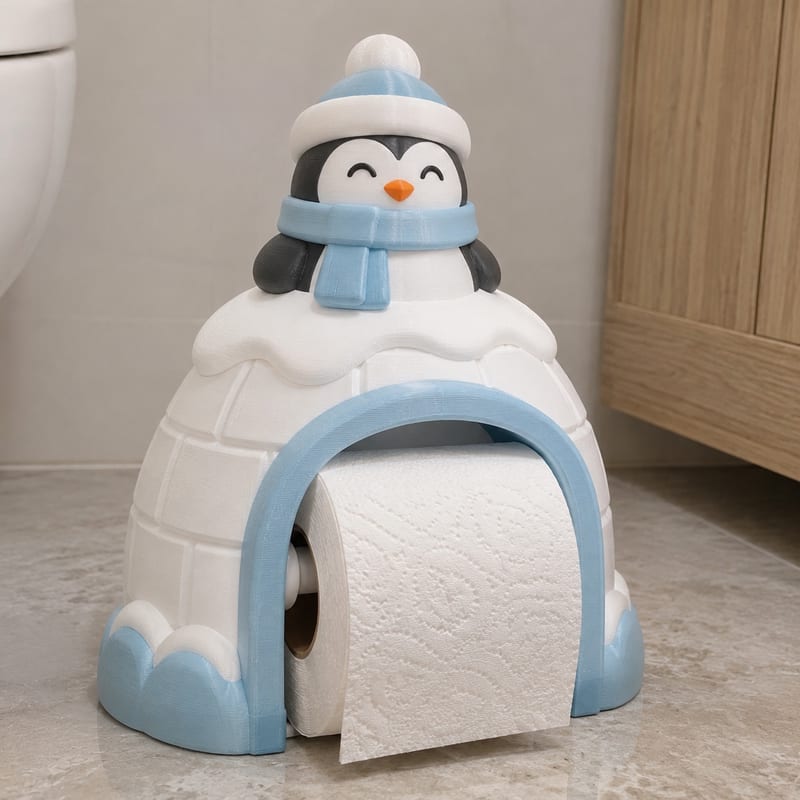
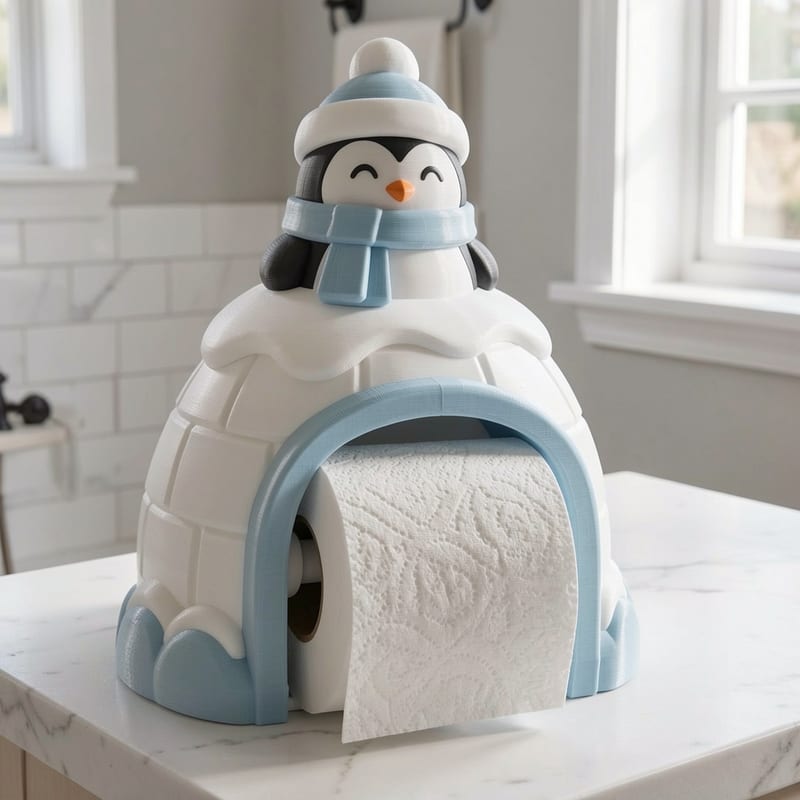
Sellers mention the material because it changes how the piece behaves in your home. A PLA toothbrush holder and a PETG one can look almost identical in photos, yet one is better suited to a damp sink edge than the other. You usually can't tell them apart reliably by eye, so the listing text or the maker is your best source.
Looks and detail: why most decor and figurines are PLA
Filament maker Formfutura recommends PLA for decorative objects, display models and props, because it is stiff, has a good surface finish and is easy to print well (Formfutura). Easy to print matters to you as a buyer: it means sharper edges, cleaner curves and fewer flaws on the finished piece.
For figurines, the deciding question is where the piece will live and what matters most: detail, color, heat, moisture or ease of care. For indoor display, PLA is the usual choice thanks to its crisp detail and wide color range (3D Central). The same source points out that a PETG figurine isn't automatically better. PETG differs in surface finish, is more prone to stringing (fine wisps of plastic between parts of the print), and comes in fewer colors.
PETG is also harder to paint and needs careful surface prep (Formfutura). If you want a hand-painted piece, PLA is usually the easier base for the maker to work with.
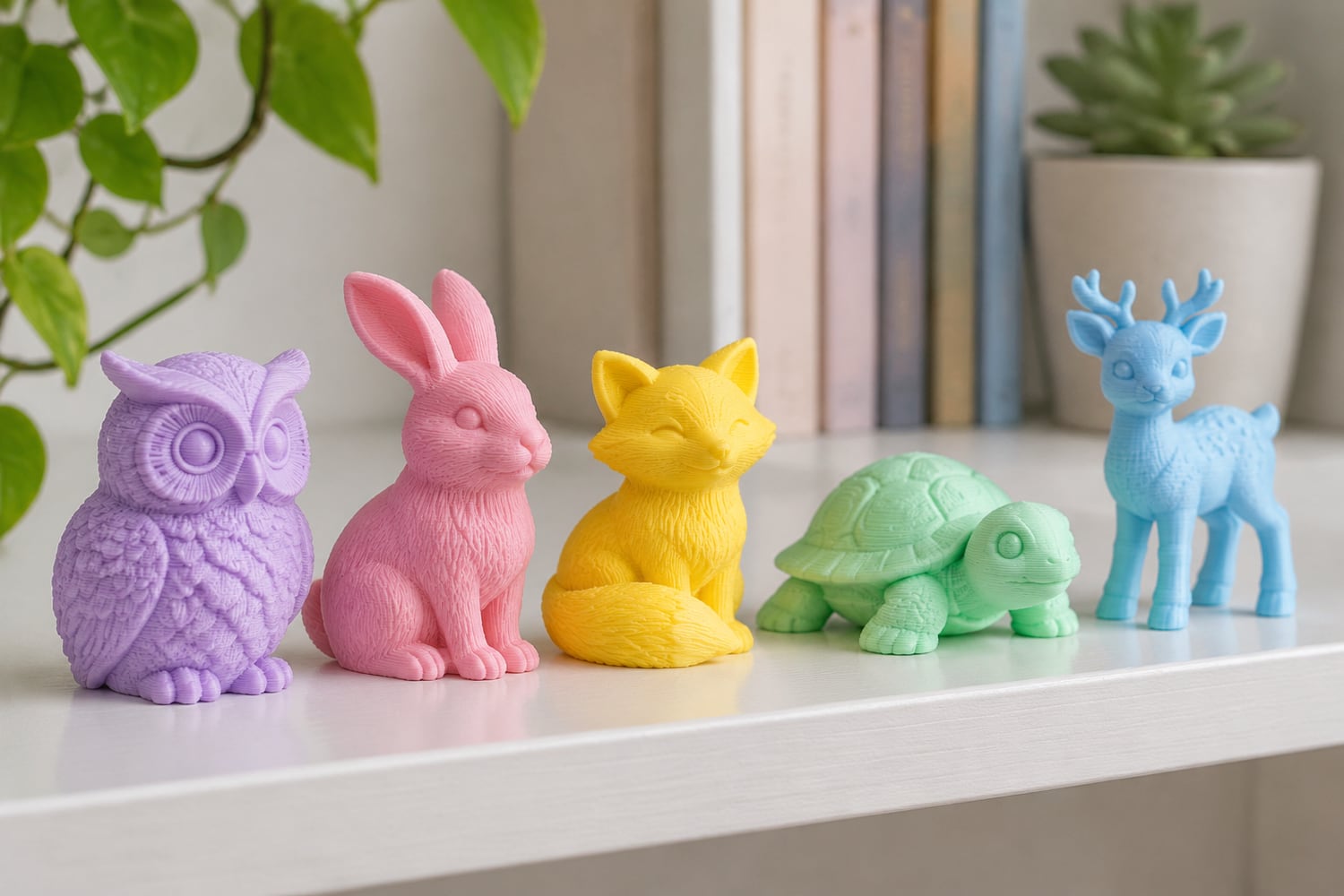
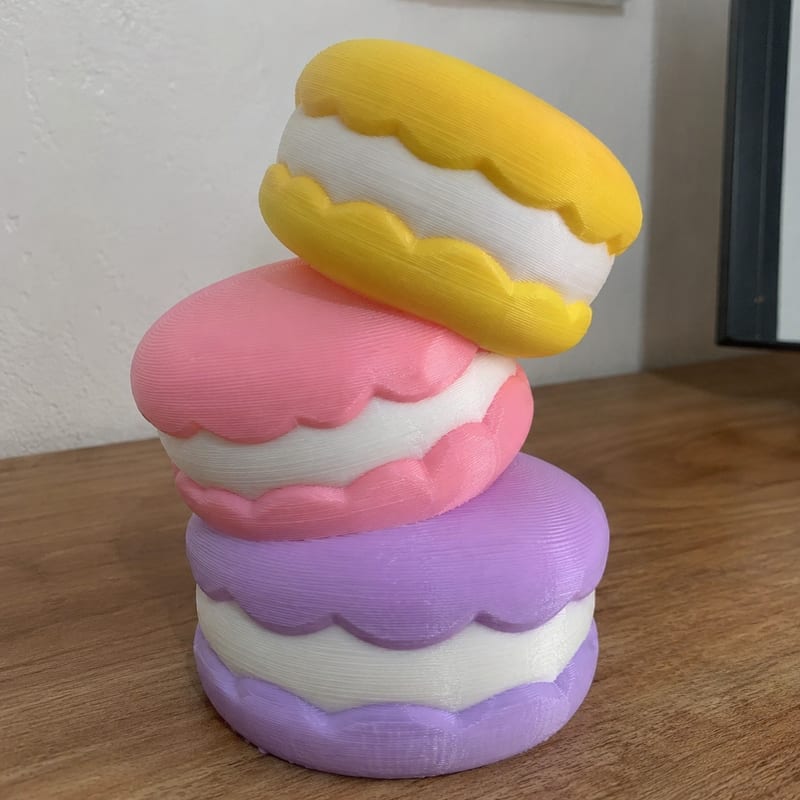
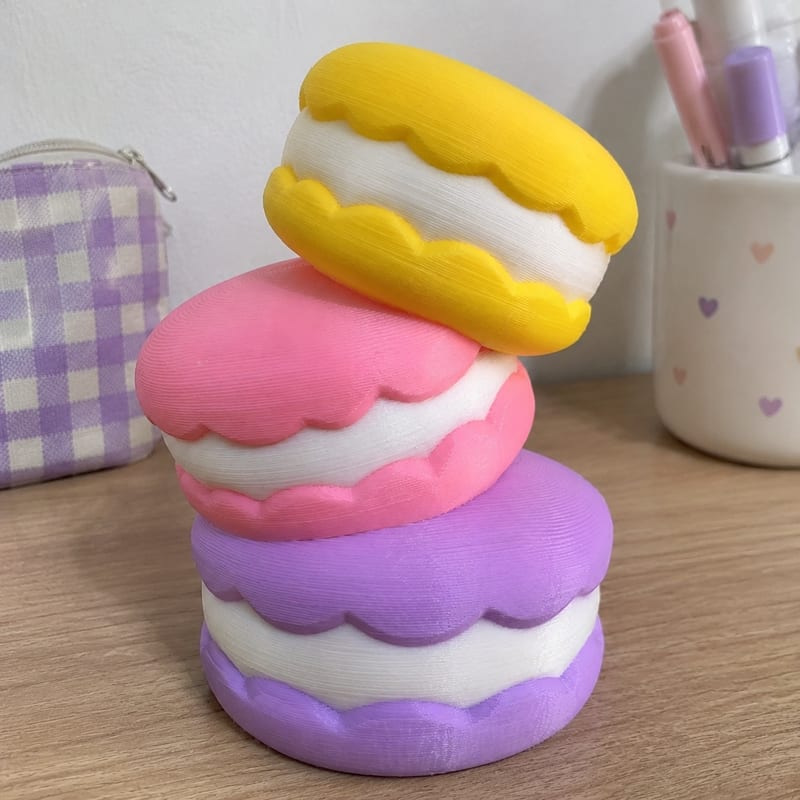
So for a macaron figurine on a bookshelf, a wall mask in the living room or a desk sculpture, PLA is not a cheap compromise. It's the material that shows off the design best.
Heat: sunny windows, cars and hot rooms
Heat is where the two differ most, and where PLA gets people into trouble.
Published figures vary a little. Spoolhound puts PLA's limit at about 60 °C (140 °F) and PETG's at about 80 °C (176 °F) (Spoolhound). Other guides say PLA softens closer to 55 °C (131 °F) (JLC3DP). The honest answer is a range: PLA starts to soften somewhere around 55 to 60 °C, and PETG holds out roughly 20 degrees Celsius longer.
Room temperature is nowhere near either limit. The problem spots are places that trap sun and heat:
- Car dashboards and rear shelves. A black PLA part on a sunny dashboard can deform in a single afternoon (Spoolhound).
- Windowsills behind glass in direct afternoon sun, especially dark colors.
- Next to radiators, heaters, ovens or hot lamps.
If a piece is going anywhere on that list, ask for PETG. For the details on lamps, candles and other heat sources, see our guide on whether PLA will melt.
Water, humidity and bathrooms
PLA slowly gets more brittle with age, sunlight and humidity, while PETG resists water and most household chemicals (UGEE). That makes PETG the stronger pick for:
- Toothbrush holders and razor stands that sit in splash zones or on shower shelves
- Soap and sponge holders by the sink
- Planters that get watered often
- Anything that will be wiped down regularly with cleaning sprays
A PLA piece on a dry vanity, away from the shower, is a gentler job than one sitting in a puddle every morning. Still, if you're eyeing a toothbrush holder or a razor stand, ask the maker whether it's printed in PETG.
Two things neither material fixes on its own. First, printed objects are not automatically watertight, because water can seep between layers; our post on whether a 3D printed vase can hold water explains the options. Second, layer lines can hold grime, so bathroom pieces need regular cleaning. Our cleaning guide covers safe methods.
Sun and outdoor decor
PLA yellows after months of UV exposure, and as short-term outdoor decor in mild climates it lasts months, not years (Spoolhound). Outdoors it can also turn chalky and slowly break down in moisture (UGEE). The same Spoolhound guide puts PETG at roughly 1 to 2 years for permanent outdoor use, and notes that a UV clear coat helps PLA a little but does nothing for heat softening.
Sources don't fully agree on PETG and sunlight. Some guides describe it as handling long sun exposure well. JLC3DP says PETG resists UV only moderately, recommends ASA for long sun exposure, and stresses that no material has a fixed outdoor lifespan: it depends on UV, temperature, the exact formulation, the shape, the print quality and any load on the part (JLC3DP).
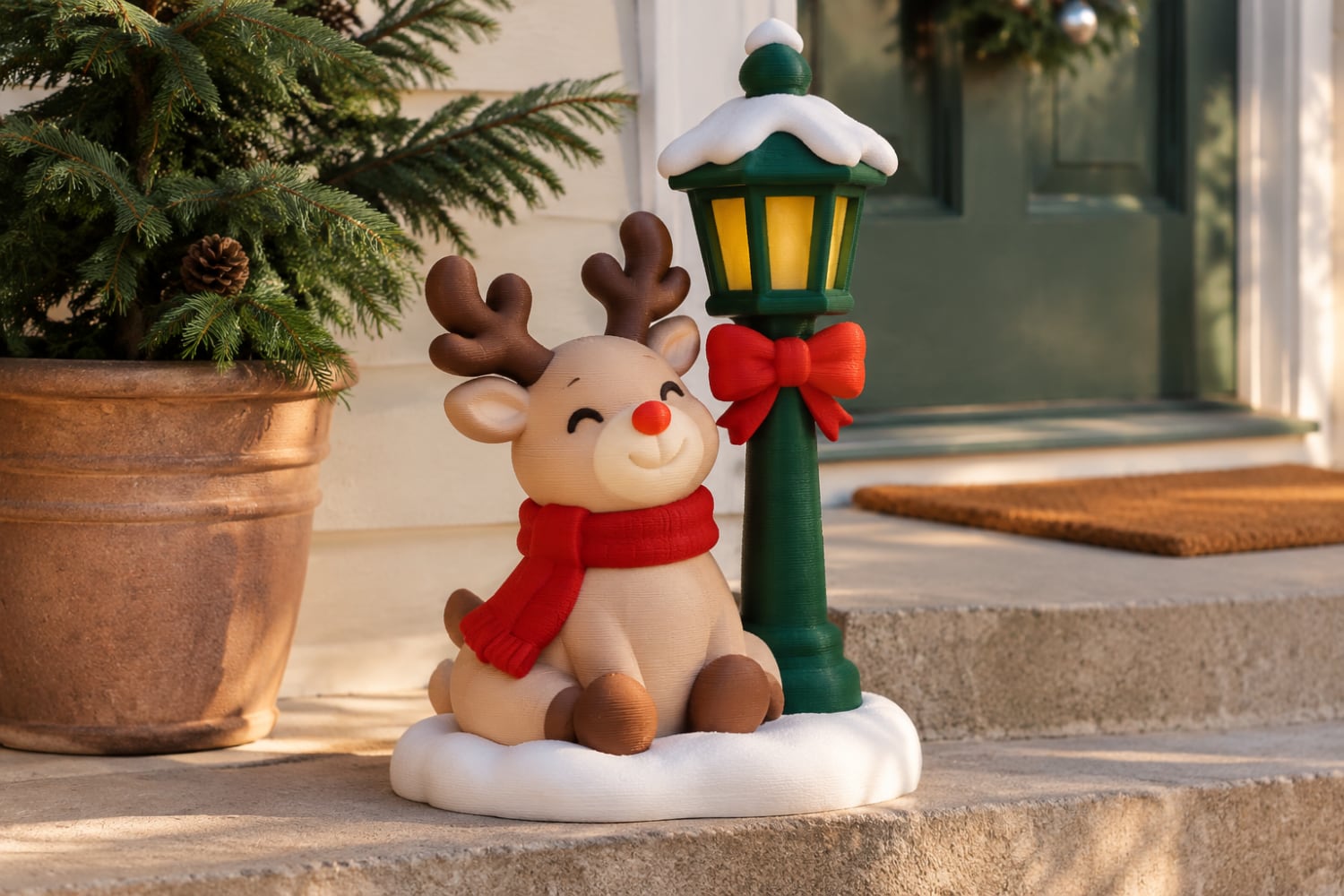
In practice:
- A few weeks of holiday porch decor: PLA can be fine, especially under a covered porch. PETG is safer.
- A full season in the yard: PETG.
- Year-round in full sun: ask about ASA.
Our post on using PLA outside in winter goes deeper on cold-weather decor, and how long 3D printed items last covers care that stretches a piece's life.
Toughness: keychains, hooks and things that get knocked around
The usual line is that PETG is stronger. Formfutura describes it as tougher and more flexible than PLA, which suits functional parts (Formfutura). Toughness here means it bends a bit before it breaks, where stiff PLA tends to snap.
That's true of well-printed PETG. It's not a guarantee. In one user's test on the Bambu Lab forum, PETG clips printed on stock settings were brittle and split along the layers, while PLA clips bent further before breaking; replies pointed out that PETG needs good calibration to reach its strength (Bambu Lab forum). PETG also absorbs moisture from the air faster than PLA while it's still on the spool, and damp filament can print with bubbles or weak layers (Eibos).
The takeaway for buyers: material matters, but so does the maker. A well-tuned PLA print can outlast a poorly tuned PETG one.
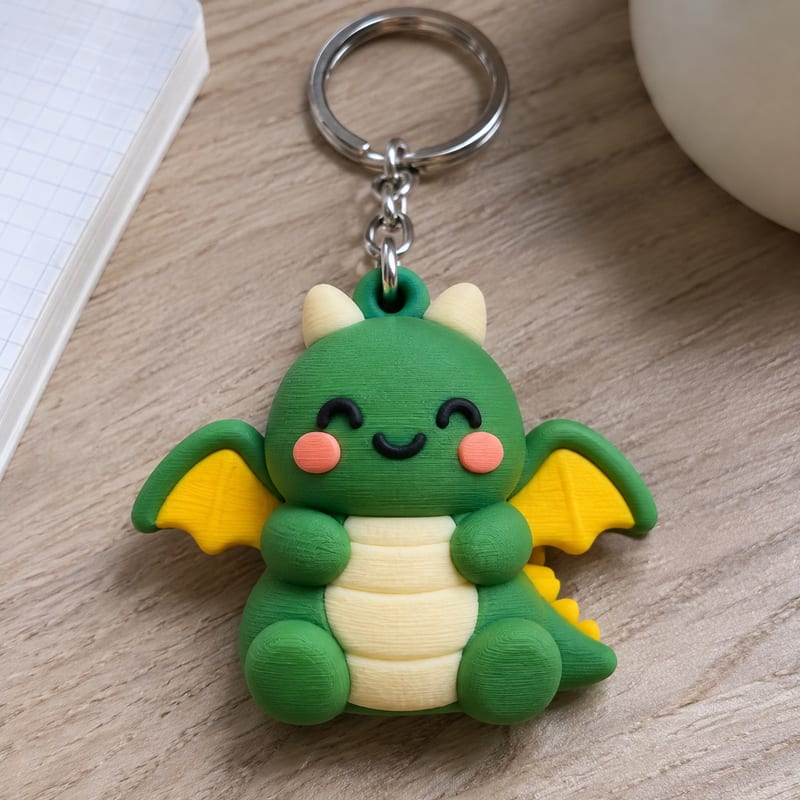
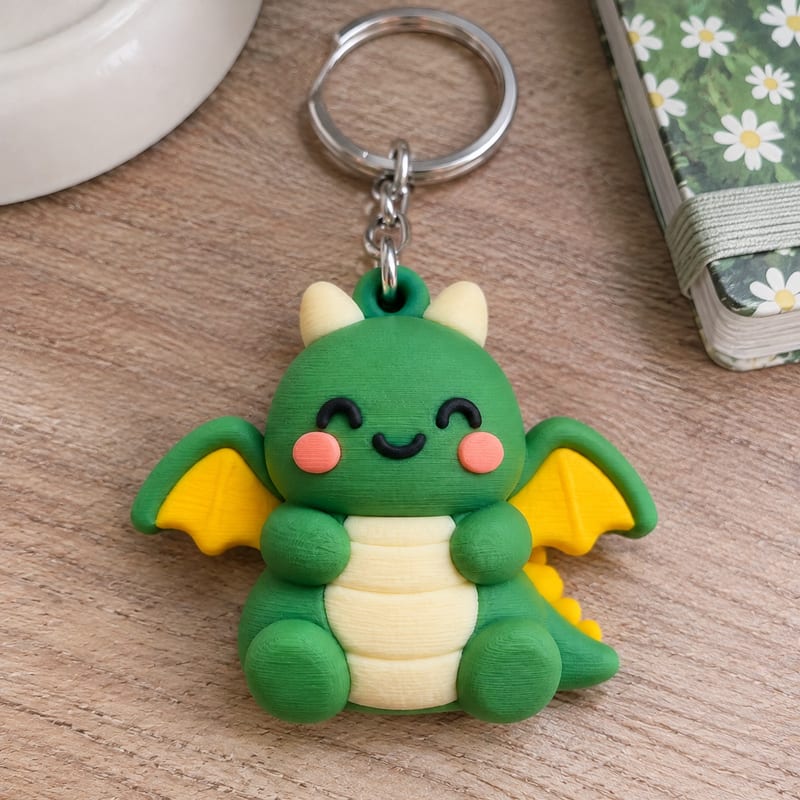
For keychains, bag charms, shoe horns and hooks, PETG is a sensible ask if the piece will be dropped, flexed or tugged daily. Whatever the material, look at the weak point. On a keychain, that's the loop the ring passes through; it should look thick and solid. Small charms are accessories, not toys, and aren't suitable for children under 12. Our toy safety guide explains why.
What about PLA+ and resin?
PLA+
PLA+ (sometimes called PLA Pro) is PLA with additives that make it less brittle. It's closer to PETG in toughness, but not in heat or weather resistance; most PLA+ still softens at about 53 to 55 °C, or roughly 127 to 131 °F (UGEE). Treat it as a tougher PLA for indoor use, not a substitute for PETG in a car or on a porch.
Resin
Resin printing works differently: a liquid is hardened by light instead of melted filament being laid down. It gives almost invisible layer lines and very fine detail, and suits small pieces where detail matters most (Craftly3D). Resin is generally the better choice for detailed miniatures, while PLA is the cheaper option for larger decor and everyday objects (PrintNests3D). Tabletop gamers buying tiny figures will often see resin; a planter or headphone stand will almost always be filament.
Which material for which room: a quick table
| Where it goes | Usual best pick | Why |
|---|---|---|
| Desk or home office | PLA | Room temperature, dry, crisp detail and color |
| Display shelf or wall | PLA | Best surface and detail; easiest to paint |
| Bathroom counter near sink or shower | PETG | Handles water, steam and cleaning sprays better |
| Kitchen counter (not touching food) | PETG near the sink, PLA elsewhere | Water and heat matter; no printed piece is food-safe by default |
| Planter that gets watered | PETG | Regular moisture and drips |
| Car, sunny windowsill, near a heater | PETG | PLA softens around 55 to 60 °C |
| Porch or yard, one season | PETG | PLA lasts months; PETG lasts longer |
| Outdoors year-round in full sun | ASA | Made for UV exposure |
| Keychain or bag charm | PETG or PLA+ | Tougher when dropped and flexed |
| Tiny detailed miniature | Resin | Finest detail, nearly invisible layers |
A note on the kitchen row: printed PLA and PETG are not food-safe by default. Layer lines create tiny grooves that can hold bacteria and are hard to clean. Holders for brushes, paper towels and salt shakers are fine; plates, cups and anything that touches food directly need more care. Our guide to whether 3D printed items are food safe explains what to look for.
What to ask a maker before you order
Most makers are happy to answer these, and some will print in a different material on request.
- Which material is this printed in? If the listing doesn't say, ask.
- Here's where it will live. Is that material right for it? Mention steam, sun, a car or outdoor use specifically.
- Can you print it in PETG instead? Expect the color options to be narrower.
- Is it coated or sealed? A coating changes care and may help a little with UV, but it won't stop PLA softening in heat.
- How should I clean it? Hot water and harsh cleaners affect PLA and PETG differently.
- For outdoor pieces, do you offer ASA? Worth asking for anything meant to stay outside all year.
On Filagora, you can message the maker from any listing before ordering. If you're shopping for damp rooms, browse Kitchen & Bath and ask which material each piece uses; for shelves and desks, PLA will serve you well.
Frequently asked questions
Is PETG stronger than PLA?
Well-printed PETG is tougher and more flexible, so it bends before it breaks where PLA tends to snap. A poorly tuned PETG print can be weaker than PLA, so print quality matters as much as the material.
Is PLA or PETG better for a bathroom?
PETG is the better choice for splash zones, shower shelves and sink edges because it resists water and most household chemicals. PLA can be fine on a dry counter away from the shower, but it slowly gets brittle with humidity.
Can I leave a PLA item in my car?
It's not a good idea. PLA starts to soften at about 55 to 60 °C (131 to 140 °F), and a dark PLA part on a sunny dashboard can deform in an afternoon; PETG handles about 80 °C.
What is PLA+?
PLA+ is PLA with additives that make it tougher and less brittle. It still softens at about 53 to 55 °C, so it's an indoor upgrade, not a replacement for PETG in heat or outdoors.
Is PETG food safe?
Printed PETG, like printed PLA, is not food-safe by default. The layer lines create small grooves that can trap bacteria, so keep printed pieces for holding utensils and containers rather than food itself.
Pieces from this guide
Printed to order by makers on Filagora.