Are 3D Printed Coasters Heat Resistant? Hot Mugs and Care Tips
Most 3D printed coasters handle a hot mug of coffee fine. Here's when PLA can warp, why your mug's base matters, PLA vs PETG, condensation and simple care.
By the Filagora team · November 22, 2026 · 9 min read
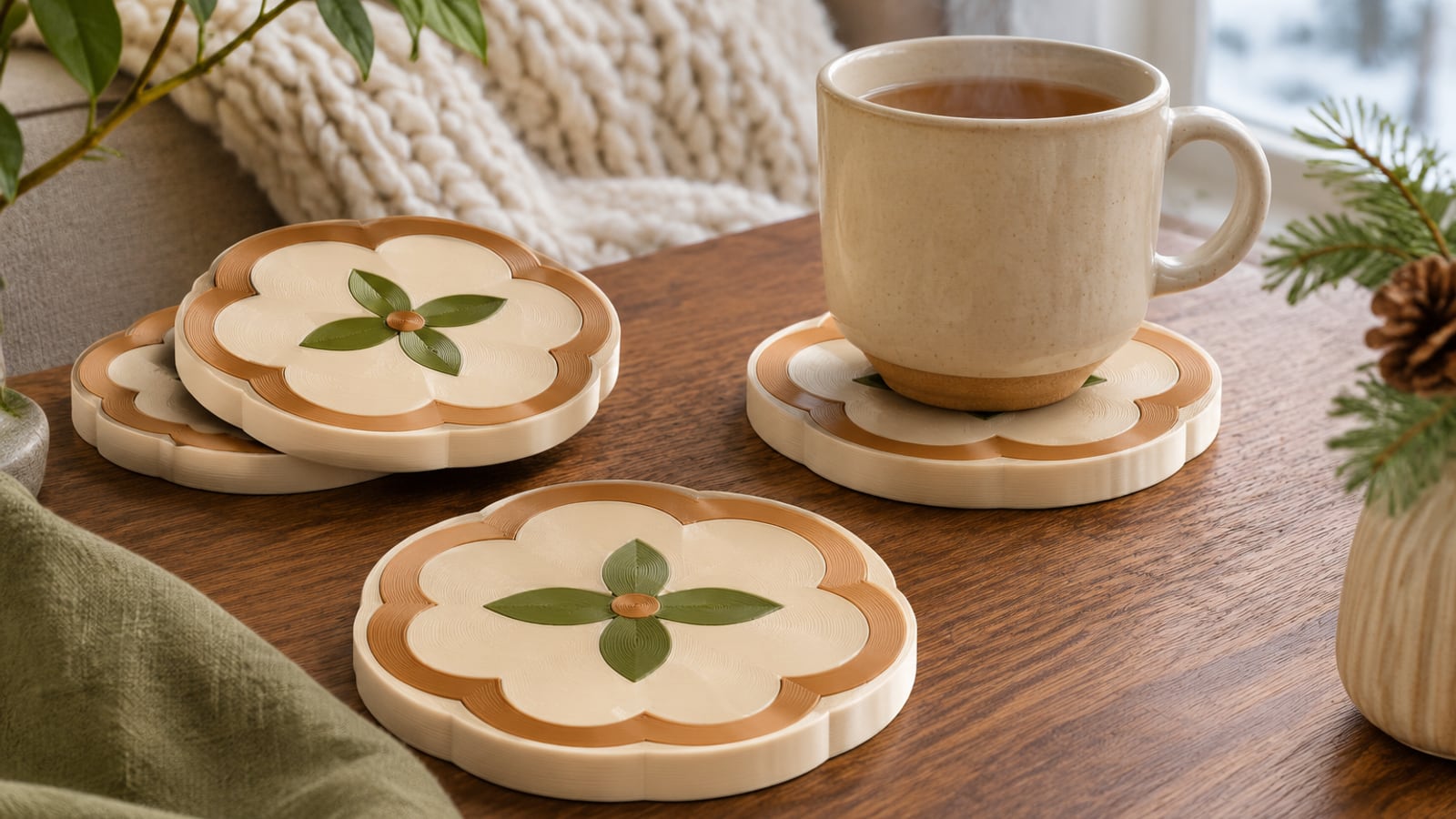
Yes, most 3D printed coasters handle an everyday mug of coffee or tea just fine. The exceptions are specific. A coaster printed in PLA can soften and warp under a very hot, flat-bottomed cup, especially if that cup sits there for a long time, and almost any printed coaster can be ruined by a dishwasher. The shape of your mug and the material of the coaster matter more than how hot your drink is.
Below: what heat actually does to printed plastic, which mugs are a good match, what to ask a seller before you buy, and how to keep a set flat and clean through the hot-drink months.
The short answer: yes for most mugs, with a few exceptions
A printed coaster is a thin plastic disc. Its job is to keep water rings and heat off your table, and under a typical ceramic mug it does that well.
Where things go wrong:
- PLA under very hot, flat-bottomed cups. PLA starts to soften at about 60 °C, so a very hot mug can warp it over time (Siraya Tech).
- Hot cups on a stack of coasters. The heat gets trapped in the pile instead of escaping (Latencot).
- The dishwasher. One hot cycle can do more damage than months of tea. More on that below.
- A sunny windowsill. PLA won't melt in the sun, but it can deform within a few hours in hot sun (3DSolved).
The problem does happen. Latencot reports a maker who found a hot cup of coffee starting to warp a PLA coaster, and points to an r/3Dprinting thread where someone asked about heat-resistant sealants for PLA coasters (Latencot). It is real, just narrower than people fear.
What heat does to PLA: it softens, it doesn't melt
PLA is the most common plastic for printed home goods. At drink temperatures it doesn't turn liquid. What happens is softening: as it passes about 60 °C it loses stiffness, and if weight and heat sit on it long enough, it can bend and keep that new shape once it cools (Siraya Tech). 3D Printerly describes PLA as especially sensitive to heat, with warping and bending as the usual results (3D Printerly).
Tea made with boiling water starts well above that softening point, which sounds alarming. But the coaster never touches the drink. It touches the bottom of the mug, and how much heat reaches it depends mostly on that mug. If you want the wider picture of PLA near candles, lamps and radiators, see Will PLA Melt? 3D Printed Decor Near Lights, Candles and Heat.
Your mug matters more than your drink
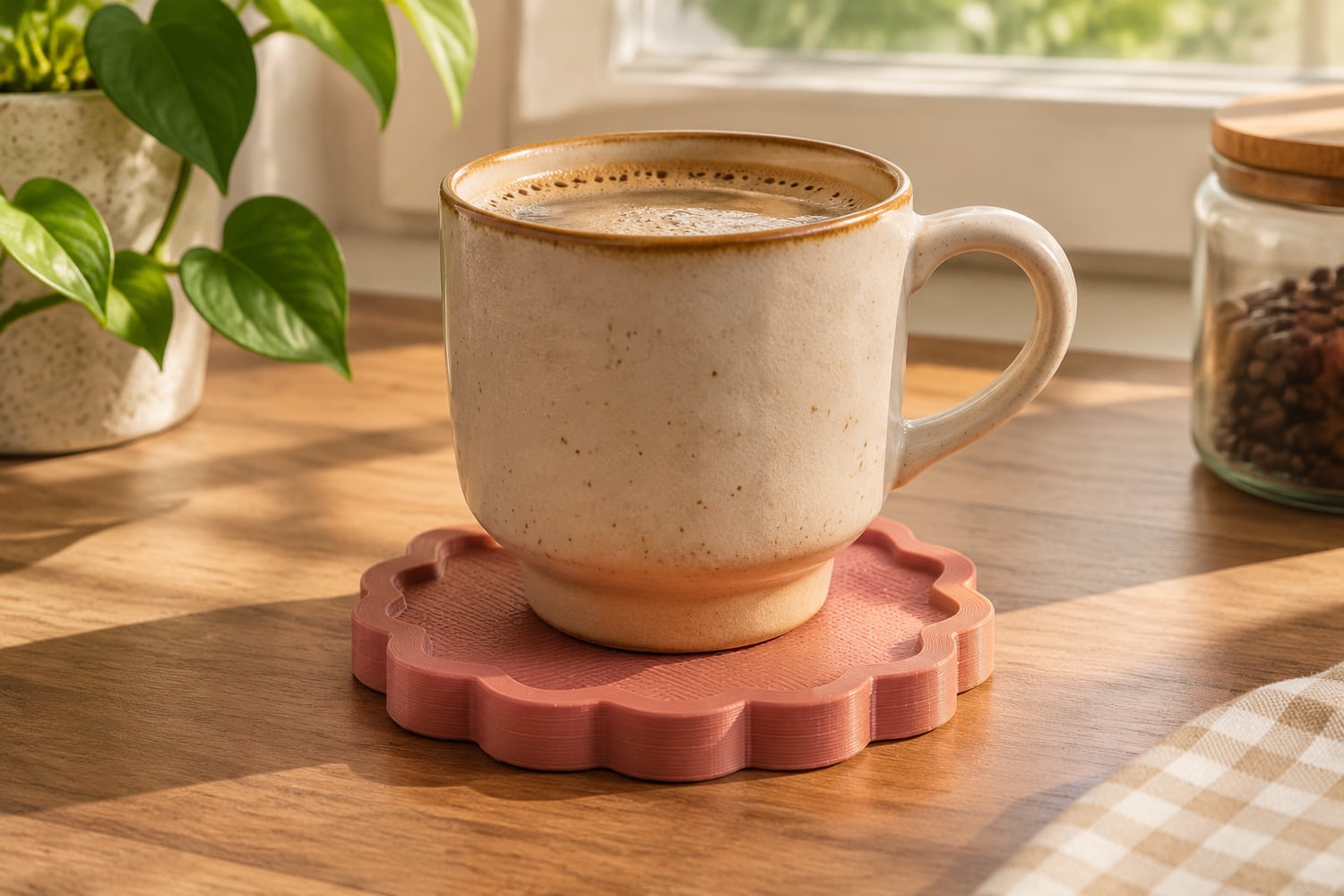
This is the most useful point, and most guides skip it. A ceramic mug with a foot ring puts very little heat into whatever is under it, while a flat-bottomed steel tumbler of near-boiling tea is a poor match for PLA (Latencot).
A foot ring is the raised rim on the base of many ceramic mugs. Only that thin ring touches the coaster, and there is an air gap under the rest of the base. A flat metal bottom touches the coaster across its whole surface, and metal passes heat along quickly. Same coffee, very different load on the plastic.
Good matches for a printed coaster
- Ceramic or stoneware mugs with a raised foot ring
- Stemmed wine glasses
- Cold glasses, cans and bottles (here moisture is the issue, not heat)
Poor matches for a PLA coaster
- Flat-bottomed metal tumblers or camp mugs filled straight from the kettle
- Teapots, saucepans and casserole dishes (that is a trivet's job, not a coaster's)
- Any hot cup set on top of a stack of coasters
PLA vs PETG coasters: what to ask the maker
Siraya Tech says PETG holds up to about 80 °C without softening, takes knocks better than PLA, and is the better pick for daily hot drinks (Siraya Tech). Print3Dezy also notes that PLA can handle some casual hot use but may soften, and that several guides call PETG the stronger choice for hot mugs (Print3Dezy).
Treat that 80 °C figure as extra headroom, not a guarantee. PETG handles more heat than PLA, but it still has a ceiling, and a scorching flat metal base left on it for an hour is not a fair test of any thin plastic disc.
Two other materials show up in coaster listings. TPU is flexible and makes non-slip coasters that are kind to furniture, and resin is better suited to display pieces (Siraya Tech).
| Material | Heat | Best for | Watch out for |
|---|---|---|---|
| PLA | Starts to soften around 60 °C | Ceramic mugs with a foot ring, cold drinks, display | Hot flat metal bases, dishwasher, sunny sills |
| PETG | Holds up to about 80 °C per Siraya | Daily hot drinks, heavier use | Still not heatproof; dishwasher only a cautious maybe |
| TPU | Ask the maker | Non-slip, gentle on furniture | Ask about heat if you drink very hot |
| Resin | Ask the maker | Display coasters | Not the first pick for daily hot mugs |
For a deeper comparison of the two main plastics around the house, see PLA vs PETG: Which 3D Printed Material Suits Your Home?
Questions to ask before you buy
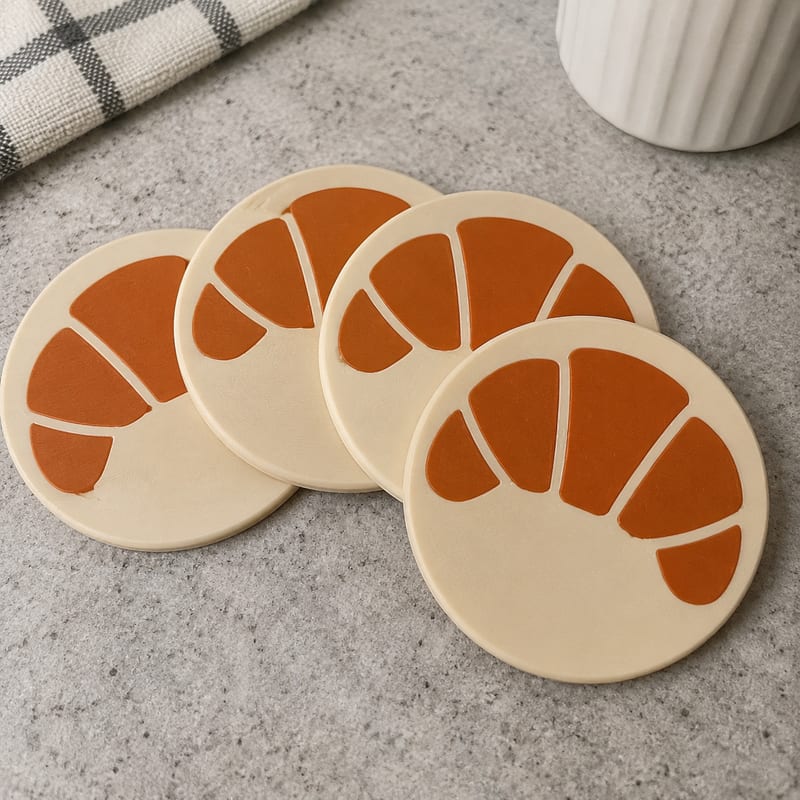
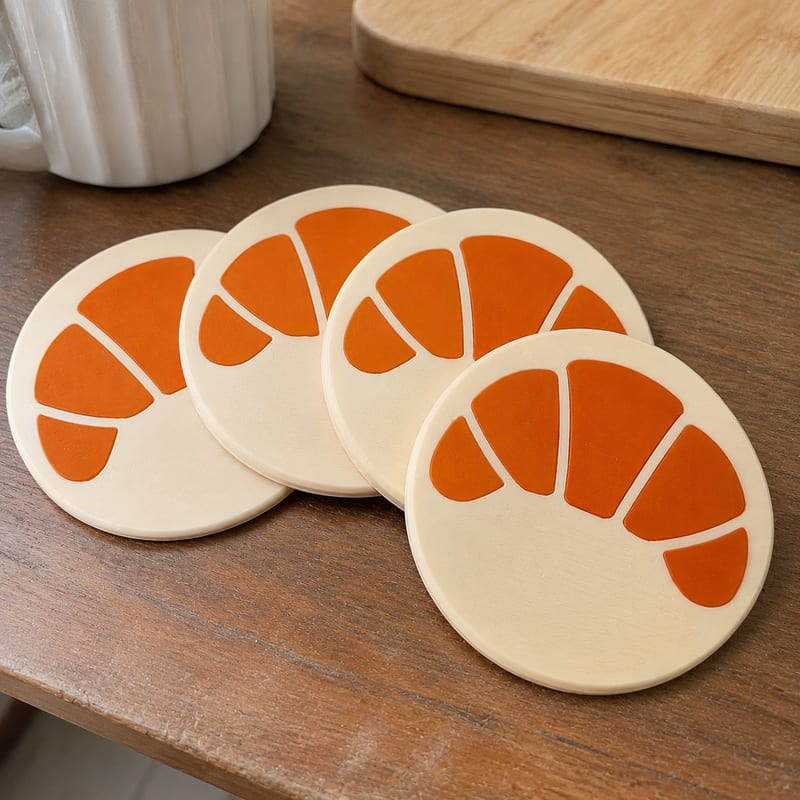
- What is it printed in? If the listing doesn't say, message the maker. If you're looking at a set like the Chubby Croissant Crescent Coaster Set of 4, check the material on the listing and match it to how you drink.
- What exactly does "heat resistant" mean here? Printie advises makers to be careful with heat-resistance claims (Printie). A seller who tells you the material and how to use it is more useful than one who promises "heatproof."
- What's on the underside? Printie also warns against scratchy bottoms. A smooth base, a soft pad or a TPU layer is easier on a table.
- Is it meant for daily use or display? Some decorative coasters are made to look good on a shelf more than to sit under a hot mug every morning.
Cold drinks and condensation: water-resistant isn't waterproof
Printed coasters are usually not waterproof in the way buyers mean the word, and a good design manages moisture rather than promising to keep it out completely (Printie). All3DP makes the same point about printed parts in general: they are usually not waterproof without extra work. It also separates two terms: waterproof means water can't get in, and watertight means water can't get in or out (All3DP).
In practice, a sweating glass of iced water leaves a puddle on top of the coaster, and some of it can sit in the fine layer lines. That is fine for a coaster. Its job is to catch the water before your table does. Just wipe it after use and let it dry instead of leaving it damp under the next glass.
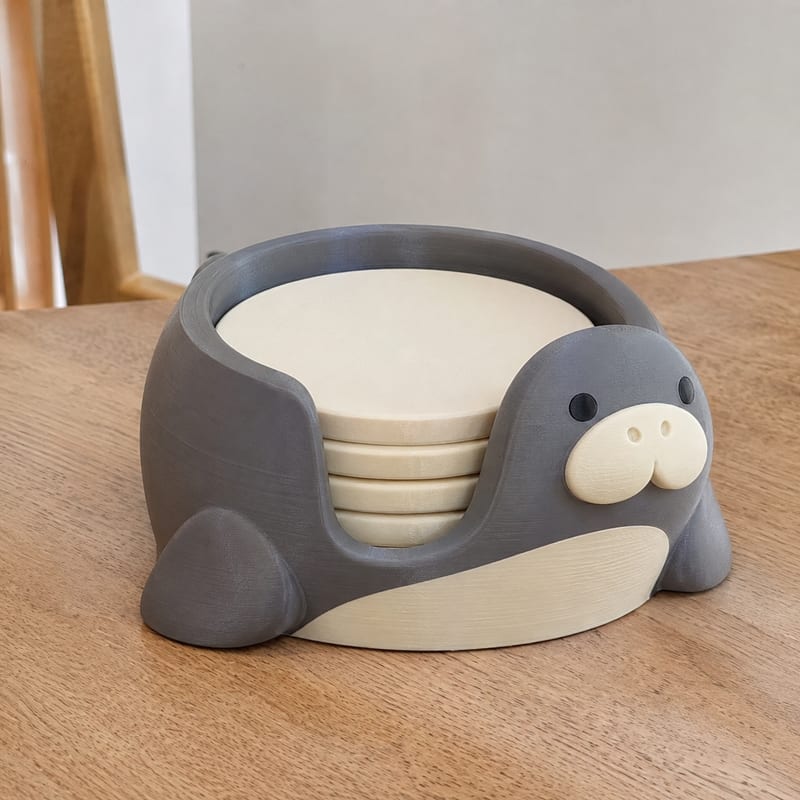
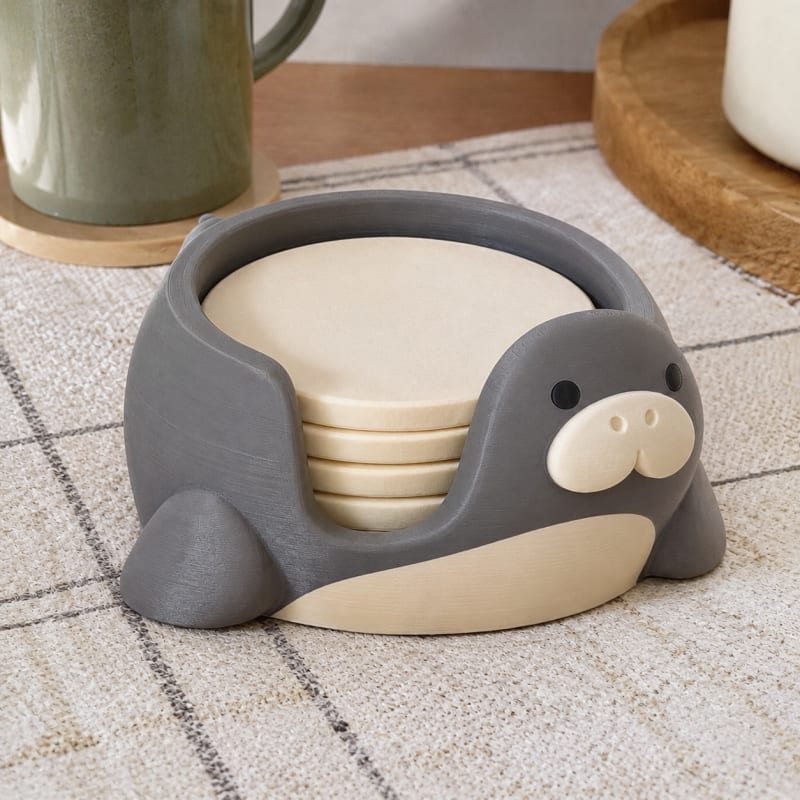
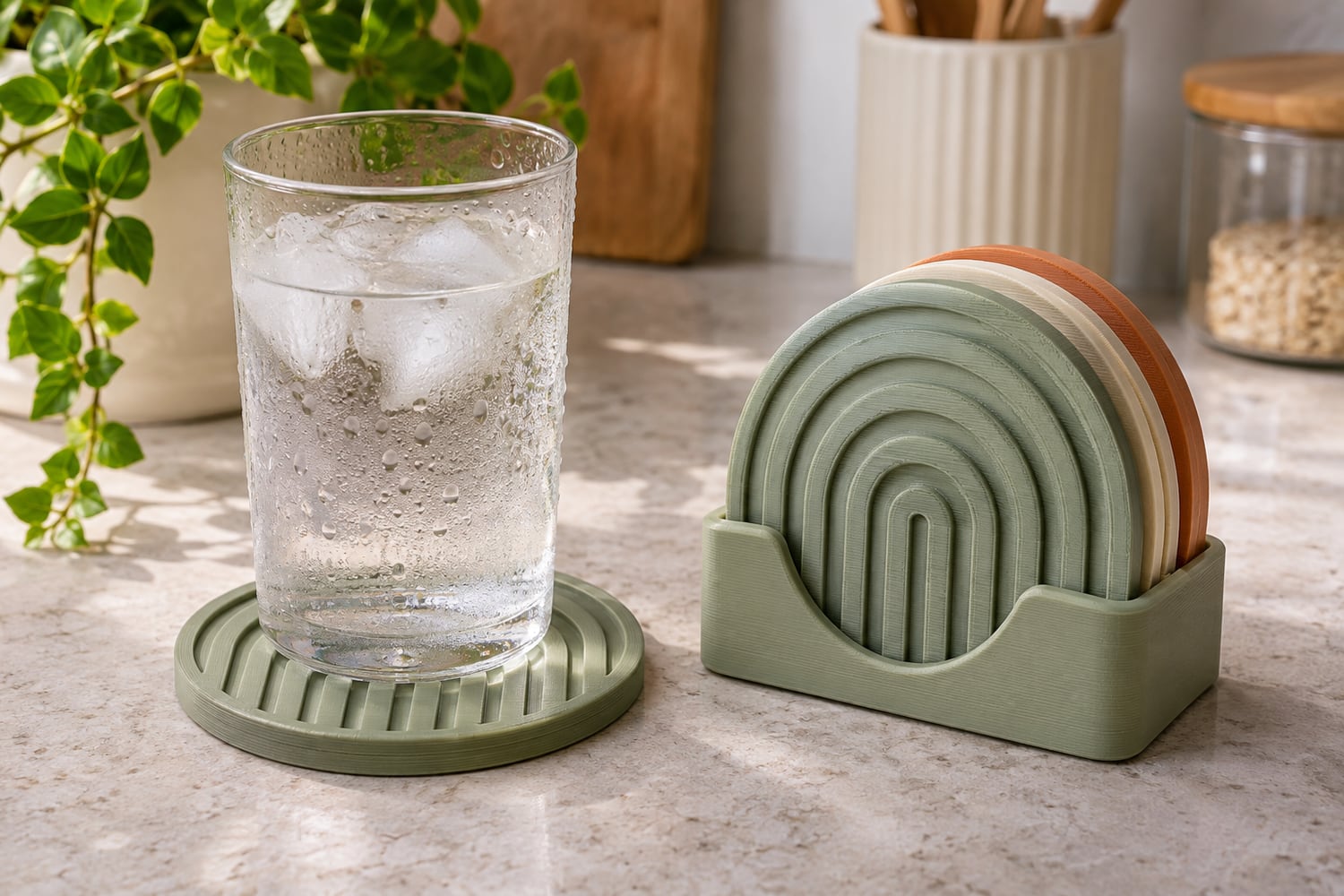
Drying matters more than people expect. Coasters stacked wet in a pile on the counter stay wet. Standing them upright in a holder, like the Plump Elephant Seal Coaster Holder, lets air reach both sides and keeps them off a wet countertop.
Will a printed coaster protect your table?
For most tables, yes. Heat damage to furniture is mostly limited to really hot vessels on finished wood (Latencot). Day to day, the bigger threats are water rings from cold glasses and scratches from the coaster itself.
A few practical checks:
- Run a finger over the underside. Any sharp edge or stray bit of plastic can scratch a finish. Printie specifically flags scratchy bottoms as something makers should avoid (Printie).
- Look for non-slip feet or a TPU base if you have a glossy or delicate tabletop.
- Don't use a coaster as a trivet. A pot, a baking dish or a slow cooker needs a proper heat mat.
Care: hand wash only, no dishwasher, keep out of strong sun
Printed coasters need very little care, but the few rules are firm.
- Hand wash in lukewarm water with mild soap and a soft cloth. Our guide on how to clean 3D printed items covers brushes and stubborn grime.
- Skip the dishwasher. A cycle at 60 °C or more does in minutes what a hundred cups of tea wouldn't (Latencot). PLA should not go in at all, and PETG is only a cautious maybe for items that don't matter much, because damage can happen during the wash, the rinse or the heated dry (FilamentSpecs).
- Dry upright or flat, not stacked wet.
- Keep them off sunny windowsills. Besides the risk of deforming in hot sun, UV fades PLA's color fairly quickly (3DSolved).
- Don't serve food on them. Printed PLA and PETG are not food-safe by default, since layer lines can hold bacteria. A coaster is for cups, not for cookies or cheese. More in Are 3D Printed Items Food Safe?
Hot drinks season: cocoa, mulled wine and the holiday table
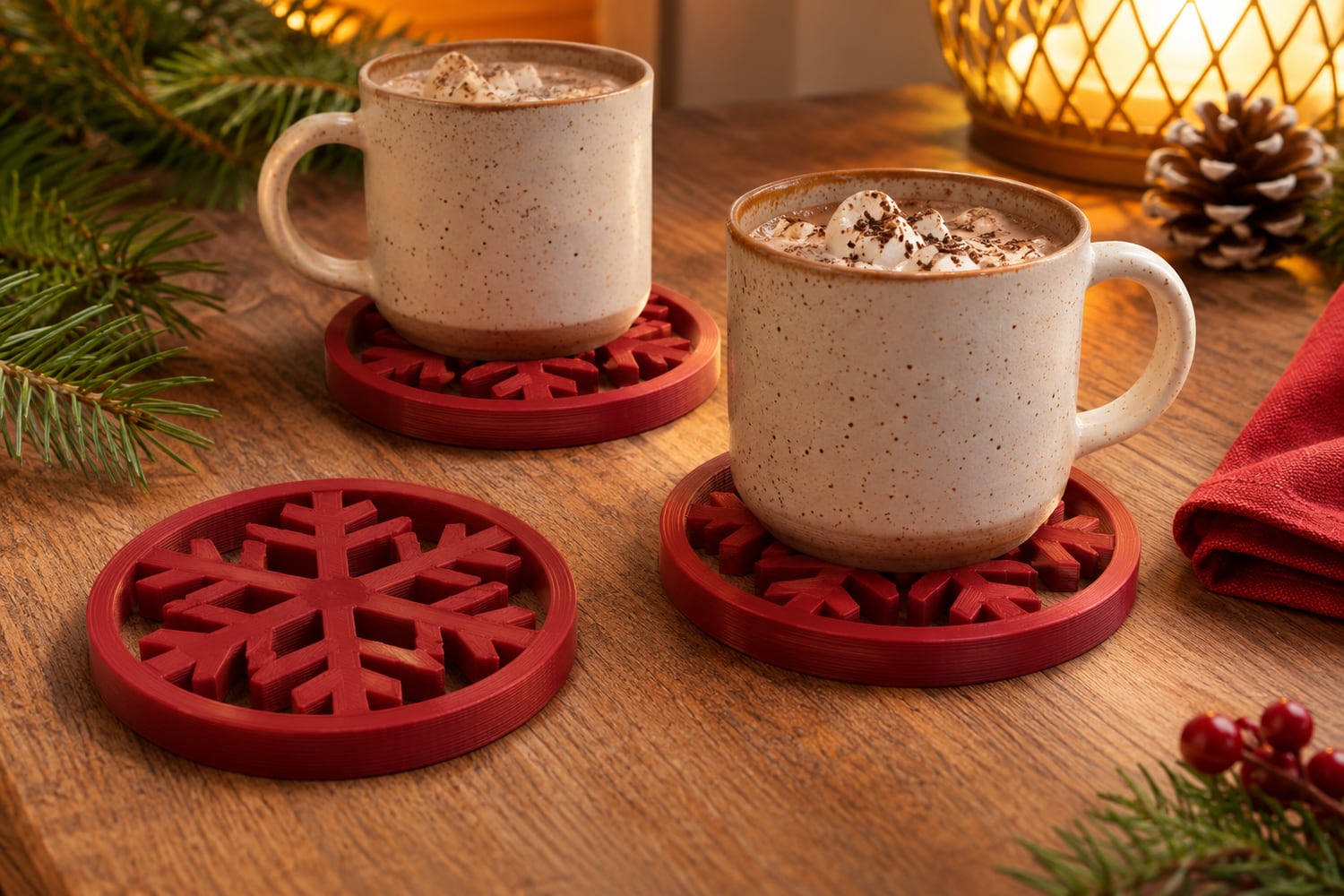
November and December bring a lot of hot mugs, and the same rules apply. Cocoa or coffee in a ceramic mug with a foot ring is the easy case. Mulled wine or cider ladled into a mug is the same story: the base of the mug matters more than the drink.
A few holiday-specific habits help:
- Put out one coaster per guest instead of a stack in the middle of the table, so nobody parks a hot mug on a pile.
- Keep spare coasters away from the fireplace, a radiator shelf or a sunny window. Extra heat from below or behind adds up for PLA.
- Keep the serving pot on a trivet, not on a coaster.
Gifting a coaster set
Coasters make a practical gift: almost every household uses them daily, and a printed set can match a hobby, a color scheme or a season in a way plain cork can't. A few ways to make the gift better:
- Add a holder so the set doesn't drift around the counter and dries properly between uses.
- Tuck in a short care note: hand wash, no dishwasher, keep off sunny windowsills, and a mug with a foot ring is the best match.
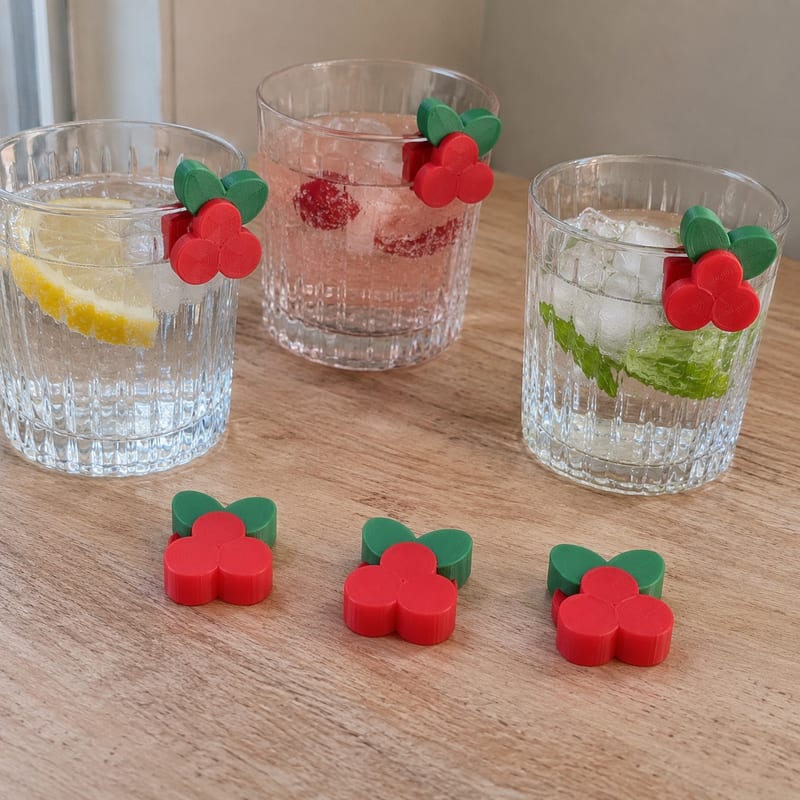
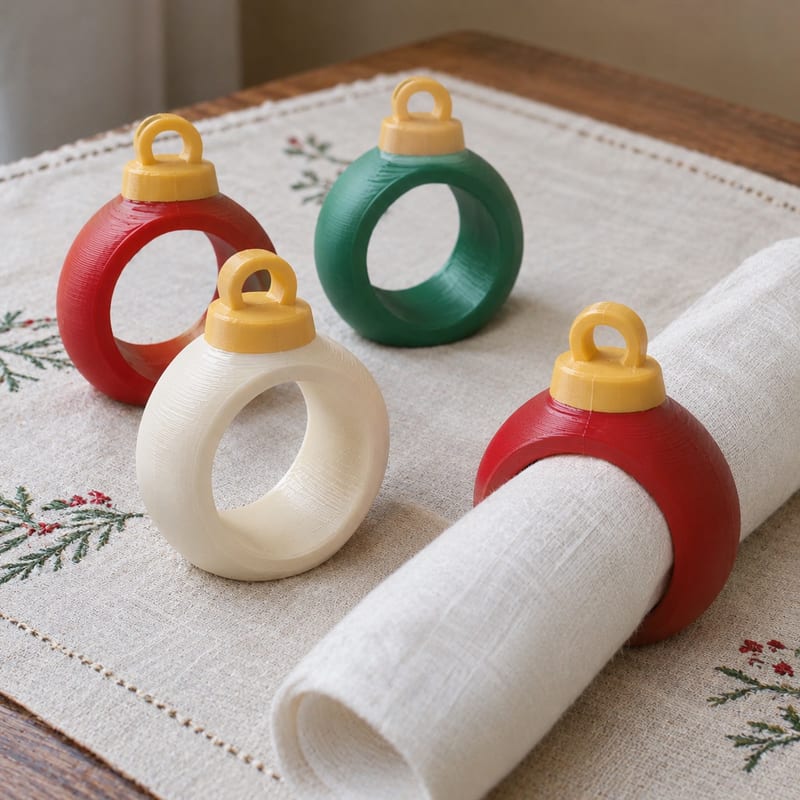
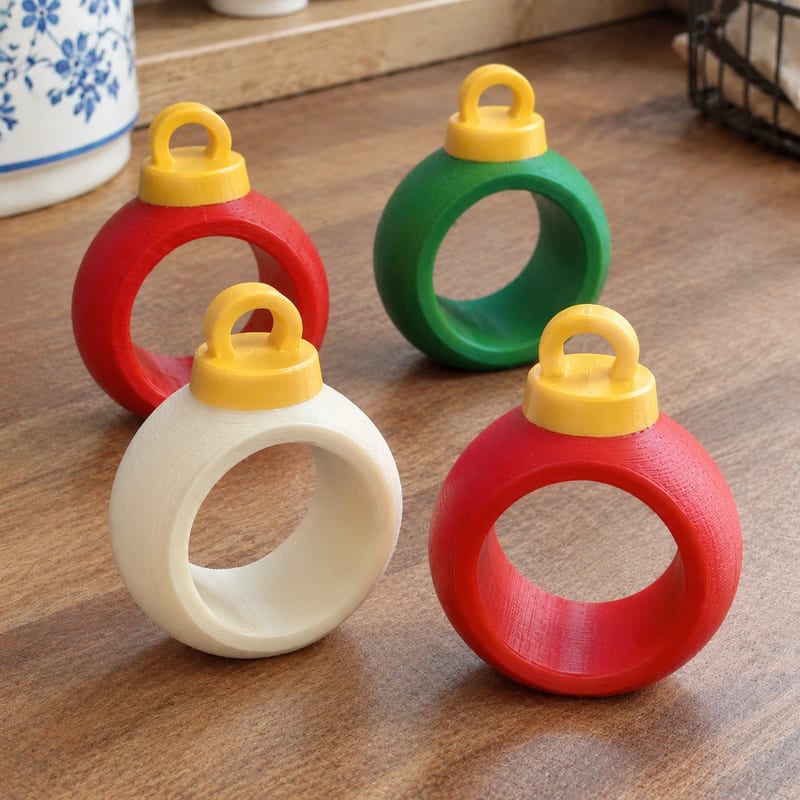
- Build a small table set for a holiday host with matching drink markers or napkin rings.
- Match the material to the person. For someone who drinks tea straight from the kettle in a metal tumbler, ask for PETG or a different style of coaster.
Filagora makers print coasters, holders and holiday table pieces to order, and most will tell you exactly which filament they use if you ask before buying.
Frequently asked questions
Can PLA coasters handle hot coffee?
Usually, yes, especially under a ceramic mug with a raised foot ring. PLA starts to soften around 60 °C, so a flat metal cup of near-boiling coffee left on it for a long time can slowly warp it.
Are 3D printed coasters waterproof?
Usually not in the full sense of the word. They catch condensation from cold glasses well, but water can sit in the layer lines, so wipe them after use and let them dry.
Are 3D printed coasters dishwasher safe?
No for PLA, and PETG is at best a cautious maybe. A hot dishwasher cycle can warp a coaster in minutes, so hand wash in lukewarm water instead.
Is PETG better than PLA for coasters?
For daily hot drinks, generally yes. PETG handles more heat and takes knocks better than PLA, but it is still not heatproof and shouldn't go in the dishwasher.
Do 3D printed coasters protect wood tables?
Yes, from water rings and most everyday heat. Check that the underside is smooth or padded so the coaster itself doesn't scratch the finish.
Pieces from this guide
Printed to order by makers on Filagora.