Are 3D Printed Items Food Safe? A Buyer's Guide for Kitchen Gifts
Which 3D printed kitchen pieces can touch food and which can't, how to wash them, and the questions to ask a seller before you buy or gift one this season.
By the Filagora team · November 9, 2026 · 8 min read
Most 3D printed items are not food safe as sold, even when the filament is labeled food safe. A food-safe material and a food-safe printed object are two different things. The plastic may be approved, but the finished piece adds layer lines that trap bacteria, colorants that were never tested for food, and possible traces from the printer itself. Even Craftcloud, a large print service, says it can't certify a final printed part as food grade.
That doesn't make 3D printed kitchen gifts a bad idea. It means you sort them by how they meet food:
- Never touches food (brush holders, recipe stands, bottle holders): fine.
- Brief contact with dry, solid, room-temperature food (cookie cutters): a gray zone with sensible limits.
- Holds food or drink, or gets hot (cups, plates, storage containers, anything for coffee): skip it unless the maker has sealed it properly, and even then, be cautious.
The rest of this guide explains why, and what to ask before you buy.
Why 3D printed items are tricky with food
Most printed home goods are made on FDM printers, which lay down melted plastic one thin layer at a time. That process creates three problems for food contact.
Layer lines hold food and bacteria
Run a fingernail across a printed piece and you'll feel tiny ridges. Those grooves are roughly 20 to 100 microns deep depending on layer height, and they collect food particles, moisture and bacteria. Snapmaker notes that these crevices can't be cleaned even by a good dishwasher cycle. Because FDM prints are porous, All3DP says printed parts are generally unsuitable for regular or long-term food use.
This is the main reason. Even with perfect plastic and a perfect printer, a cutter or cup that can't be fully cleaned will eventually grow things you don't want near your food.
Filament is more than plastic
PLA itself is considered low-risk, but a spool of filament also contains pigments, plasticizers, lubricants and other extrusion aids. A glitter, marble or silk-finish filament has more going on than a plain natural one. The base polymer may be cleared for food contact while the additives that give it color or shine are not.
The printer leaves its mark
Most stock desktop printers use brass nozzles. Creality describes the lead transfer risk as small but unacceptable for food contact, and worn nozzles can shed metal particles. Makers who print for food use usually switch to a stainless steel nozzle. Most decorative prints aren't made that way, and there's no reason they should be.
Is PLA food safe? Is PETG? The materials in plain English
Here's how the common materials stack up for kitchen use. Remember that each answer is about the material, not a finished print.
- PLA is the most common filament for home goods. The raw polymer is low-risk, but PLA softens at about 60°C (140°F). That rules out hot drinks, hot water and the dishwasher.
- PETG is the same family of plastic used in many drink bottles. The resin is authorized for food contact under US 21 CFR 177.1630 and EU 10/2011, but that covers the polymer only, and colorants or UV stabilizers in a given spool may have no food-contact clearance. PETG also handles washing better than PLA.
- ABS holds up to heat better. 3DPrinterly reports it is fairly resistant to dishwasher conditions, though it still has layer lines.
- Resin prints (smooth, highly detailed pieces like dice and miniatures) are a different process. Keep them away from food entirely; see the FAQ below.
Formlabs lists PLA, PP, co-polyester, PET, PETG, HIPS and nylon-6 among filament materials that can be food safe. Note the word "can."
Does anyone certify 3D printed items as food safe?
No regulator signs off on a printed object you buy from a maker.
- United States: The FDA doesn't certify or approve 3D printing materials as food safe. When a filament brand says "FDA compliant," it means the raw material meets food-contact rules. Creality puts it plainly: the FDA reviews materials and migration, not prints.
- European Union: EU 10/2011 sets rules for plastics that touch food. As with the FDA, compliance applies to the plastic, not to a hobby print made from it.
- United Kingdom: None of the guides we reviewed cover UK rules specifically. The practical position is the same: nobody inspects individual printed pieces, so safety comes down to the maker's materials and how you use the item.
What "food grade filament" means
It means the spool's ingredients meet food-contact rules before printing. It does not mean the object made from it is food safe, because printing adds the layer lines, the nozzle and the maker's handling. Treat "made with food-grade filament" as a good sign, not a guarantee.
Kitchen items that are fine: near food, not touching it
This is where 3D printed kitchen gifts shine, and it's the distinction most guides skip. If a piece never touches what you eat or drink, the food-safety question mostly goes away. You're left with ordinary care questions like heat and water.
Good examples:
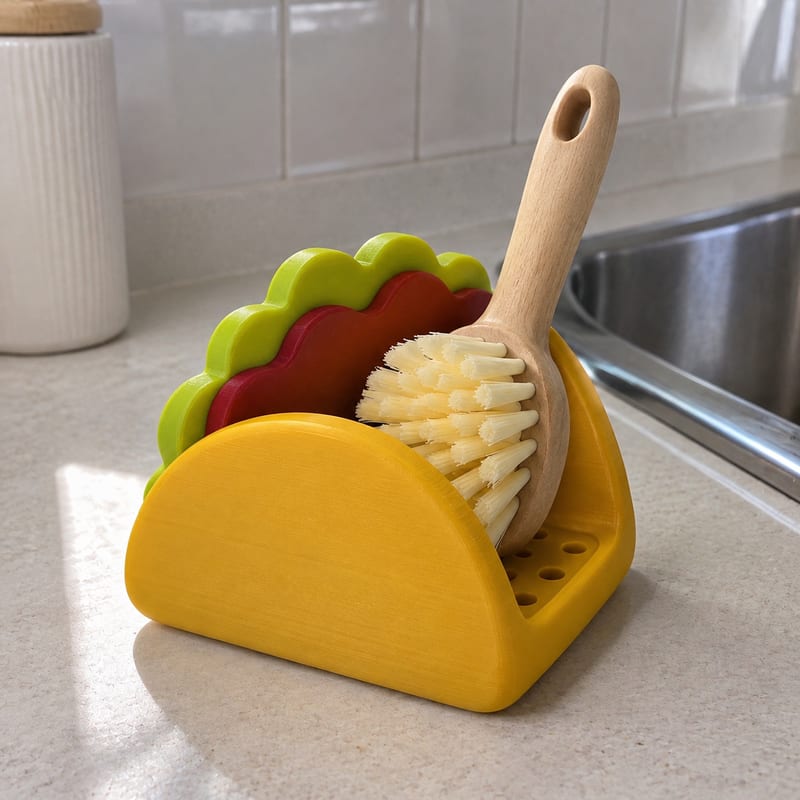
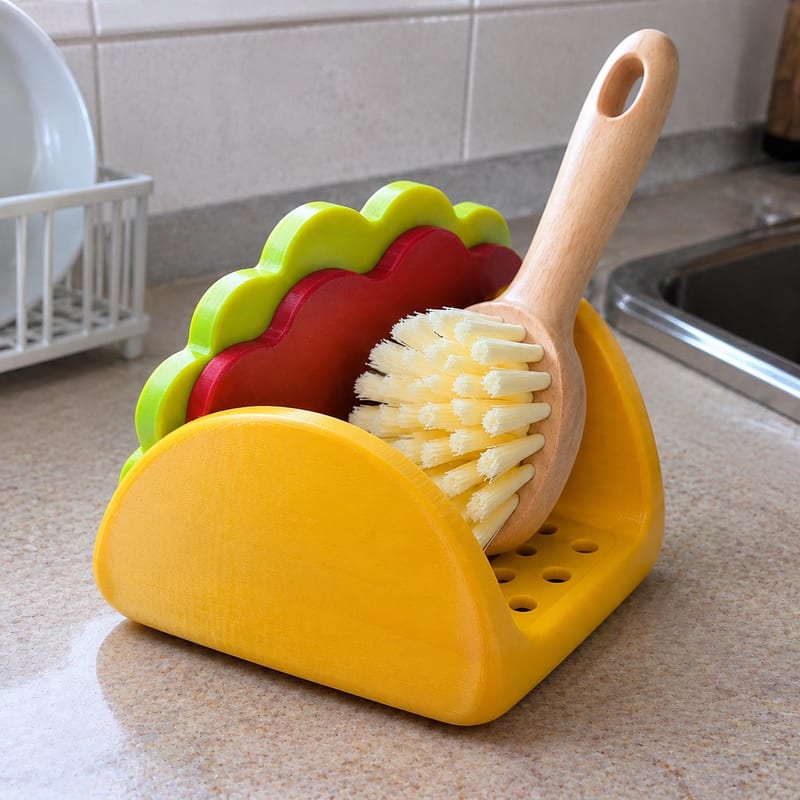
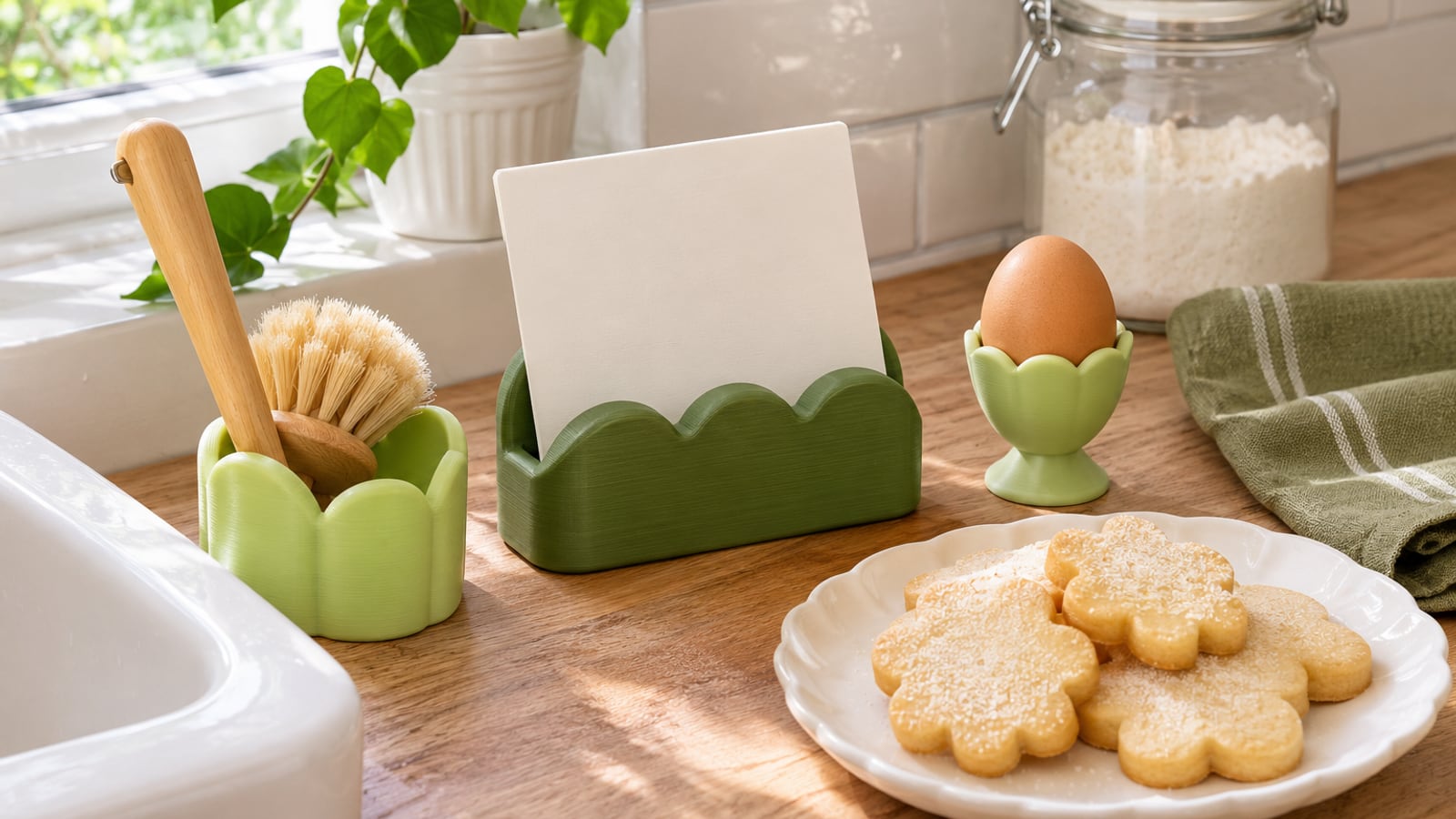
- Dish brush and sponge holders sit by the sink and hold tools, not food. A piece like a chunky dish brush holder just needs to drain and dry between uses.
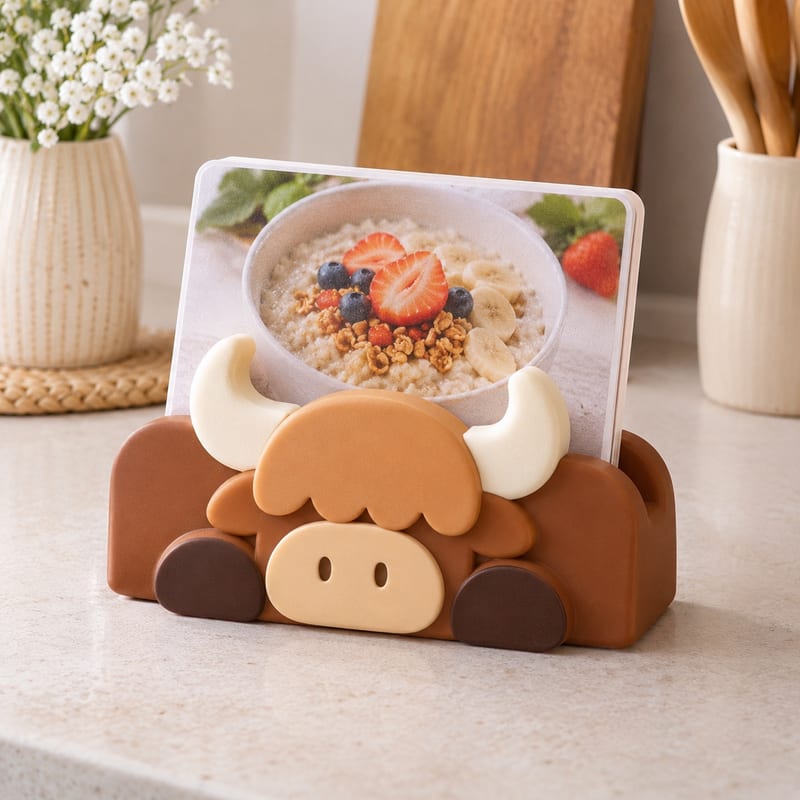
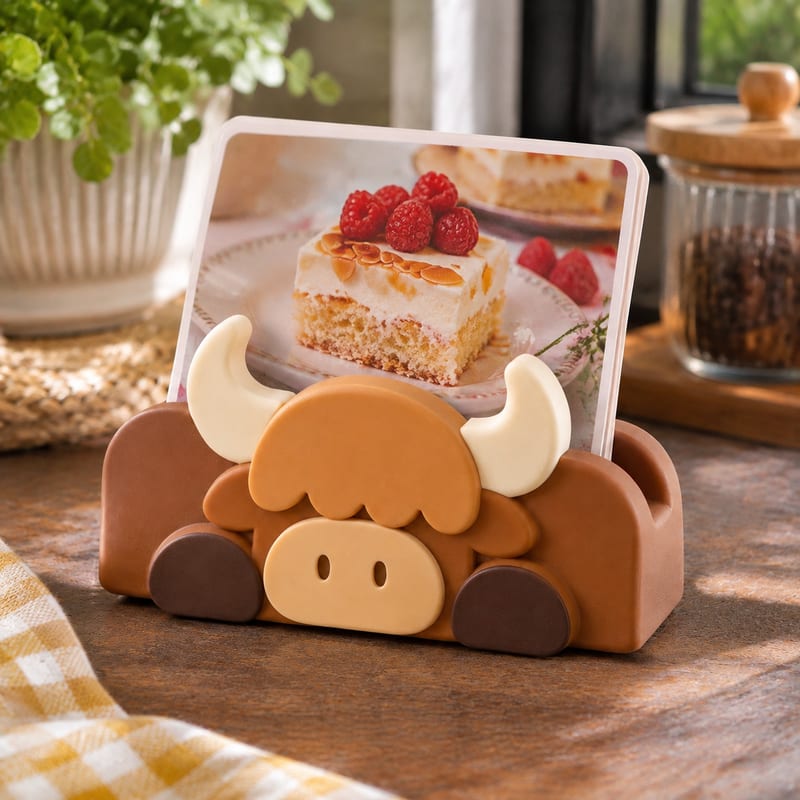
- Recipe card and cookbook stands keep paper off the counter.
- Wine bottle holders touch the outside of the bottle only.
- Egg cups hold an egg in its shell. The shell is the barrier, so this counts as indirect contact. Wipe the cup if yolk spills on it.
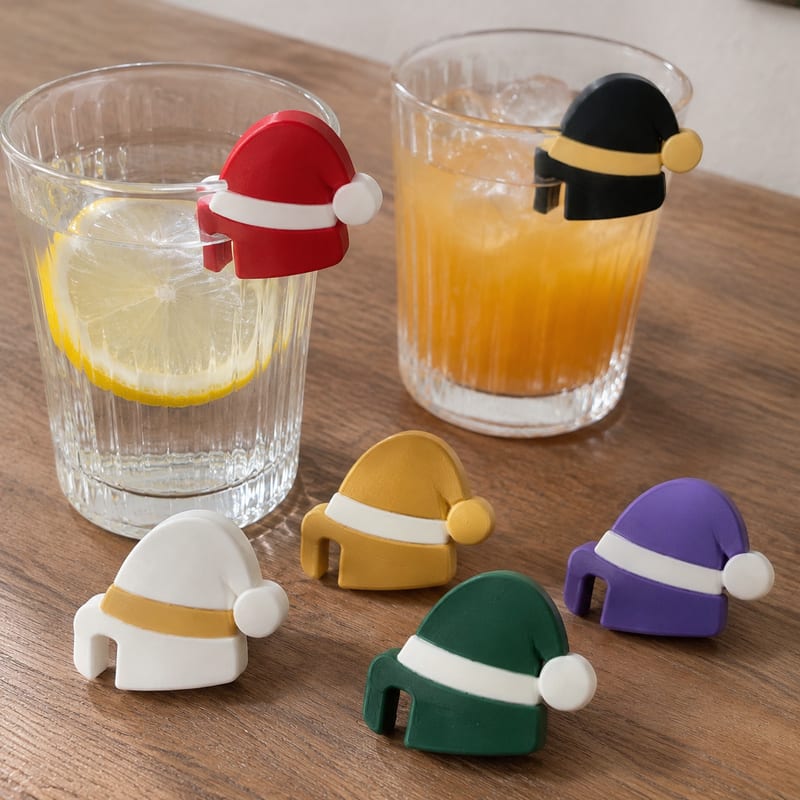
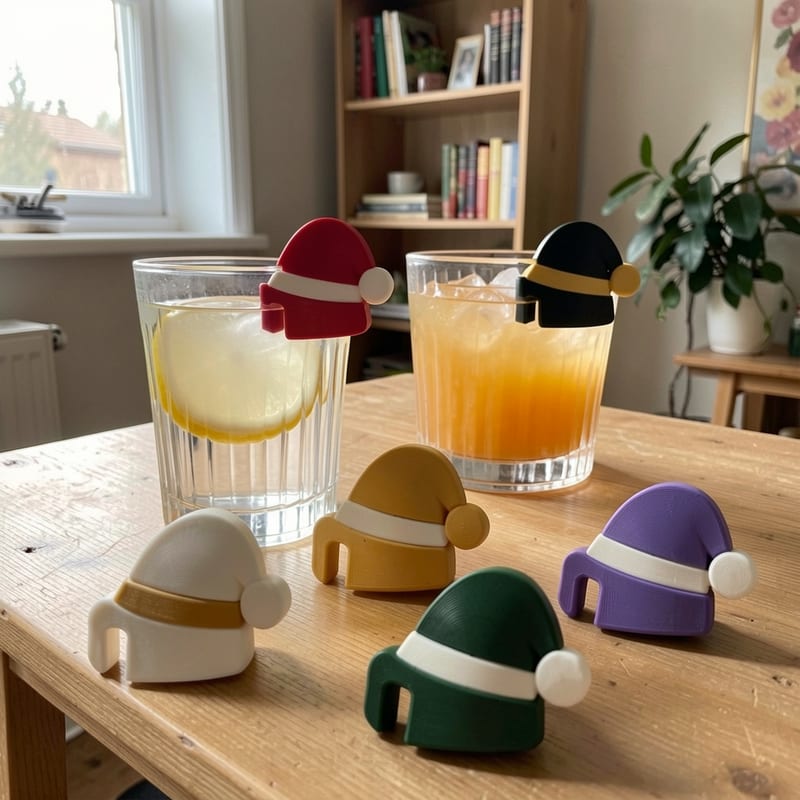
- Drink markers clip onto a glass stem, not into the drink.
- Tea bag rests and spoon rests catch drips. Rinse them after use and don't let them sit wet.
You'll find more in Filagora's kitchen and bath category. None of these need a food-safe claim to be useful, and you shouldn't assume one unless the maker states it.
| Type of contact | Examples | Verdict |
|---|---|---|
| No food contact | Brush holders, recipe stands, bottle holders | Fine; keep away from high heat |
| Indirect contact | Egg cups (in shell), drink markers on stems, tea bag rests | Fine with rinsing and drying |
| Brief, dry, room temperature | Cookie cutters, cake toppers on a barrier | Gray zone; treat as semi-disposable |
| Holds food or drink | Cups, plates, bowls, storage containers | Avoid unless sealed with food-safe coating, and only short-term |
| Hot food or liquid | Coffee mugs, serving dishes for hot food, utensils for cooking | Avoid |
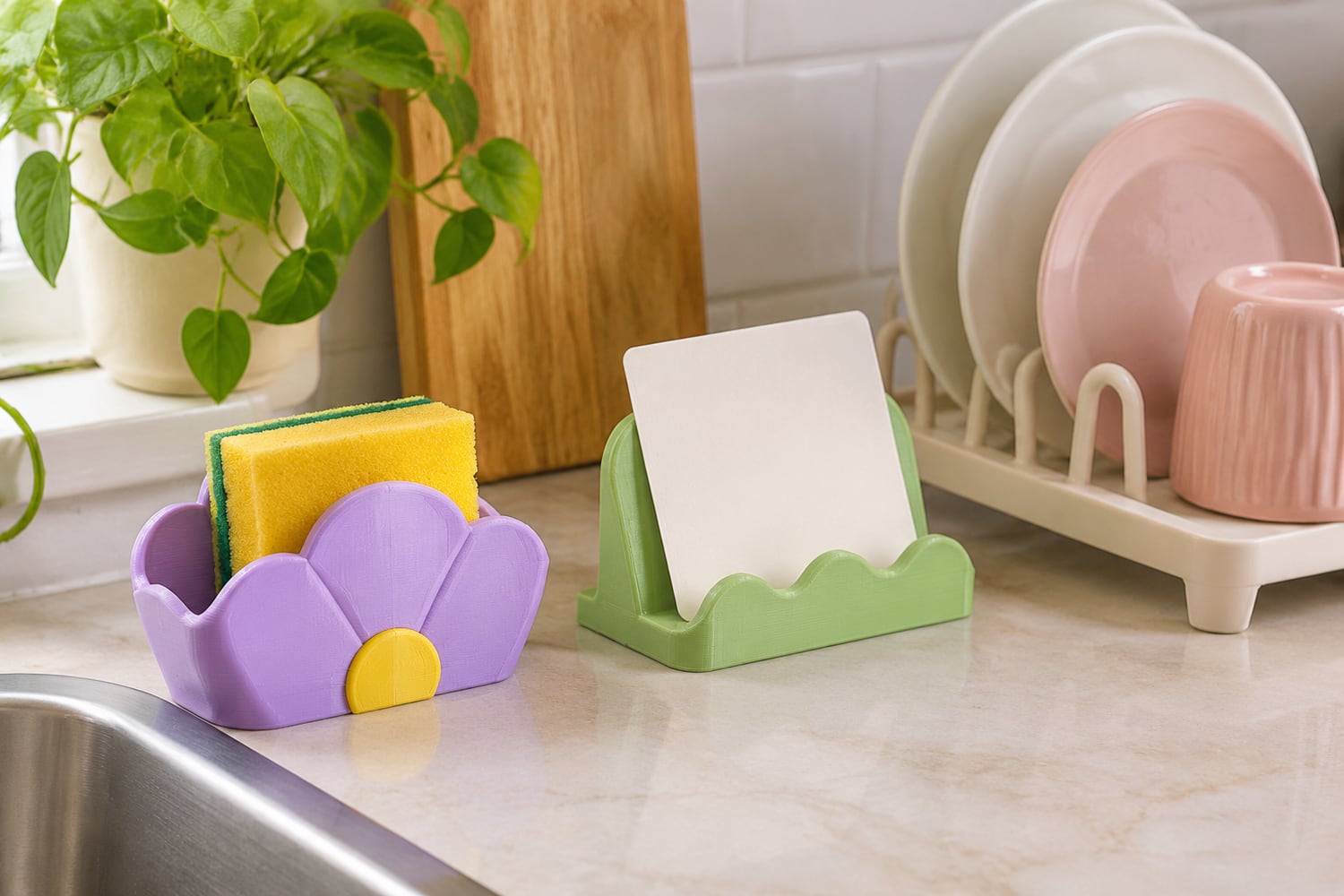
Cookie cutters, cups and plates: where the line is
Cookie cutters
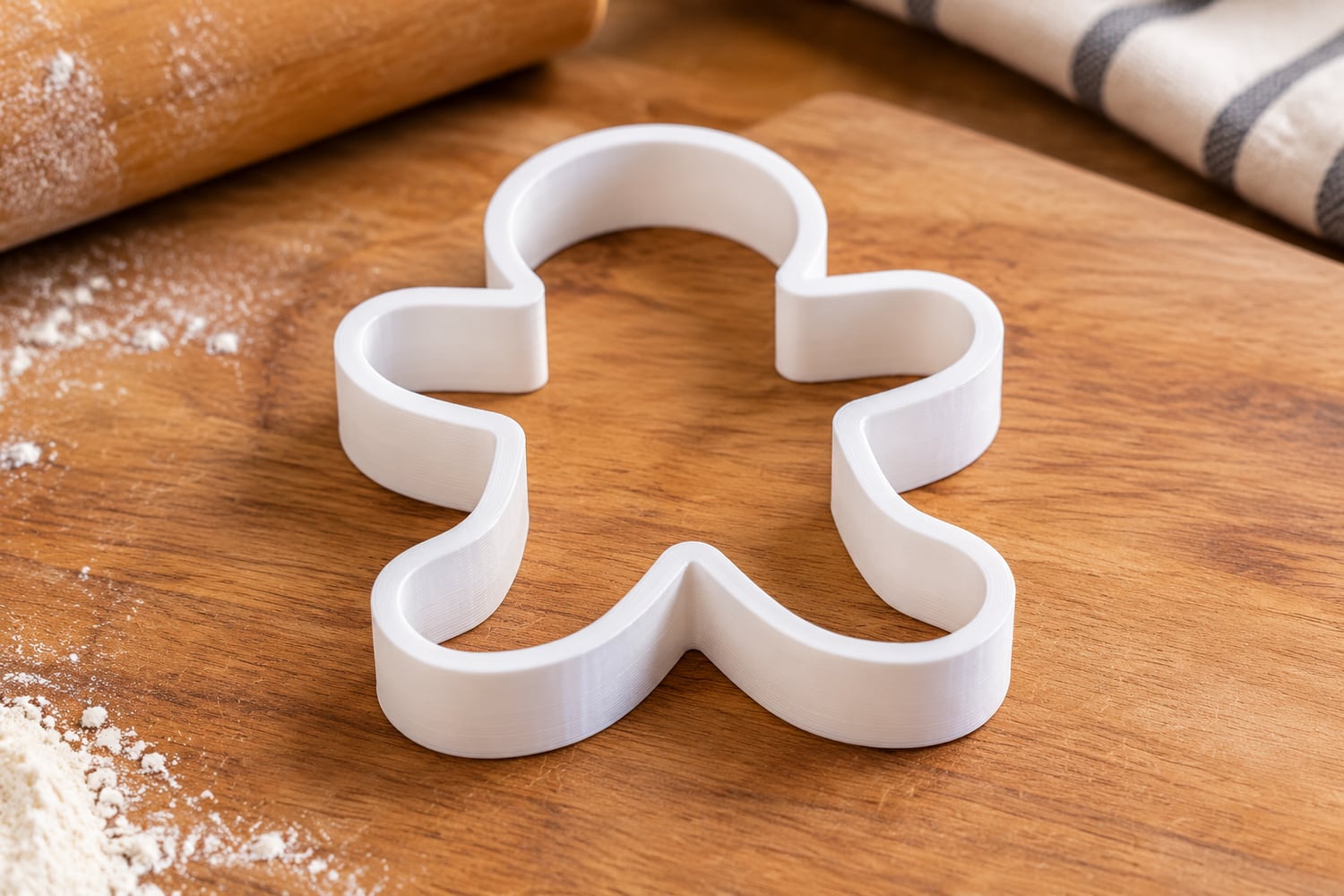
Cookie cutters are the most popular printed kitchen item, especially in November and December. The contact is short, the dough is solid, and nothing is hot. QIDI judges the practical risk as low for brief, room-temperature contact with solid food, and cites Prusa's guidance that printed cutters should be treated as semi-disposable.
In practice that means:
- Use them for a baking session or a season, not for years.
- Wash by hand in warm, not hot, soapy water right after use, and dry fully.
- Replace any cutter that has dough stuck in the grooves, cracks or a fuzzy edge.
- Dust with flour so less dough presses into the layer lines.
Cups, plates and bowls
This is where we'd say no to a standard print. A cup holds liquid against the layer lines for minutes or hours. A plate gets scraped with cutlery, opening more grooves. Coffee and tea are often well above the 60°C (140°F) point where PLA starts to soften.
Some makers seal pieces with food-grade epoxy. Products that meet FDA 21 CFR 175.300 once fully cured, which takes 24 to 72 hours, fill the layer lines and leave a non-porous surface. That helps, but even coated prints are usually recommended only for indirect or short-term food contact, and most coatings aren't heat-resistant either.
What to do instead
The better approach combines materials. Pick a printed holder, sleeve or tray that cradles a glass, ceramic or stainless insert. The printed part gives you the shape and color; the insert touches the food. A printed coaster under a glass, a decorative stand for a ceramic bowl, or a printed lid knob on a glass jar all follow the same idea.
Dishwashers, hot water and cleaning
Keep most 3D printed items out of the dishwasher.
- PLA is not dishwasher-safe and can't be steam-sterilized. Dishwasher heat can warp it.
- PETG and ABS cope better with washing, but a dishwasher still won't clean out layer lines.
- Coated pieces depend on the coating, and most don't like heat.
A simple care routine for printed kitchen pieces:
- Rinse or wash by hand in warm, soapy water. Avoid boiling or very hot water.
- Use a soft brush for textured surfaces, not steel wool.
- Dry fully before putting it back, especially self-draining holders where water can pool underneath.
- Don't soak printed pieces overnight.
- Keep them off the stovetop, out of the microwave and away from hot pans and sunny windowsills.
For more on heat, sunlight and how long printed pieces hold up, see our guide on how long 3D printed items last.
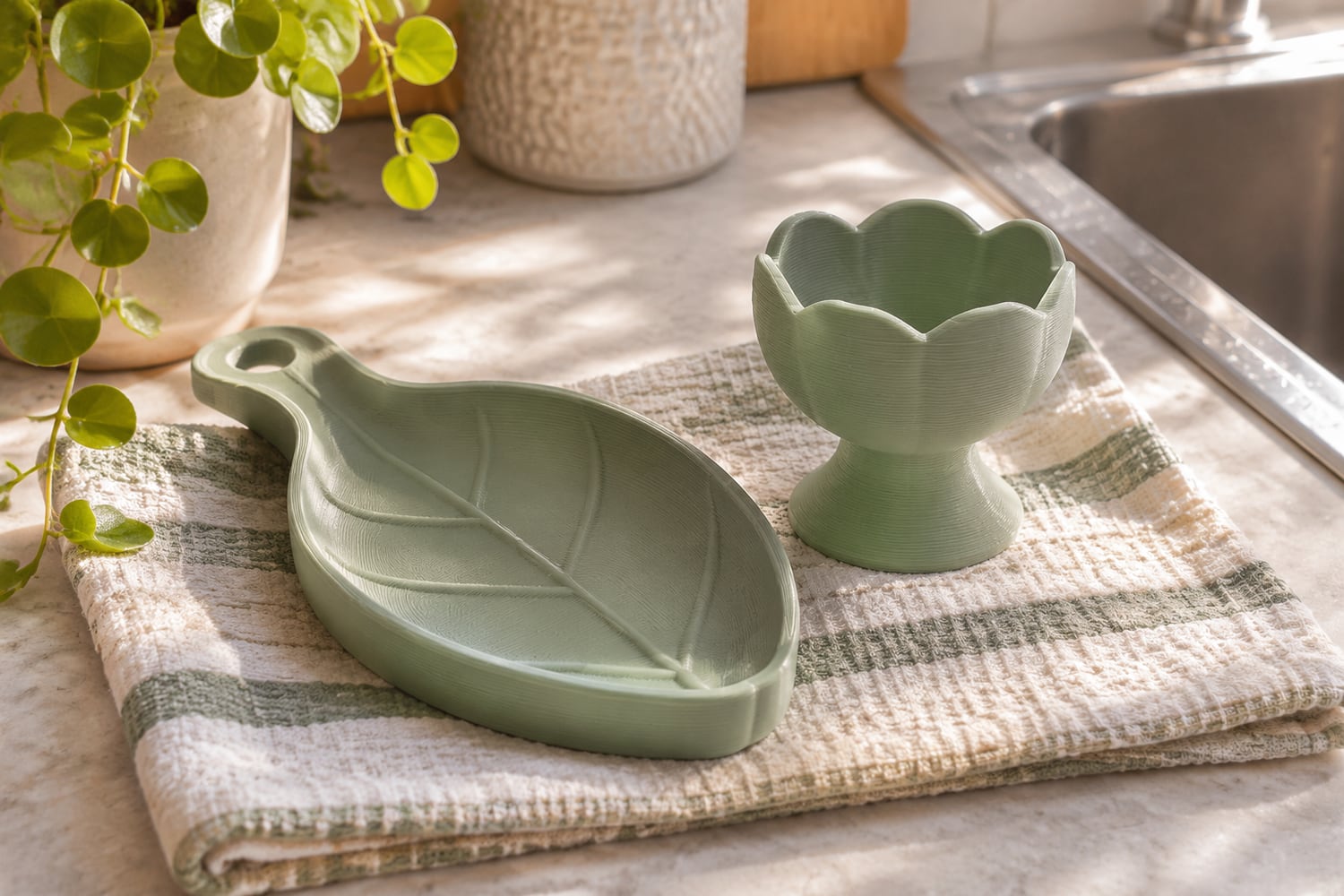
Five questions to ask before buying a 3D printed kitchen gift
If a piece will touch food at all, message the maker first. A good maker will answer these without fuss.
- What material is it printed in? PLA, PETG and ABS behave very differently with heat and washing. Ask about the specific filament if it's a special finish like silk or glitter.
- What nozzle was used? A stainless steel nozzle avoids the brass and lead question. If the answer is "standard brass," keep the piece away from food.
- Is it coated, and with what? If the maker says "food safe," ask which coating, what standard it meets, and how long it cured.
- What are the care instructions? Hand wash only, no dishwasher, no hot liquids? Pass these on if you're giving it as a gift.
- Is it designed for food contact, or as decor? Many kitchen-themed pieces are decorative. That's fine, as long as everyone knows.
If the answers are vague, use the piece only for the no-contact jobs above.
Filagora makers print kitchen helpers, hosting pieces and holiday gifts to order. The ones that hold your brushes, recipes and bottles make great presents without any food-safety guesswork.
Frequently asked questions
Are 3D printed things toxic?
Everyday PLA or PETG decor isn't considered dangerous to handle, but printed parts aren't inert either. A 2015 UC Riverside study found parts from both filament and resin printers [measurably toxic to zebrafish embryos](https://phys.org/news/2015-11-3d-toxic.html), with resin parts the most toxic, which is one more reason to keep prints away from food.
Can you put a 3D printed item in the microwave?
No. PLA softens at about 60°C (140°F), most coatings don't handle heat well, and there's no way to know what the colorants do when heated. Use a microwave-safe glass or ceramic dish instead.
Can you drink coffee from a 3D printed cup?
It's not a good idea. Hot coffee can soften PLA, the layer lines trap residue that washing can't reach, and even coated prints are usually recommended only for short-term, indirect food contact.
Are resin 3D prints food safe?
Treat resin prints as non-food items. In the UC Riverside study, resin parts were the most toxic of the samples tested, and UV post-curing reduced but did not remove that toxicity. Keep resin dice, figures and decor out of the kitchen.
Are 3D printed cookie cutters safe to use?
For brief contact with cold, solid dough, the practical risk is considered low. Hand wash them in warm water right after use, dry them fully, and replace them once dough gets stuck in the grooves or the edges wear.
Pieces from this guide
Printed to order by makers on Filagora.