Are 3D Printed Keychains Durable? What to Know Before You Gift One
Are 3D printed keychains durable enough for keys and bags? What makes one last, PLA vs PETG, hot cars, winter, scuffs, and a checklist for picking a gift.
By the Filagora team · November 20, 2026 · 9 min read
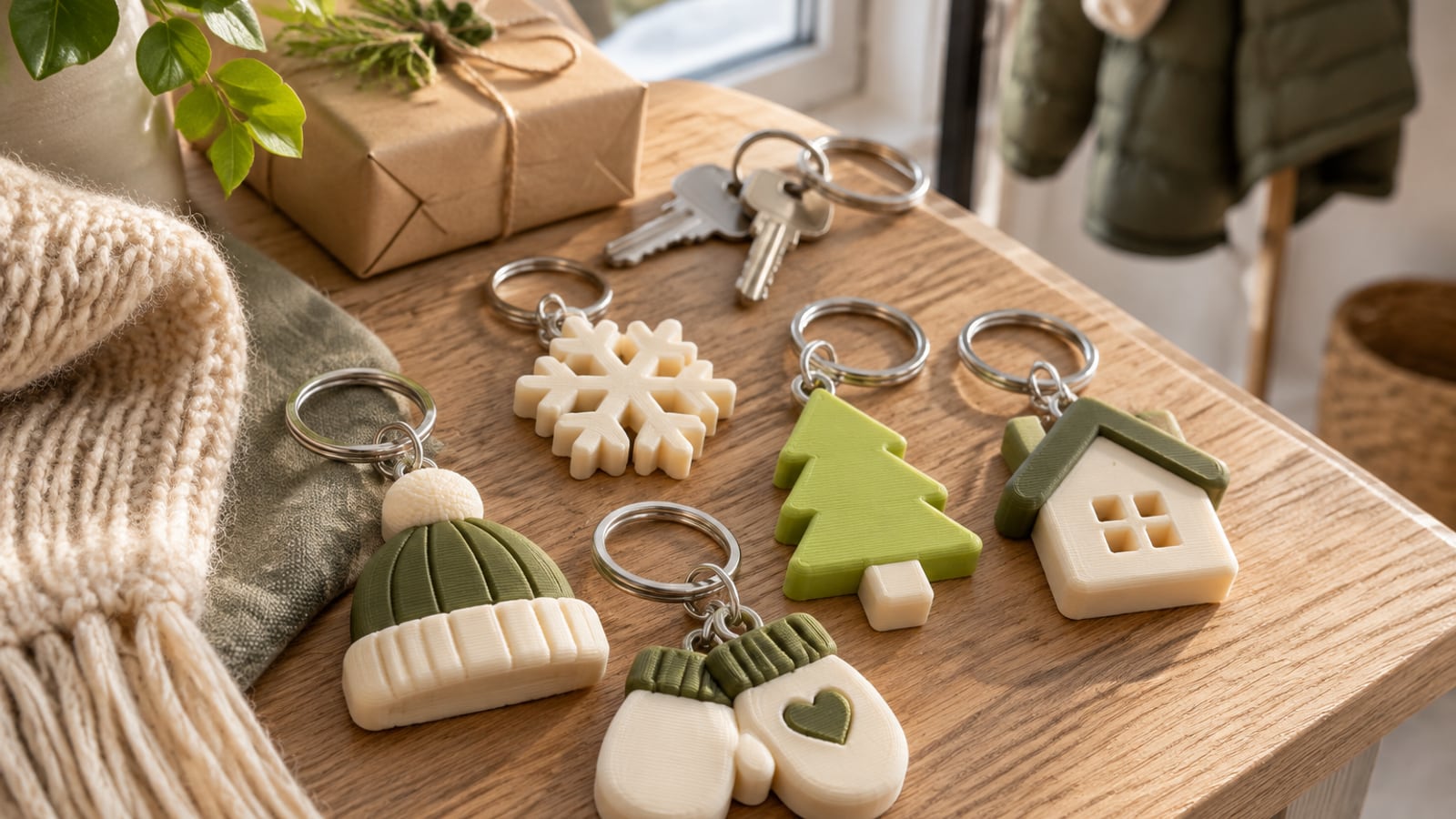
Yes. A well-made 3D printed keychain is durable enough for daily use on keys, zippers and bags. The caveats are specific: the shape should be chunky rather than spindly, the loop or hole has to be solid, it should hang from a metal split ring, and it should never sit on a sunny dashboard. Get those right and the material question matters less than most guides suggest.
That matches what the sites ranking for this question say, once you look past their differences. JLC3DP calls printed keychains strong enough for daily use "as long as you use the right material." 3DPrintShop describes PLA and PETG products as "quite durable" for typical use like handling, gifting and keychains. Print3dezy says that with a tough filament and a metal split ring, they "last surprisingly long."
The rest of this guide explains where keychains fail, how heat and cold affect them, what normal wear looks like, and how to pick one that will still be on someone's keys next December.
Why the advice online contradicts itself
If you've searched this already, you've probably seen opposite answers about PLA, the most common printing plastic:
- Siraya Tech says "Standard PLA is too brittle" for durable keychains.
- Kingroon calls PLA brittle but still says its ease of printing makes it the usual pick for most keychains.
- Bandits Print Den says PLA keychains "hold up well for daily carry."
None of these sources is lying. They're describing different keychains. A thin, flat cutout with a narrow loop and a chunky, rounded charm can be printed from the same spool and behave completely differently in a pocket. So can two identical designs printed in different orientations. The material is one factor among several, and for a buyer the other factors are often easier to judge.
What makes one keychain last and another snap
Shape: chunky beats thin
Thin tips, narrow necks and delicate outlines are where charms break. Every time keys drop on a counter or a bag gets tossed on a seat, force goes to the skinniest part. A rounded, thick-bodied design has no obvious weak point for that force to find.
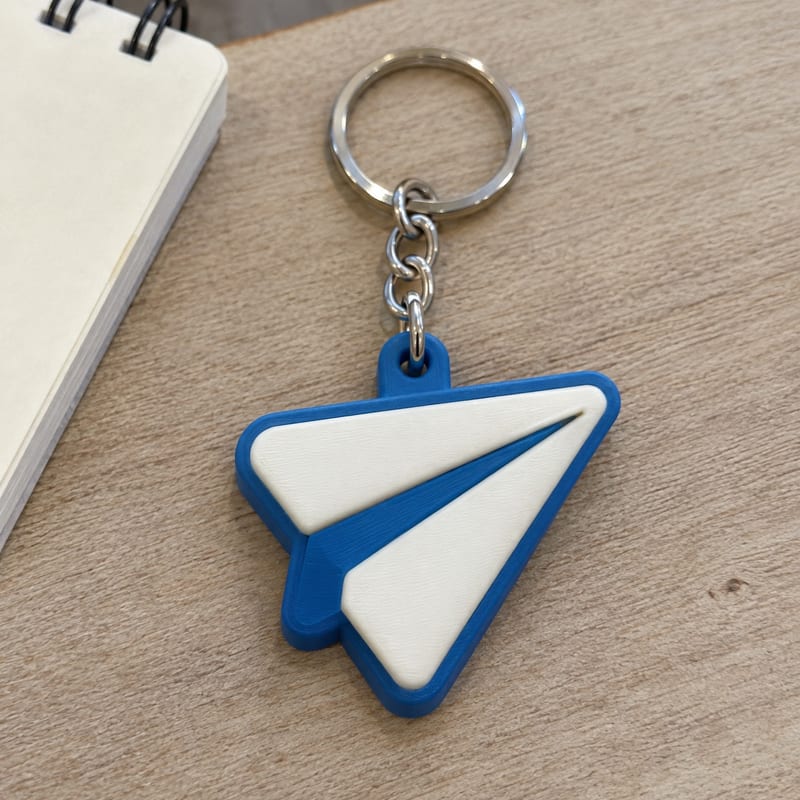
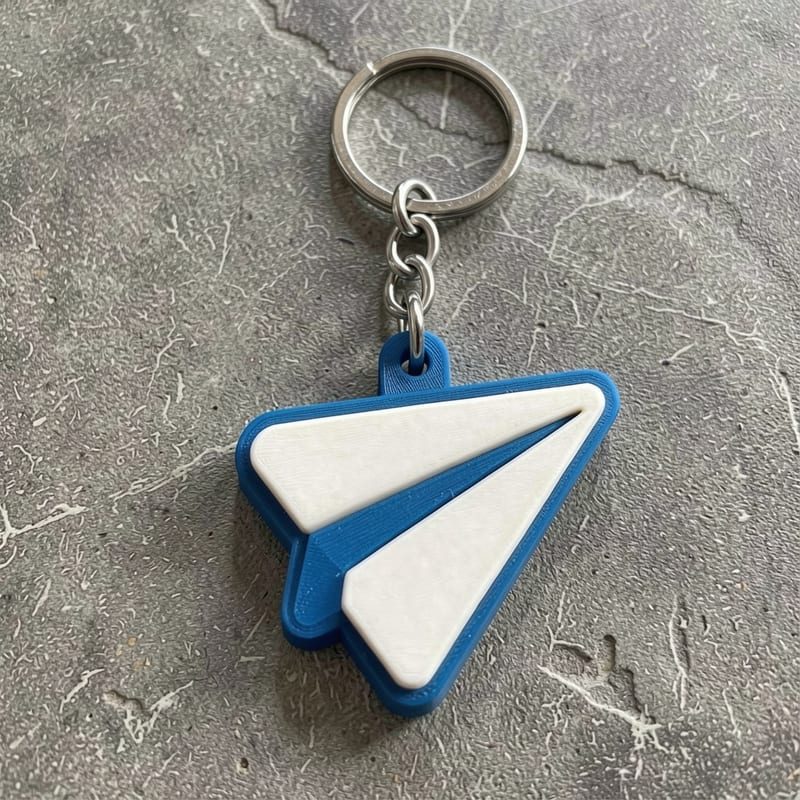
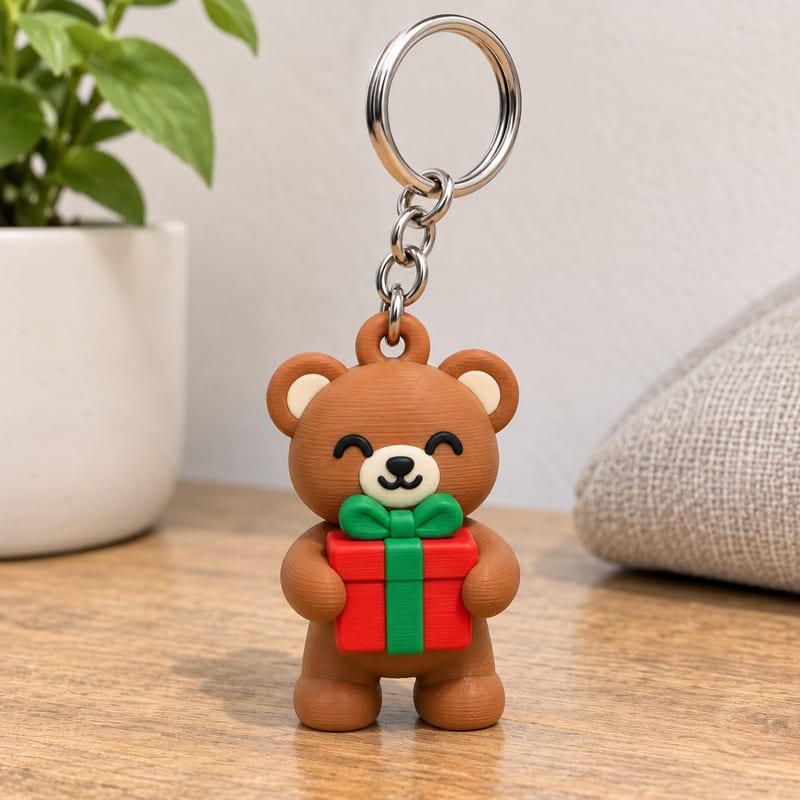
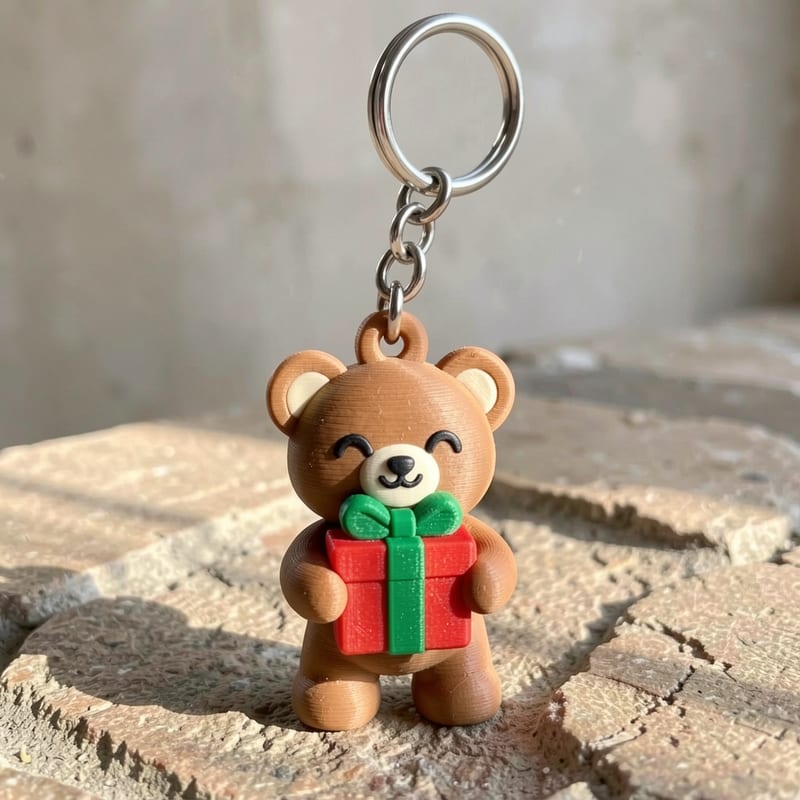
This is why makers who sell everyday keychains lean toward "chunky," "plump" and "chubby" designs. It isn't only a look. A stout shape like a chunky paper airplane is far less likely to lose a wingtip than a thin, realistic one would be.
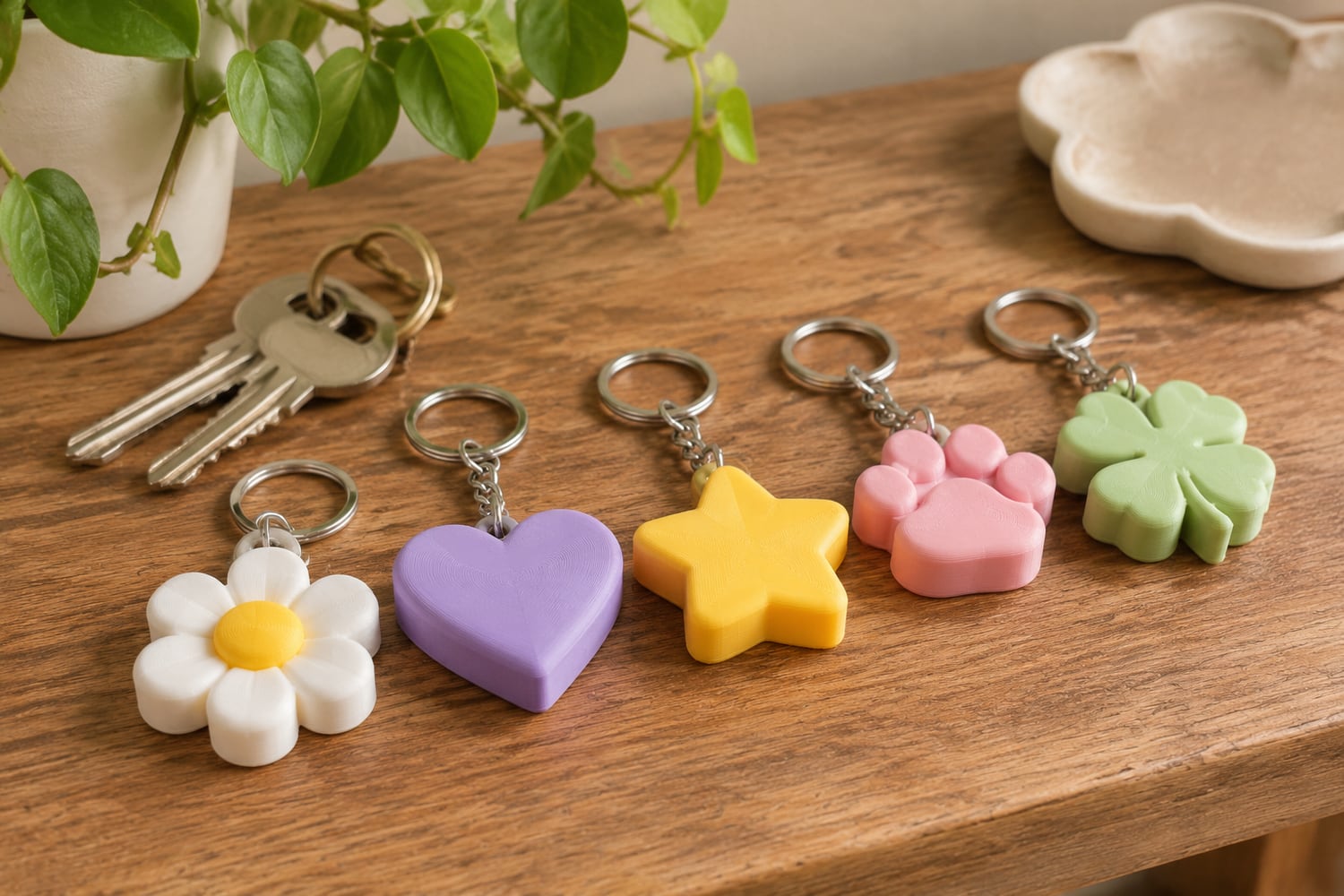
The loop or hole is the real weak spot
Most keychain failures happen at the attachment point, not in the middle of the charm. A small plastic loop carries the full weight of the keys and twists with every movement. Look for:
- A hole that passes through a thick section of the charm, not a thin tab sticking out of it.
- A generous ring of material around the hole.
- A metal split ring or jump ring, rather than a plastic clip or a cord rubbing directly against the print.
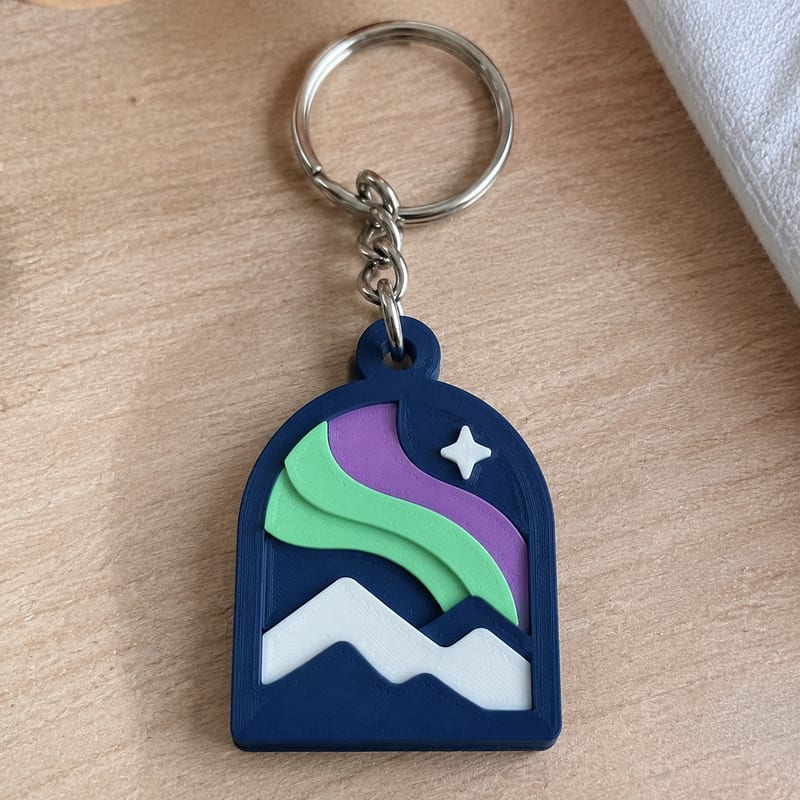
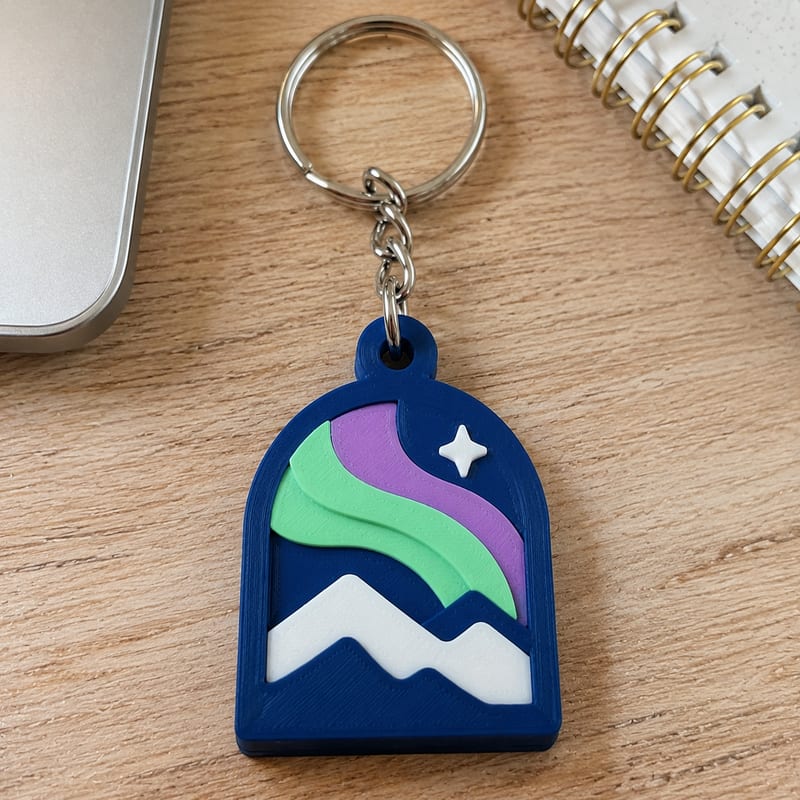
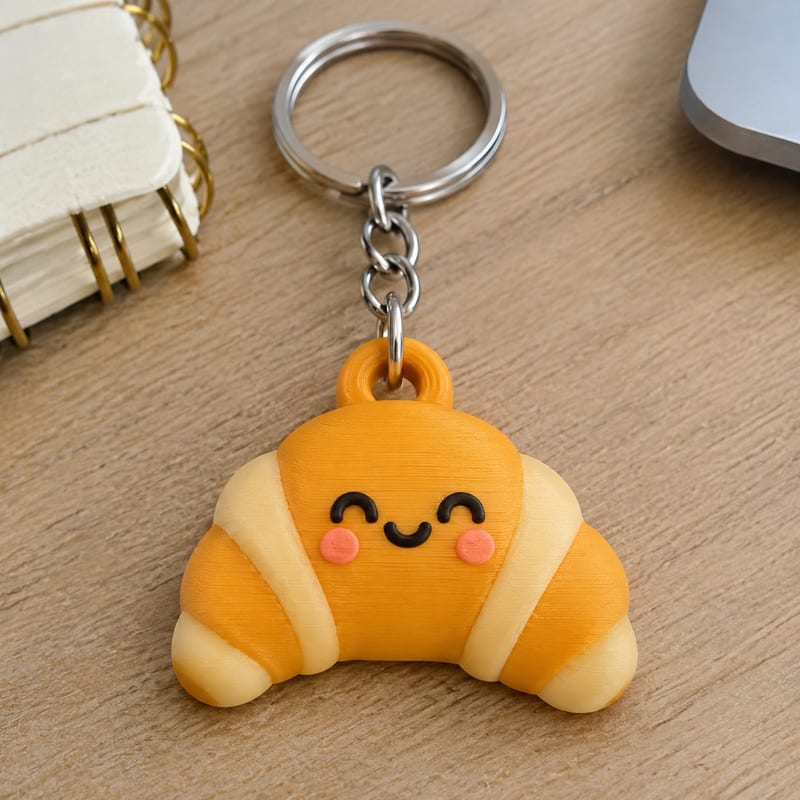
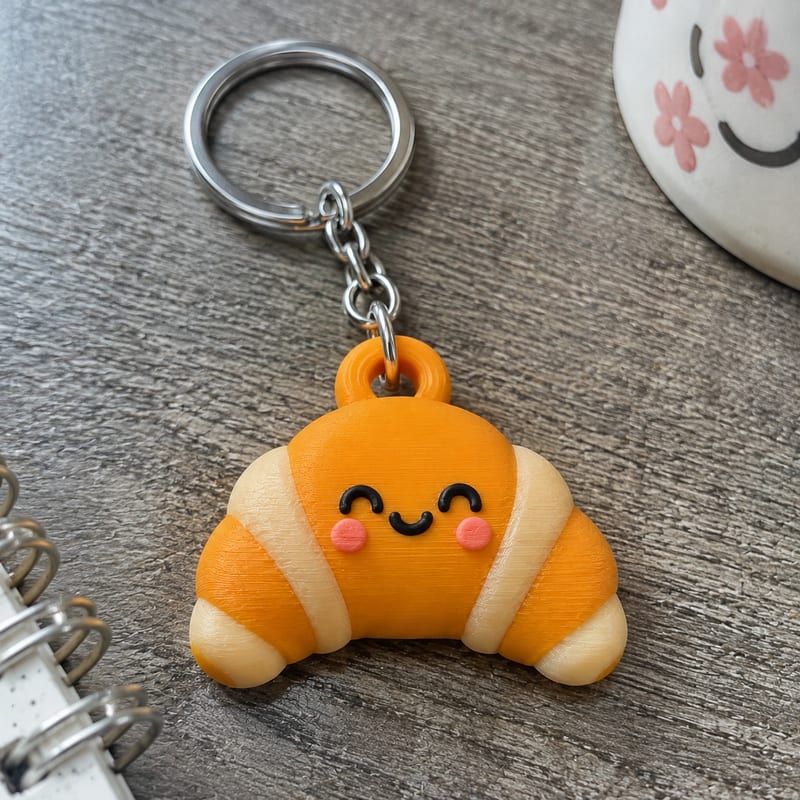
A metal ring spreads the load and doesn't wear a groove into the plastic the way a cord can. Some listings say this up front, like this aurora keychain with a split ring. If a listing doesn't say, it's fair to ask the maker.
How it was printed
3D prints are built in layers, and they're weakest between those layers. Siraya Tech notes that keychains usually break because of "poor print orientation or brittle materials." A maker who prints a keychain flat, so the layers run across the loop rather than stacking up through it, gets a much tougher part from the same filament. You can't see this in a photo, but a seller who has made a few hundred keychains has usually learned it.
What it's carried with
A charm on a backpack zipper lives an easier life than one jammed in a jeans pocket with six metal keys and a car fob. If the recipient carries a heavy key ring, a thicker charm (or one made in a tougher material) is the better gift. A light bag charm can be more decorative.
PLA vs PETG for keychains, without the jargon
Here's how the guides describe the common materials:
| Material | What the sources say | Good fit for |
|---|---|---|
| PLA | "Less durable, not heat-resistant" (JLC3DP); cheap but brittle, still the usual pick (Kingroon) | Chunky charms, bag charms, light key rings |
| PETG | "Strong, weather-resistant, glossy" (JLC3DP); "stronger, slightly flexible, perfect for daily wear" (Kingroon) | Heavy key rings, items passed around, cars |
| TPU | Flexible and durable (JLC3DP) | Bendy tags that won't snap |
| ABS | Tough and heat-resistant (Kingroon) | Less common for small gifts |
3DPrintShop adds that items carried in bags or handed around benefit from PETG's toughness. That's a fair rule of thumb: PLA is fine for a thick charm with a solid loop, and PETG gives more margin for thin designs or rough use.
For a fuller comparison of the two plastics around the house, see our PLA vs PETG guide. If a listing doesn't name the material and it matters to you (for example, the keychain will live in a car), ask the maker before you order.
Heat: hot cars, dashboards and summer pockets
Heat is the one thing that can ruin a PLA keychain in an afternoon. According to How-To Geek, PLA starts to soften around 140°F (60°C) and warps "long before it reaches melting temperature" in a sun-baked car. One maker on the Hubs forum, writing during 108°F weather, reported that a hot car can warp a PLA part in under an hour. That's one person's experience, not a lab test, but it lines up with the softening point.
In practice, that means:
- Don't leave a PLA keychain on the dashboard, rear shelf or in the ignition of a parked car in summer.
- A charm clipped inside a bag on the floor of a car fares better than one in direct sun, but it isn't immune.
- Body heat in a pocket won't come close to softening PLA.
- The same rule applies to any printed car accessory, not just keychains.
We cover softening points in more detail in Will PLA Melt?.
Cold and winter: ski jackets, snow and frosty mornings
None of the keychain guides we read covers cold weather, and we couldn't find a solid test of keychain-sized prints at freezing temperatures. So we won't give you numbers. What we can offer is practical handling advice from the way charms actually get used in winter:
- Dry it off. Wipe away snow and slush instead of letting it sit in a damp pocket for days.
- Avoid hard knocks. Don't use the charm to scrape ice or bang it against frozen car doors. Treat it as decoration, not a tool.
- Ride inside, not outside. On a ski jacket or a stroller, a charm clipped to an inner zipper takes fewer hits than one swinging on the outside.
- Watch the loop. If the attachment point already shows stress whitening or a hairline crack, retire it before a cold, clumsy morning finishes the job.
For how PLA handles outdoor winter conditions in larger decorations, see Can PLA Be Used Outside?.
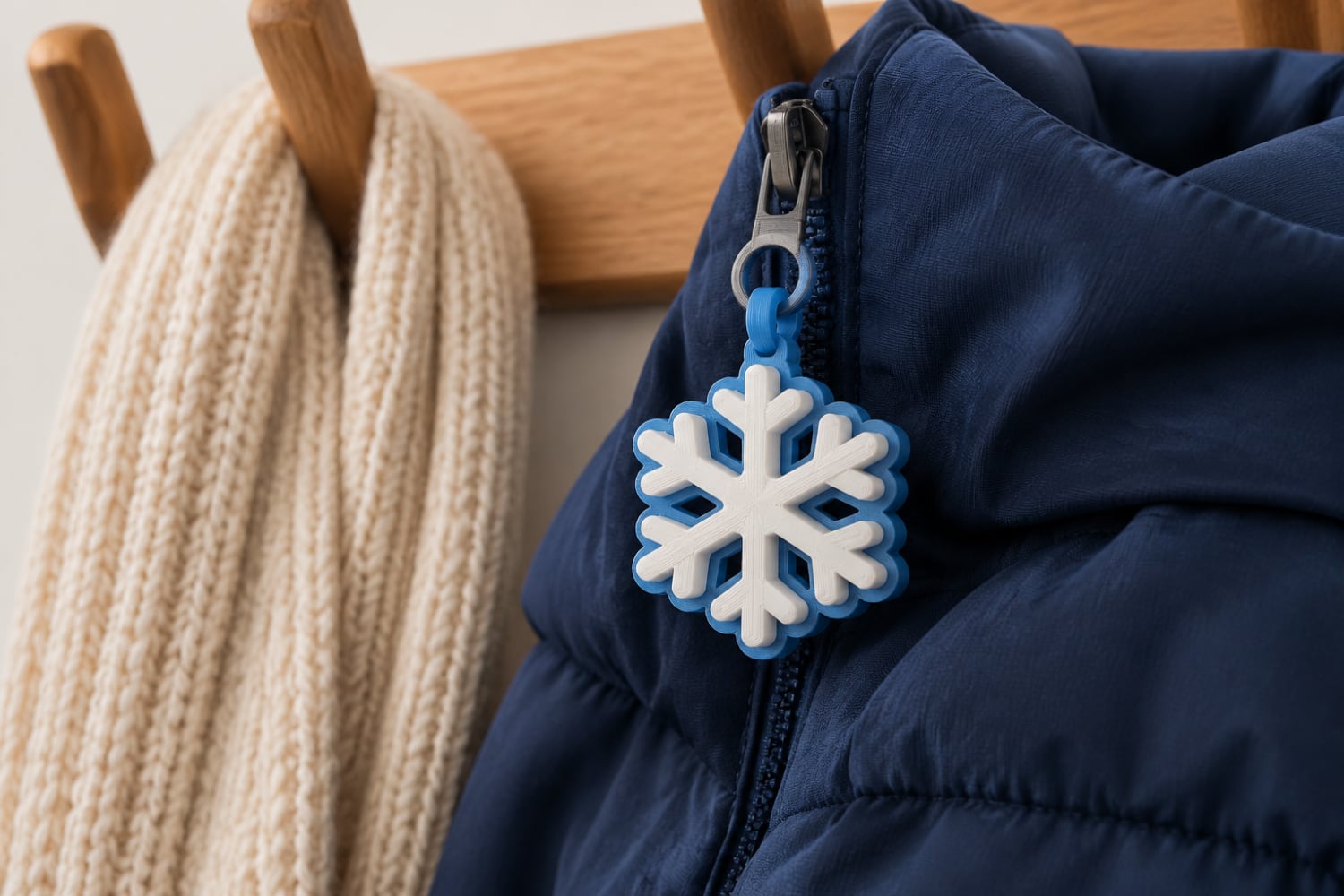
Scuffs, scratches and fading
A printed keychain that rides with metal keys will pick up marks. Print3dezy notes that PLA scuffs more easily than acrylic. Expect light scratches on raised areas and edges within a few months of pocket carry. On a matte or textured surface they're barely visible. On glossy, dark colors they show more.
Fading is a sun issue. How-To Geek points out that PLA has poor UV resistance, so a charm that spends every day on the outside of a backpack in strong sun may dull over time. Indoors or in a pocket, color holds well.
Some makers add a coating. JLC3DP says an epoxy coating gives a keychain a glossy, durable finish. If scratch resistance matters to the recipient, look for a listing that mentions one.
3D printed vs acrylic keychains
Acrylic keychains are flat, laser-cut and usually printed with an image. Print3dezy says 3D printed keychains win on customization, intricate 3D shapes and light weight, while the trade-off is that PLA scuffs more easily and is more sensitive to heat. If you want a dimensional charm someone can actually hold and turn over, 3D printed is the better choice. If you want a flat photo tag that lives on a car key, acrylic may cope better with dashboards.
Is it safe to handle all day?
For adults, yes. Biology Insights states that "pure PLA is generally considered safe for direct and prolonged skin contact." One PLA filament safety data sheet from LulzBot notes the raw material "may cause slight skin irritation," which is worth knowing if someone has very sensitive skin, but it describes the filament itself rather than a finished charm.
Two honest limits: keychains are small and come with metal rings, so they aren't for children under 12 (our guide to printed toys explains why). And while a charm shaped like a cookie or cocoa mug looks edible, printed plastic shouldn't go in anyone's mouth, and layer lines can trap grime.
How to choose a keychain gift that lasts
Use this checklist when you're shopping:
- Chunky shape. Rounded, thick bodies with no thin tips or narrow necks.
- Solid attachment. A hole through a thick part of the design, with plenty of material around it.
- Metal ring included. A split ring or jump ring, not a plastic clip.
- Material that fits the use. PLA for bag charms and light key rings; consider PETG for heavy key rings, car keys or rough handling. Ask if the listing doesn't say.
- Matte or coated finish if it will ride with metal keys and you want it to stay looking new.
- Size that suits the carrier. A big charm on a small key ring gets levered around more; a small charm on a heavy ring takes more knocks.
As Bitstream Media puts it, the only 3D printed gifts that feel tacky are "the unconsidered ones." A keychain picked for someone's hobby, favorite season or daily routine, and built to survive it, isn't one of those.
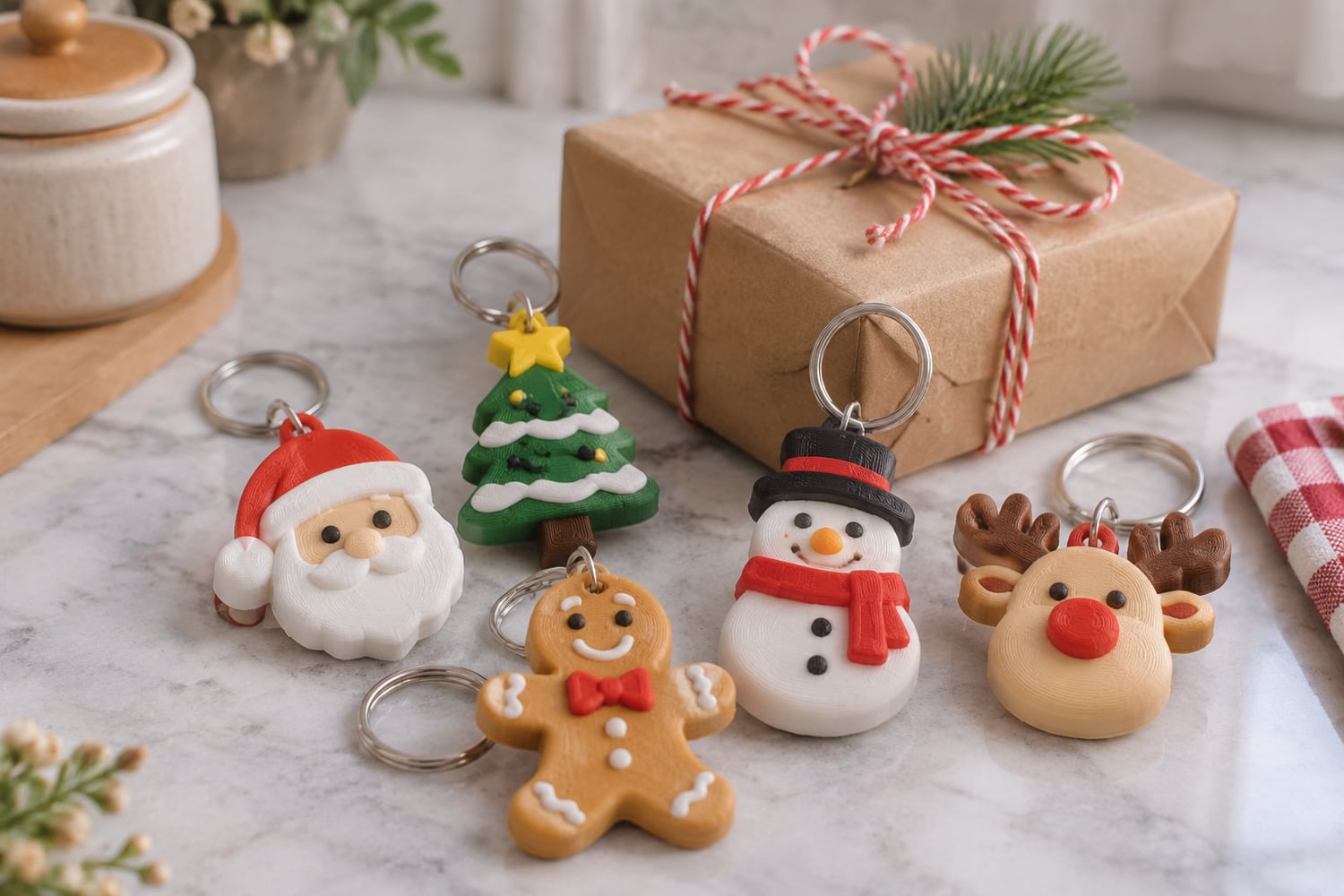
Care tips that keep a keychain going
- Clean gently. Mild soap, lukewarm water and a soft brush are enough. Skip hot water and the dishwasher. Our cleaning guide covers the details.
- Check the loop now and then. White stress marks or a fine crack near the hole mean it's time to retire it from heavy keys and move it to a bag zipper.
- Swap worn rings. A bent split ring is cheap to replace and puts uneven stress on the plastic.
- Fix clean breaks. If a piece snaps off the body, a good glue can save it. See How to Fix a Broken 3D Print. A repaired loop won't be as strong as the original, so use it for light duty afterward.
- Keep it out of the sun in summer cars, especially if it's PLA.
For a broader look at lifespan, read How Long Do 3D Printed Items Last?
If you're filling stockings this year, Filagora makers print keychains and bag charms to order, from chunky winter animals to holiday treats. Browse the Jewelry & Wearables category, and use the checklist above to pick one built for the way your recipient carries their keys.
Frequently asked questions
Are 3D printed keychains strong enough for daily use?
Yes, if the design is chunky, the loop is solid and it hangs from a metal split ring. JLC3DP says they're strong enough for daily use as long as the right material is used, and 3DPrintShop calls PLA and PETG products quite durable for keychain use.
Why do 3D printed keychains break?
Most break at the loop or at thin parts of the design, where force concentrates. Siraya Tech notes that breakage usually comes from poor print orientation or brittle materials.
Can I leave a 3D printed keychain in a hot car?
Not if it's PLA. How-To Geek says PLA starts to soften around 140°F (60°C) and can warp in a sun-baked car well before it melts, so keep it off dashboards in summer.
Is PLA or PETG better for a keychain?
PETG is tougher and slightly flexible, which helps on heavy key rings or in cars. PLA works well for chunky charms and bag charms that don't face heat or rough handling.
Do 3D printed keychains scratch?
They pick up light scuffs when carried with metal keys, and Print3dezy notes PLA scuffs more easily than acrylic. Matte finishes hide marks better, and an epoxy coating adds protection.
Pieces from this guide
Printed to order by makers on Filagora.