Can a 3D Printed Vase Hold Water? Flowers, Plants and Sun
Some 3D printed vases hold water and many seep. How to tell, the glass-liner trick for fresh flowers, planter drainage, sun limits and a 48-hour leak test.
By the Filagora team · November 8, 2026 · 10 min read
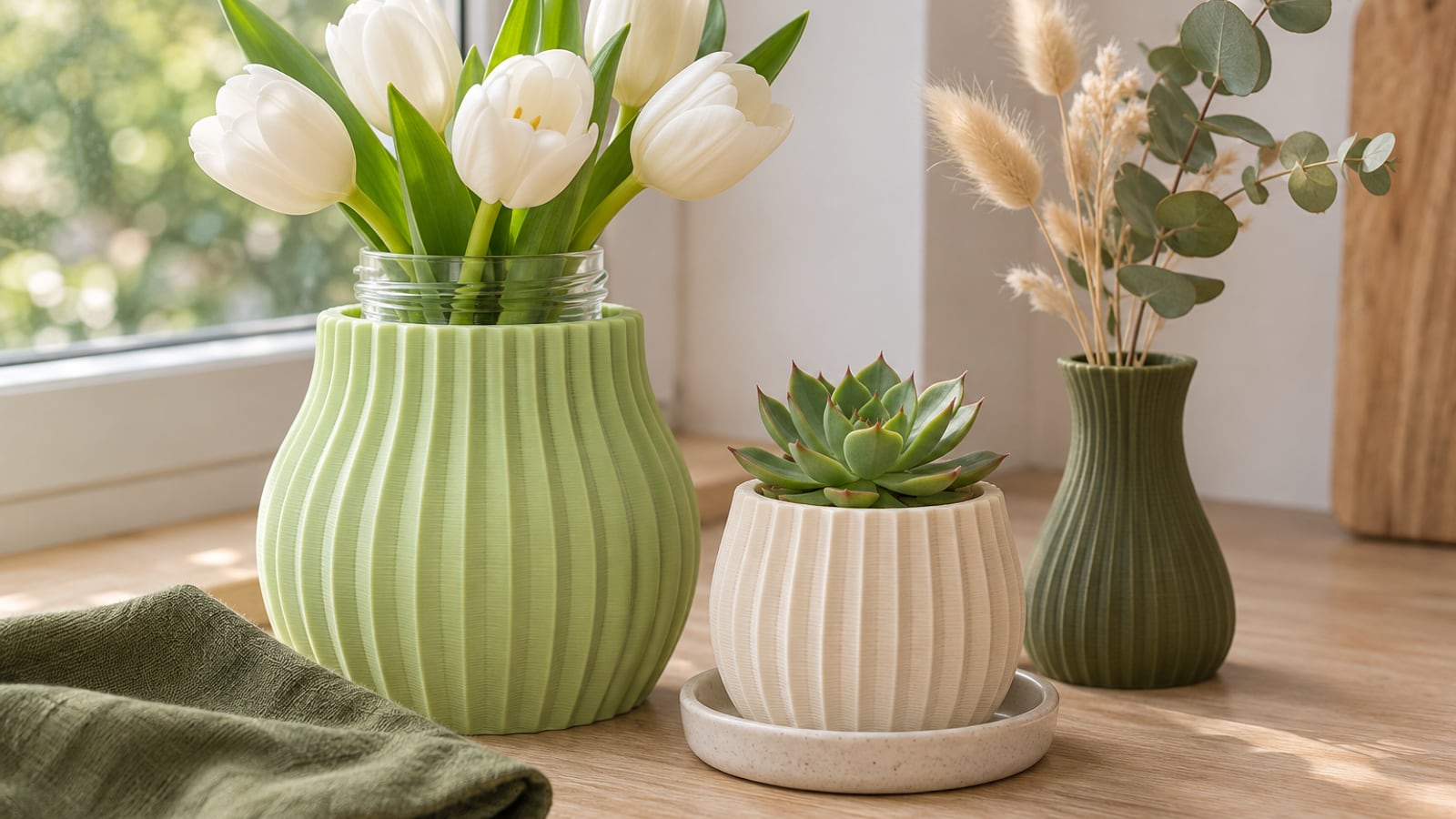
Some 3D printed vases and planters hold water for years. Many don't, at least not reliably, and you can't tell which is which by looking. Prusa's own testing starts from the position that prints "won't be waterproof without any extra work" (Prusa).
The practical answer for buyers:
- Put fresh flowers in a glass liner inside the vase.
- Put plants in a nursery pot, a pot with a drainage hole, or both, and use a saucer.
- Keep printed pieces out of hot sun, hot cars and the dishwasher.
- Run a simple leak test before you trust a piece on a wooden table.
Below is what decides whether a printed piece holds water, what you can still control after you buy it, and what to ask the maker first.
The short answer: some can, many can't
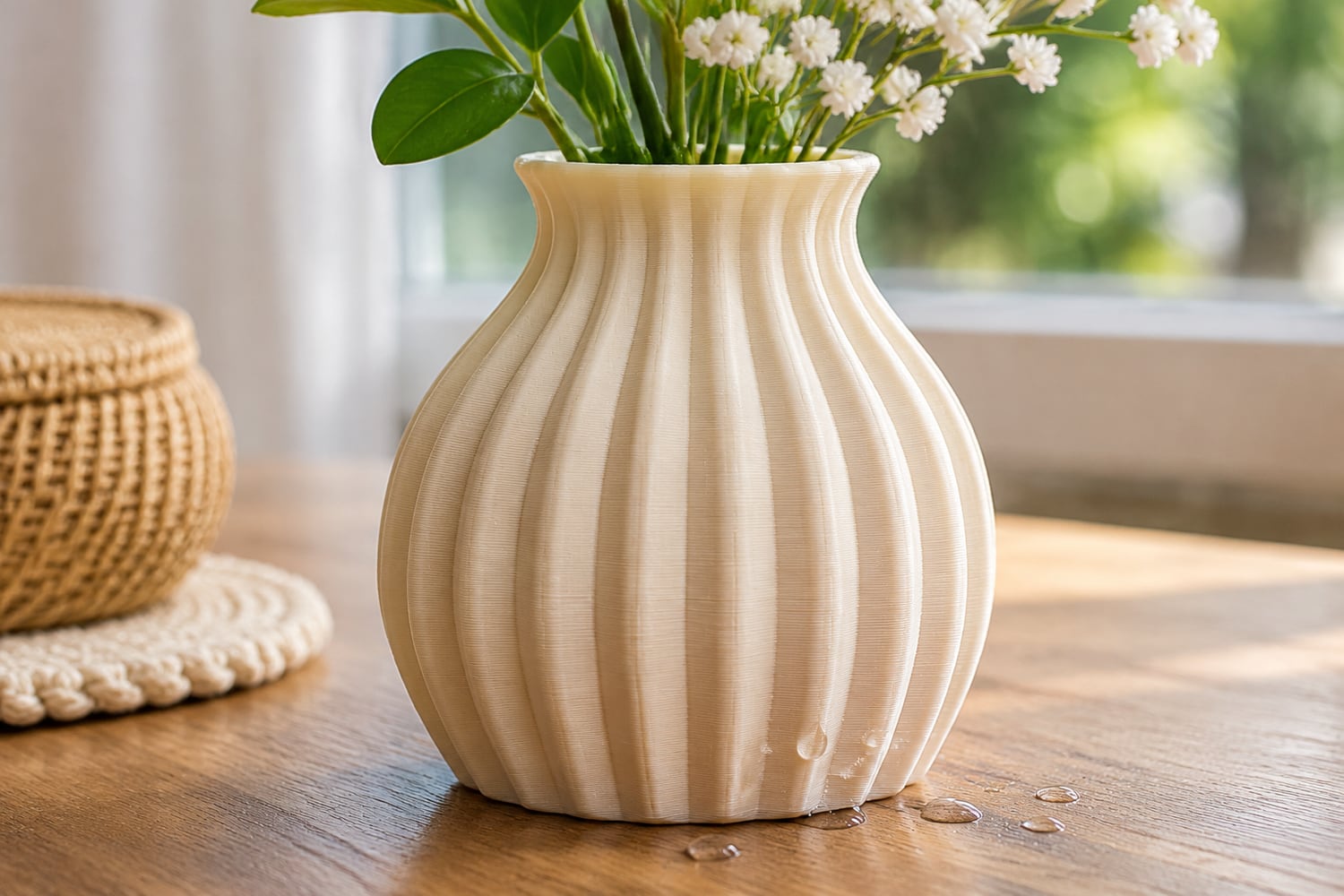
A printed vase is built from hundreds of thin layers of melted plastic stacked on top of each other. When those layers fuse well and the walls are thick enough, the piece can be fully watertight. When they don't, water finds tiny gaps and slowly works its way out.
The pages that rank for this question disagree, and it helps to know why. Puku Prints says a standard PLA vase is not reliably waterproof and that water can seep through gaps between layer lines "usually within a few days" (Puku Prints). Prusa, testing its own filament, found most test parts held water with 4 to 6 perimeters (walls about 2 to 3 mm thick), and that a single-wall vase-mode print was watertight in every material it tried (Prusa).
Both can be true. It comes down to how a specific piece was printed, and that's something a buyer usually can't see from a photo.
Waterproof vs watertight: why layer lines can seep
Makers use these words loosely, but the difference is useful:
- Waterproof material: a solid block of the plastic doesn't let water pass through.
- Watertight object: the finished piece has no path for water to escape. That depends on the print, not just the plastic.
A printed vase is not a solid block. It's a stack of beads of plastic, and the weak points are predictable. Summarizing Prusa's tests, asked3d notes that water tends to escape at the seam (the spot where each layer starts and stops) and where the solid bottom meets the walls (asked3d).
There's also a slow-leak scenario. Prusa notes PLA can swell and act like a wick, so in theory a vase could start leaking after several weeks, though none of its own PLA test objects did (Prusa).
What decides it: material, walls, vase mode and sealing
You can't change any of this after purchase, but knowing it helps you read a listing and ask the right questions.
Material
PLA is the most common material for decor. It prints cleanly and looks great, but Filamentz doesn't recommend it for a vase you want to still have in five years (Filamentz).
PETG is often recommended for vases, but it isn't a guarantee. In Prusa's low-pressure tests, untreated PETG did worst, leaking quickly through seams and the contact points between the walls and the solid infill (Prusa, part 2). "It's PETG" tells you about heat resistance more than about leaks.
Wall thickness and the bottom
More walls mean more chances to block a gap. Prusa's 4 to 6 perimeter result is a decent benchmark. For the base, Prusa's test objects with 2 to 7 solid bottom layers were all waterproof, and Filamentz suggests at least 5 solid bottom layers for a tight base. Thin decorative planters are where trouble usually shows up: asked3d puts it simply, thin-walled planters leak.
Vase mode
Vase mode (spiral mode) prints one continuous wall with no seam. That's why it did so well in Prusa's tests. The tradeoff is a thin, lighter piece with no backup wall if something goes wrong in one spot.
Sealing
Some makers seal the inside. Common methods are epoxy resin and waterproof sprays, with two or three coats recommended (3D Printed Decor). A sealed vase is a different product from a raw print, so if a listing says it's sealed, it's fair to ask with what.
Fresh flowers in a printed vase: the glass-liner trick
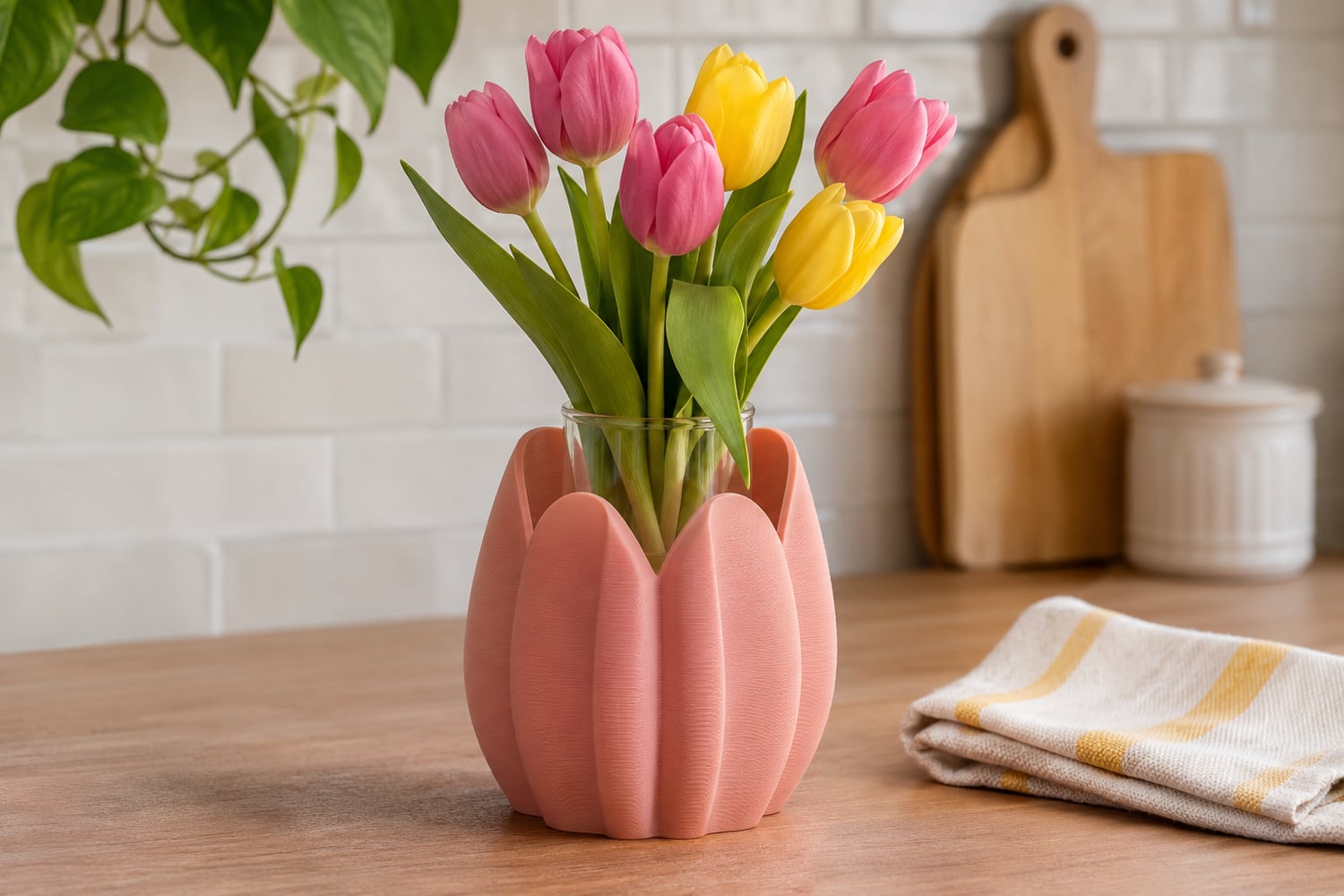
The simplest fix is the one Puku Prints recommends: put a glass tube or small jar inside the vase and put the water and stems in that. The printed vase becomes the decorative shell, and the glass does the work.
This solves more than leaks:
- No risk to furniture, even if the print seeps.
- Easier cleaning. Flower water gets cloudy and slimy within days. Printed PLA and PETG aren't food-safe by default partly because layer lines hold bacteria and grime, and the same ridges are hard to scrub out of a vase. Glass rinses clean.
- Fresh water is easy. Lift the jar out, refill at the sink, drop it back in.
Measure the inner opening and depth before shopping for a liner. Tall, narrow bud vases suit a glass test tube; wider vases take a small jam jar or a drinking glass. Put a coaster under the vase anyway for the first few weeks.
Planters: drainage holes, saucers and double potting
Most potted plants need drainage, which means water is supposed to come out the bottom. The question is where it goes next.
Colorado State University Extension, cited by asked3d, says every container with drainage holes needs a saucer, and decorative containers without holes may call for double potting. PrintPort3D adds that printed walls can seep a little between layers, so it recommends either a drainage hole and saucer or a cover pot that holds the nursery pot (PrintPort3D).
Option 1: drainage hole plus saucer
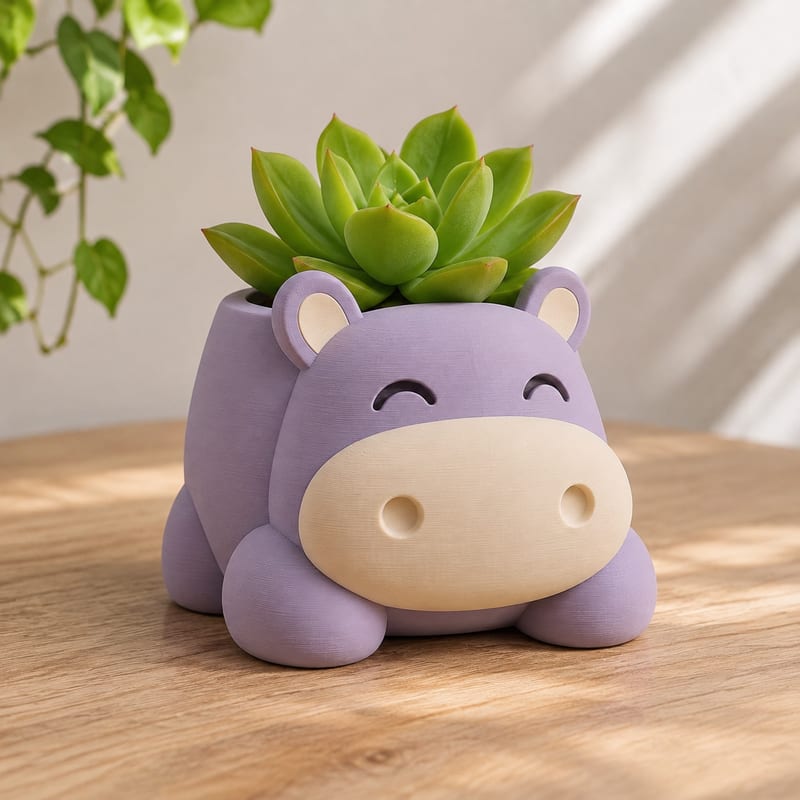
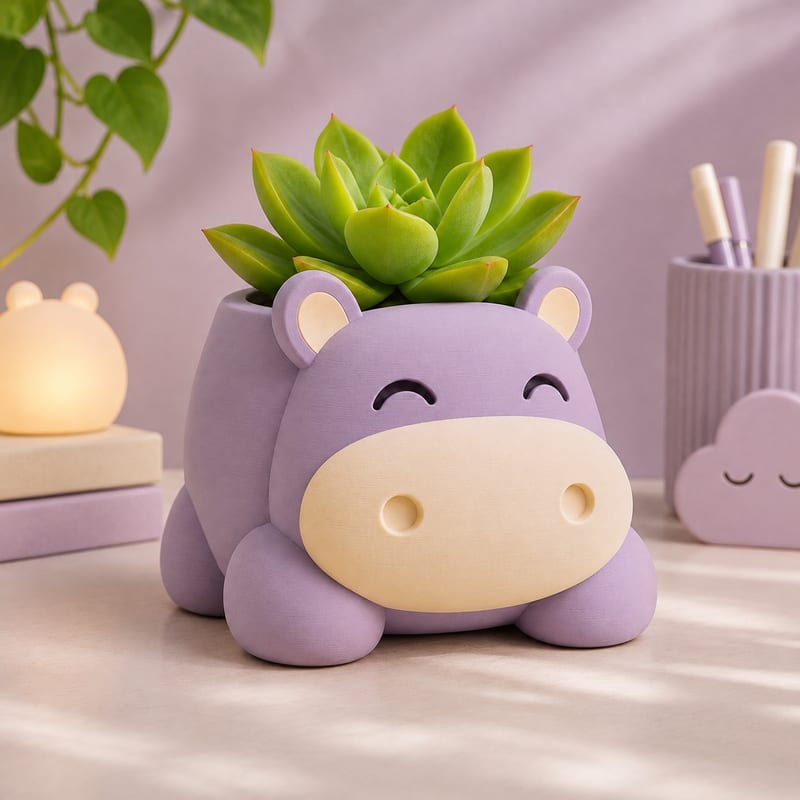
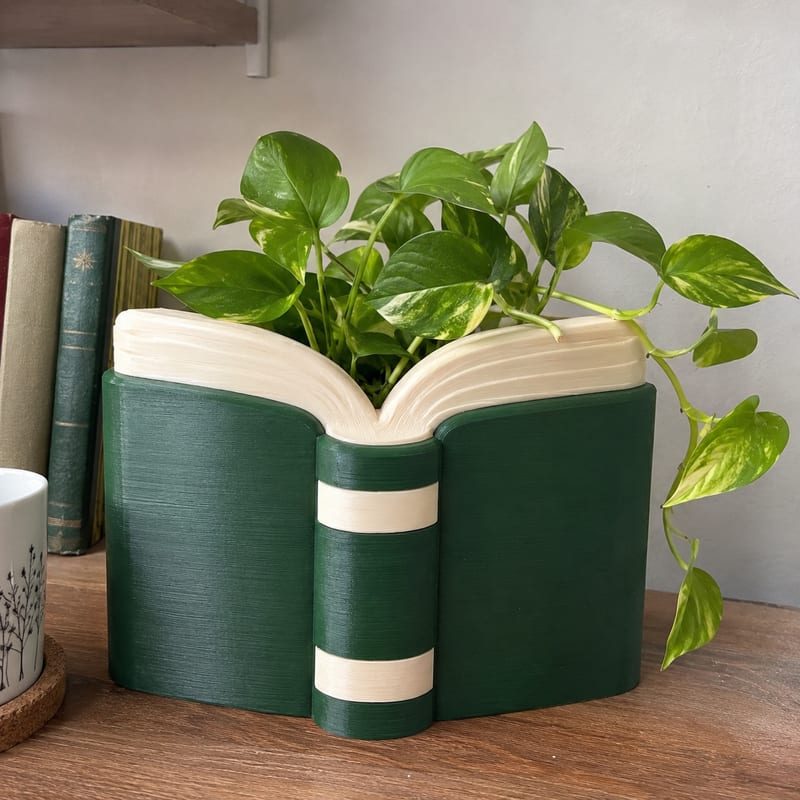
A planter like the Chubby Hippo Planter, which has a drainage hole, works the normal way: water drains into a saucer underneath. Empty the saucer after watering so the pot doesn't sit in a puddle, and use a saucer wider than the pot so seepage from the walls lands in it too.
Option 2: double potting
Keep the plant in its plastic nursery pot and set that inside the printed pot. Sovol makes an important point here: a closed cachepot (a decorative outer pot holding a removable inner pot) doesn't replace drainage, because standing water around the inner pot causes problems (Sovol).
So lift the nursery pot out, water it at the sink, let it drain, and put it back. As a bonus, the roots never touch the printed plastic, and repotting is easy.
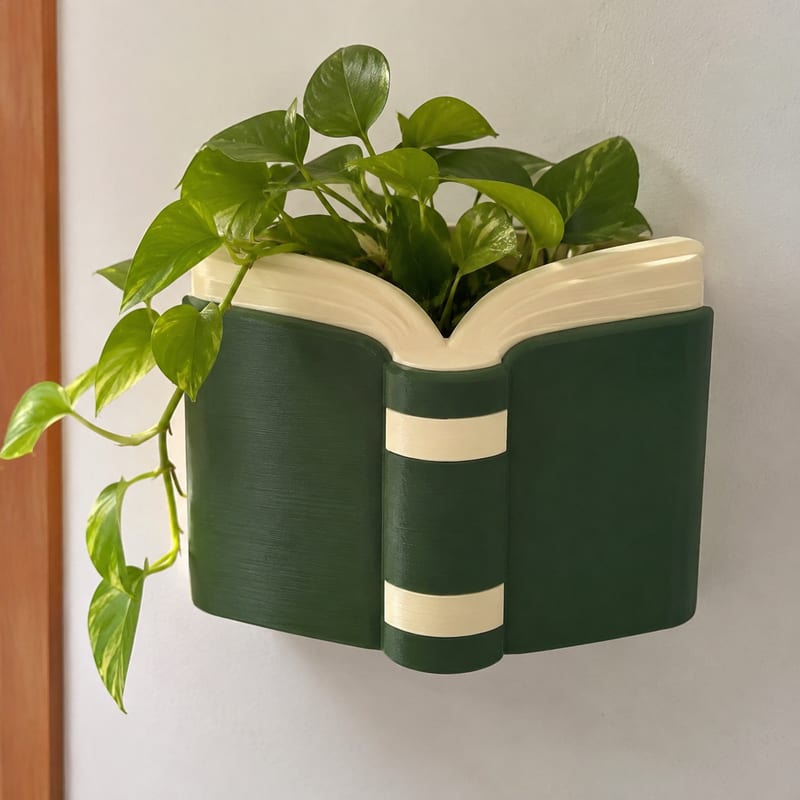
Wall planters need extra care
A leak on a shelf makes a ring. A leak on a wall-mounted planter runs down the paint. For wall planters, double potting matters even more:
- Use a nursery pot that fits inside with a little room to spare.
- Always water at the sink, never in place on the wall.
- Check the bottom of the planter after the first few waterings.
- If you'd rather not deal with water at all, fill it with dried or faux greenery.
Are 3D printed planters safe for plants?
Probably, for decorative houseplants, but be wary of confident claims either way. Treatstock says plastic containers are generally safe for plants (Treatstock). Some sellers go further and call PLA "non-toxic and safe" around plants, pets and people with no evidence behind it.
The more careful take comes from flm3dastro, which admits there's no settled answer on how much leaches from printed plastic. To be cautious, it suggests a cured food-safe coating or lining the planter so roots never touch the plastic (flm3dastro). A nursery pot does exactly that.
Two more practical notes:
- Herbs and edibles: keep them in a nursery pot inside the printed one. asked3d notes Prusa doesn't recommend prints as food containers (asked3d).
- Sick plants: Treatstock points out that diseased soil can be harder to clean out of a printed pot. If a plant dies of root rot in direct contact with the print, the layer lines can hold onto it. A liner avoids the problem.
Sunlight, heat and outdoor use: PLA vs PETG vs ASA
Heat is the bigger long-term risk than water. PrintPort3D says PLA holds its shape only up to about 57 °C (about 135 °F), so a pot in direct sun can soften. asked3d puts the softening point above 60 °C (140 °F). A dark planter in a south-facing window, a vase left in a parked car, or a dishwasher cycle can all get there.
flm3dastro also says an unsealed PLA planter may show leaks or deformation within a few weeks of regular watering, and rates materials by location:
| Material | Best spot (per flm3dastro) | Watch out for |
|---|---|---|
| PLA | Indoor decor, out of direct sun | Softens around 57–60 °C; sunny sills, hot cars |
| PETG | Indoors or covered outdoor spots | Untreated seams leaked quickly in Prusa's tests |
| ABS / ASA | Full sun outdoors | Not every shop offers it, so ask |
If you're buying a planter for a porch or balcony, ask about material before anything else. For gifts, don't leave a printed vase in the car while you run errands on a sunny day.
A 48-hour leak test you can do at home
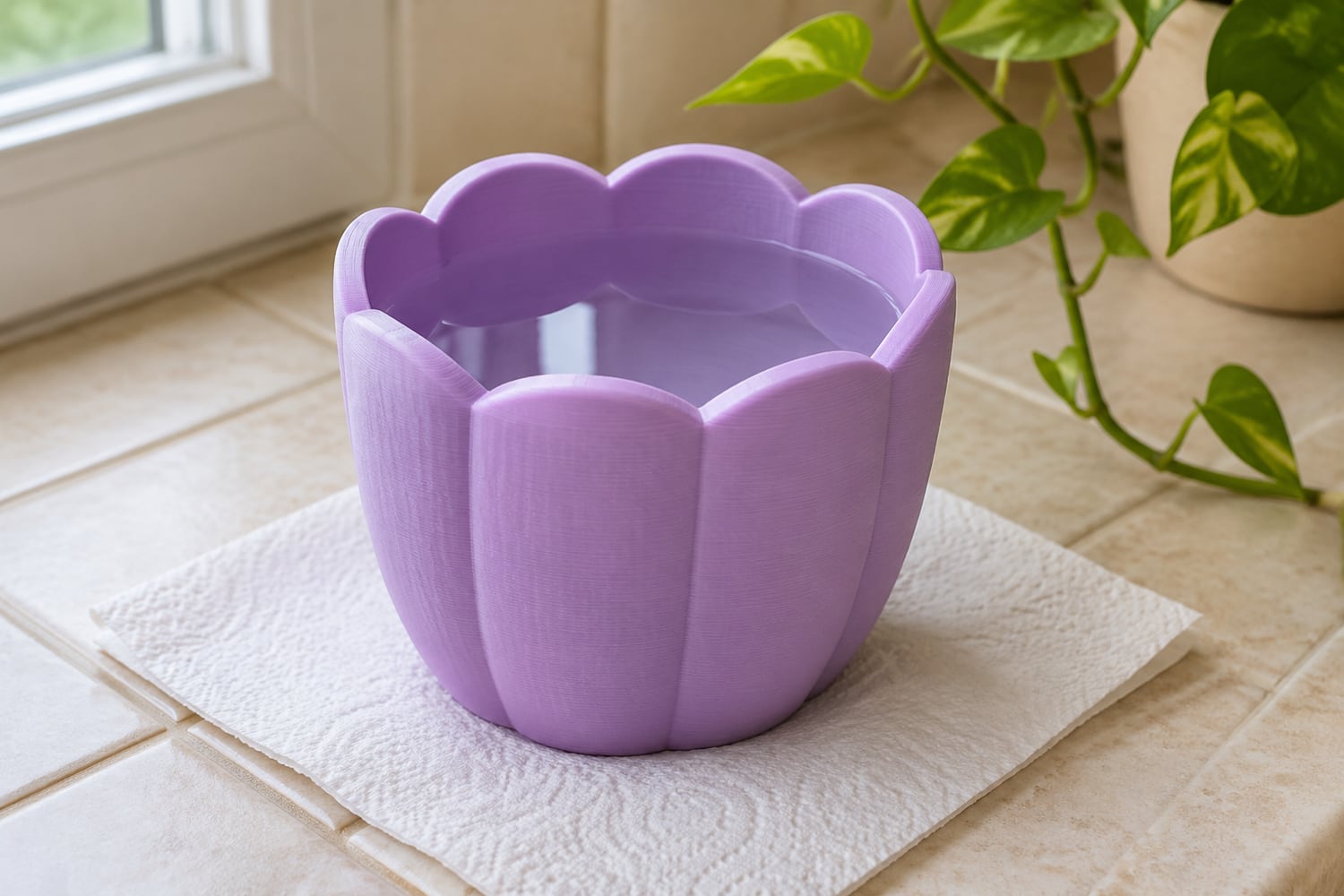
You don't need to trust a listing. asked3d describes a simple test: fill the print with water and stand it on dry tissue. It passes if the tissue is still dry after 48 hours (Bambu Lab's guidance for vases) or after one night (Prusa's guidance for closed models).
How to run it:
- Rinse the piece and dry the outside completely.
- Set it on a dry paper towel on a tray or countertop, not on wood.
- Fill it to the level you'll actually use.
- Check at 12, 24 and 48 hours. Look for damp spots under the base and along the seam line, which often shows as a faint vertical line of small bumps.
- If it stays dry, it's good for water. If not, use a liner.
Because of Prusa's note about PLA wicking over weeks, keep a coaster under even a passing vase for the first month.
Cleaning and care: no hot water or dishwasher
Treatstock warns that washing a printed planter in hot water can deform it, which fits with PLA's low softening point. Care is simple:
- Lukewarm water, a drop of mild dish soap and a soft brush.
- No dishwasher, no boiling water, no long soaks.
- Dry upside down so water doesn't sit in the bottom.
- Dust dried-flower vases with a soft brush or a hair dryer on cool.
For more on how long printed pieces hold up and how to care for them, see how long 3D printed items last.
Questions to ask a maker before you buy
Most ranking guides are written for people who print. As a buyer, your tool is the message button. Good questions:
- What material is it? PLA, PETG, ASA or something else.
- How was it printed? Several walls, or a single vase-mode wall?
- Is the inside sealed? If so, with what?
- Has this design been leak-tested? And for how long?
- For planters: Is there a drainage hole? What nursery pot size fits inside?
- What's it meant for? Fresh flowers, dried flowers or faux stems?
A maker who knows their product will answer these plainly, including "use a liner for fresh flowers" when that's the honest answer.
Dried-flower vases and planters for holiday gifts
The easiest use for a printed vase is no water at all. Puku Prints notes that dried stems, grasses, bunny tails and preserved eucalyptus can sit straight in the print and last for years. No leaks, no slime, no heat from a wet base.
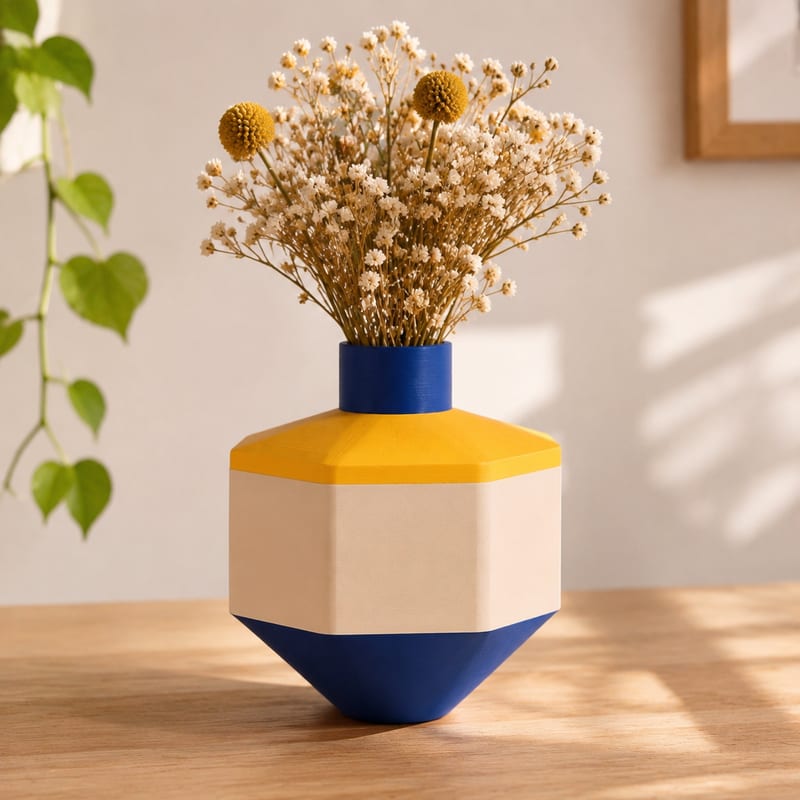
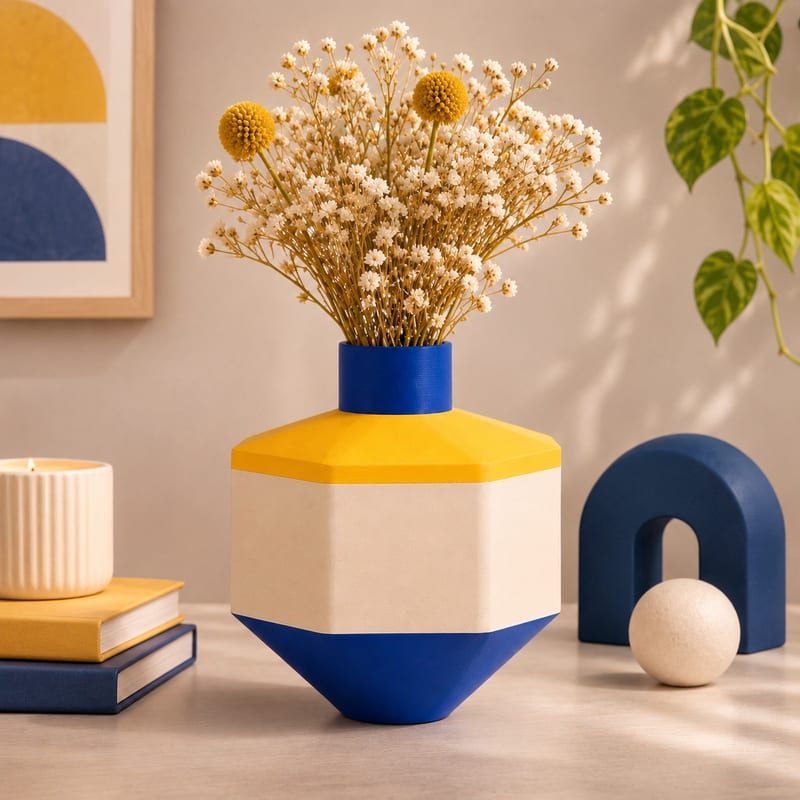
That makes a dried arrangement a good winter gift. The Dreidel Dried Flower Vase suits a Hanukkah table with a few stems of preserved eucalyptus or bunny tails. For plant lovers, a printed planter with a nursery pot and saucer tucked in is a complete gift, and a short card saying "keep out of hot sun, water at the sink" saves the recipient some guesswork.
You can browse printed vases, planters and wall planters in Filagora's Vases & Planters section, and message the maker with any of the questions above before you order.
Frequently asked questions
Are 3D printed vases waterproof?
Not automatically. Prusa says prints won't be waterproof without extra work, though its tests found pieces with 4 to 6 walls or a single vase-mode wall held water. A glass liner is the safe choice for fresh flowers.
Do 3D printed planters need drainage holes?
Most plants need drainage, so use a planter with a hole and a saucer, or keep the plant in a nursery pot inside the printed pot. A closed outer pot doesn't replace drainage, so water the inner pot at the sink and let it drain first.
Can a PLA planter go outside or in direct sun?
It's not a good idea. PLA holds its shape only up to about 57 to 60 °C, so a sunny windowsill or hot car can soften it. PETG suits covered outdoor spots and ABS or ASA suits full sun.
How do I test if a 3D printed vase leaks?
Fill it with water and stand it on a dry paper towel. If the towel is still dry after 48 hours, it's fine for water; if not, use a glass liner inside.
Can I put a 3D printed vase in the dishwasher?
No. Hot water can deform printed plastic, especially PLA. Wash it by hand in lukewarm water with mild soap and a soft brush.
Pieces from this guide
Printed to order by makers on Filagora.