Can PLA Be Used Outside? 3D Printed Decorations in Winter
Can 3D printed decorations survive snow, rain and freezing nights? How PLA, PETG and ASA handle winter, where to place them, and what to ask the maker first.
By the Filagora team · November 12, 2026 · 8 min read
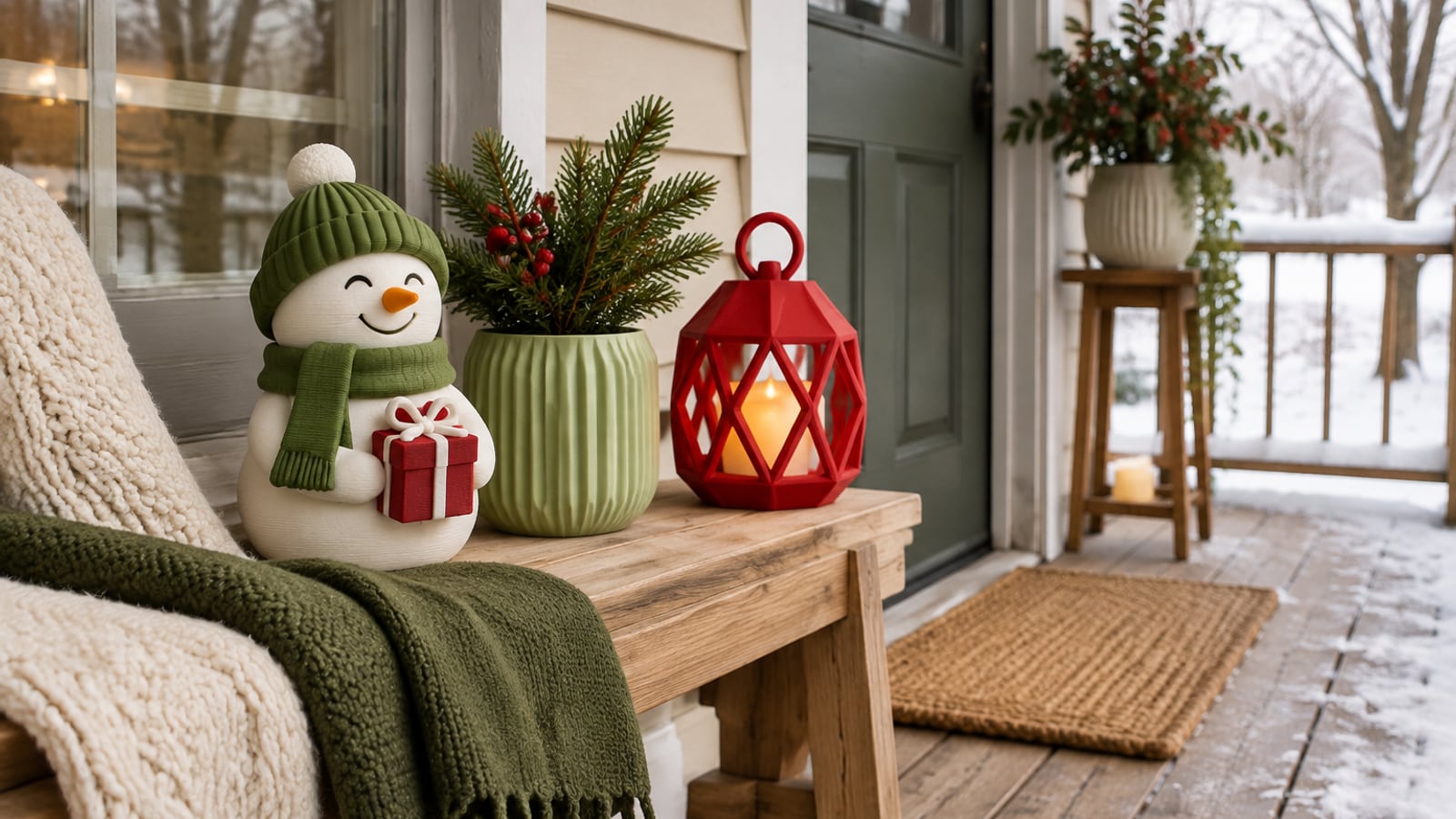
Yes, most 3D printed decorations can spend the holidays outside if they sit somewhere sheltered and come back in when the season ends. Cold by itself is not the main danger. The real risks are water that soaks in, freezes and thaws over and over, plus knocks from boots and shovels. For PLA, any spot that bakes in direct afternoon sun is also a problem. A gnome on a covered porch for six weeks and a planter left on an open lawn all year are very different jobs.
The short answer: yes, with the right spot and material
If you read around, the advice seems to contradict itself. How-To Geek calls PLA a poor choice outdoors "even in a temporary capacity" (How-To Geek). JLC3DP says PLA is fine for temporary items like seasonal decorations and for covered spots that stay cool (JLC3DP). 3DPrinterly says PLA can last several years outside, depending on humidity, heat and sun, and much longer in shade sheltered from rain (3DPrinterly).
These sources aren't really disagreeing. They're describing different conditions. Three things decide how a print holds up outside:
- Where it sits: covered and shaded, or open to sun, rain and snow.
- How long it stays: one holiday season, or year-round.
- What it's made of: standard PLA, PETG, ASA or a weather-rated blend.
For a seasonal decoration in a sheltered spot, standard PLA is usually fine. For something that lives in the yard all year, ask for a tougher material.
What winter actually does to 3D prints
Water gets inside
Most printed decorations are not solid plastic all the way through. They have outer walls around an internal infill pattern full of small air pockets, and tiny gaps between layers can let water creep in. Jawstec notes that water trapped inside a part expands when it freezes, which raises the risk of cracking or surface damage (Jawstec).
Freeze-thaw cycles do the damage
Research published on PubMed Central found that cycling between freezing and warmer temperatures can affect the structure and strength of 3D prints, especially when water is present (PMC study). A separate study found that freezing alone did not hurt PLA's mechanical properties (PMC study).
So the problem isn't the number on the thermometer. It's the sequence: wet, freeze, thaw, repeat. That is exactly what happens on a porch step that catches midday sun and ices over at night.
Cold makes plastic less forgiving
Cold can make printed parts more brittle (Jawstec). A piece that would shrug off a bump in July might chip if a boot or shovel catches it in January. This applies to the "outdoor" filaments too. All3DP warns that PETG tends to get brittle around –20 °C (–4 °F) (All3DP).
Less sun works in your favor
PLA's biggest outdoor weakness is heat, not cold. It has a low glass transition temperature, so afternoon sun can warm it enough to warp (How-To Geek). It can start to soften at around 55–60 °C (131–140 °F) (Maker Myths). JLC3DP says PLA in direct sun can warp or crack within a single season.
Winter sun is lower and weaker, so that risk drops a lot. Hydrolysis is another way PLA ages, and it depends on humidity. But it needs about 50 °C (122 °F) to drive real degradation (PMC study), so cold weather doesn't speed it up.
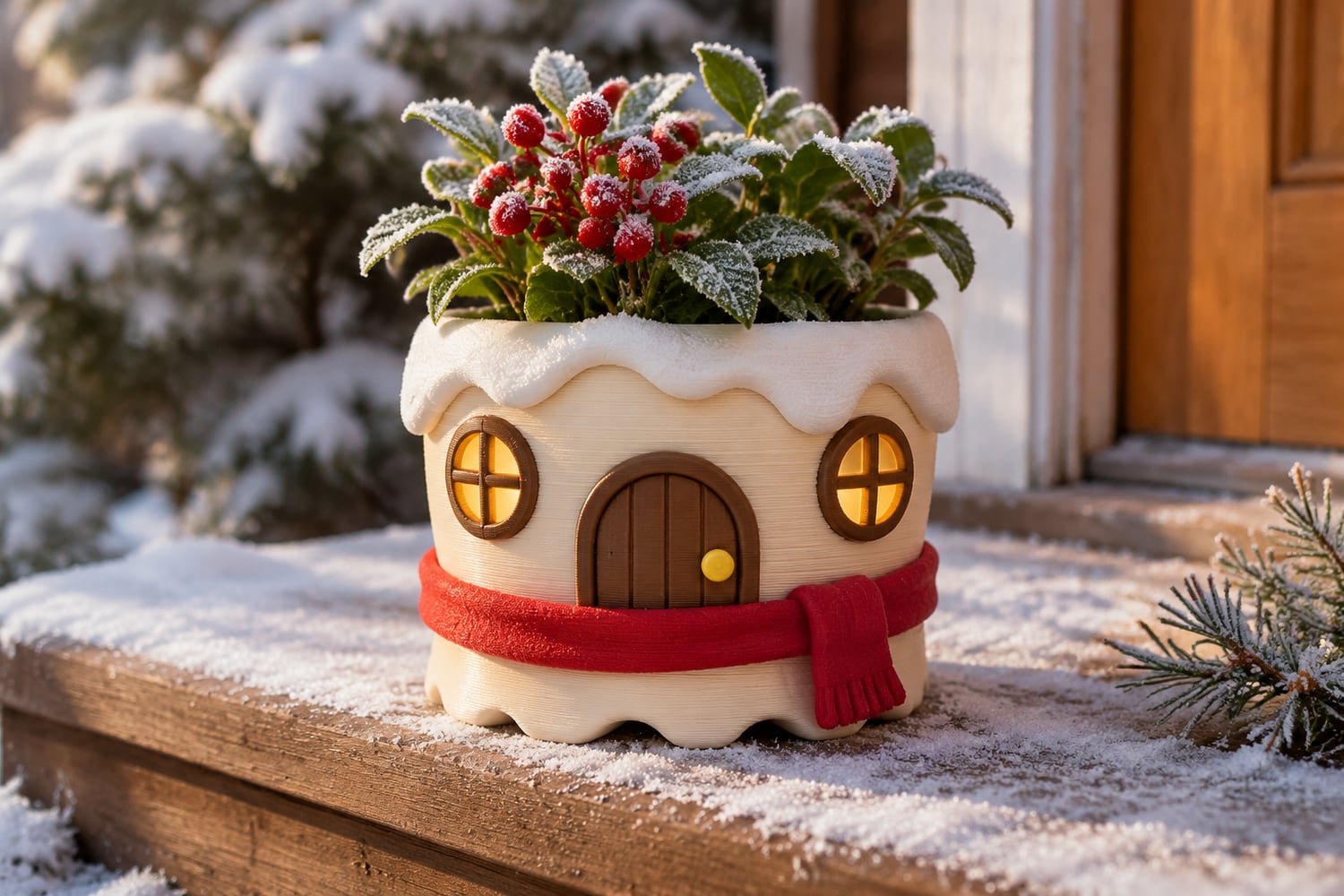
PLA, PETG and ASA outdoors: what buyers should know
PLA
PLA is the most common filament for decorative prints, and it is the one most likely to struggle outside long-term. On the Bambu Lab forum, one user found PLA prints left in the garden were "pretty brittle after 12 months." Another said PLA gets brittle as it absorbs moisture (Bambu Lab forum).
Not all PLA is the same. In one maker's own tests, matte PLA outlasted standard PLA, while silk PLA varied widely (Bambu Lab forum). Polymaker says weather testing of its Matte PLA for Production showed results on par with ASA (Polymaker). That is a manufacturer's claim, but it shows formulation matters. All3DP suggests a specially formulated high-temperature PLA if PLA has to go outside.
PETG
PETG handles water and weather better than PLA, and PLA+ is usually still less weather-resistant than PETG (Wevolver). JLC3DP says PETG works outdoors for things like garden hooks and planters. Long sun exposure can still make it fade, yellow, lose its gloss and get more brittle. For pieces that will see a lot of sun, Wevolver recommends a UV-stabilized grade or ASA.
ASA
ASA resists UV and water damage and keeps its strength up to around 100 °C (212 °F) (How-To Geek). If you want something to stay in the yard year-round, this is the material to ask about.
| Material | Holiday season, covered spot | Year-round, open yard | Winter watch-outs |
|---|---|---|---|
| Standard PLA | Usually fine | Not recommended | Gets brittle as it takes on moisture |
| Matte or weather-rated PLA | Fine | Possible; ask the maker | Results vary by formulation |
| PETG | Fine | Good; UV-stabilized for full sun | Can get brittle around –20 °C |
| ASA | Fine | Best of the common options | Ask which colors the maker stocks |
Covered porch, open yard or windowsill: matching the spot to the piece
Covered porch or patio
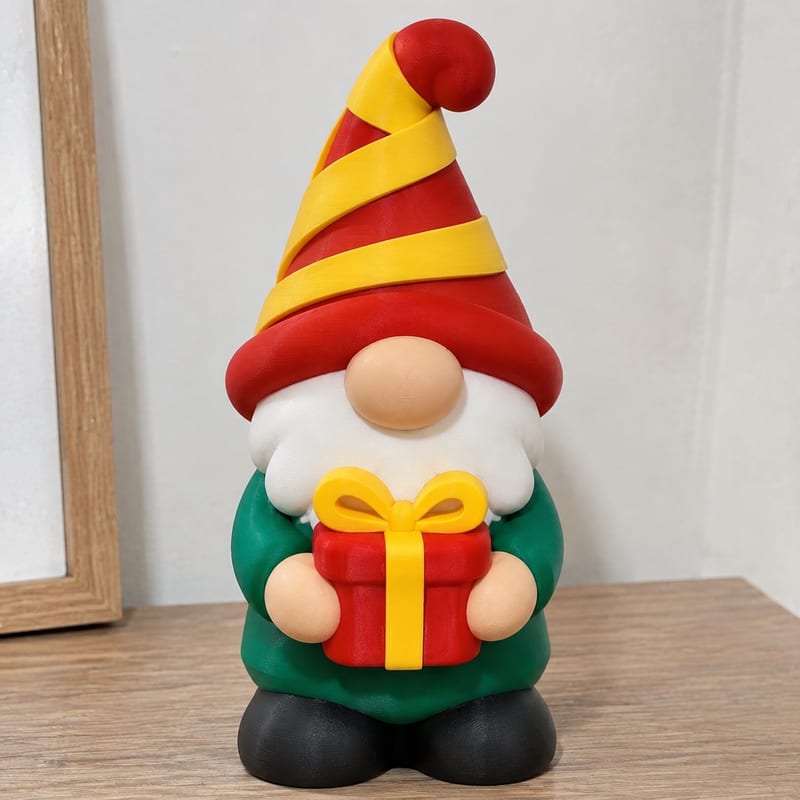
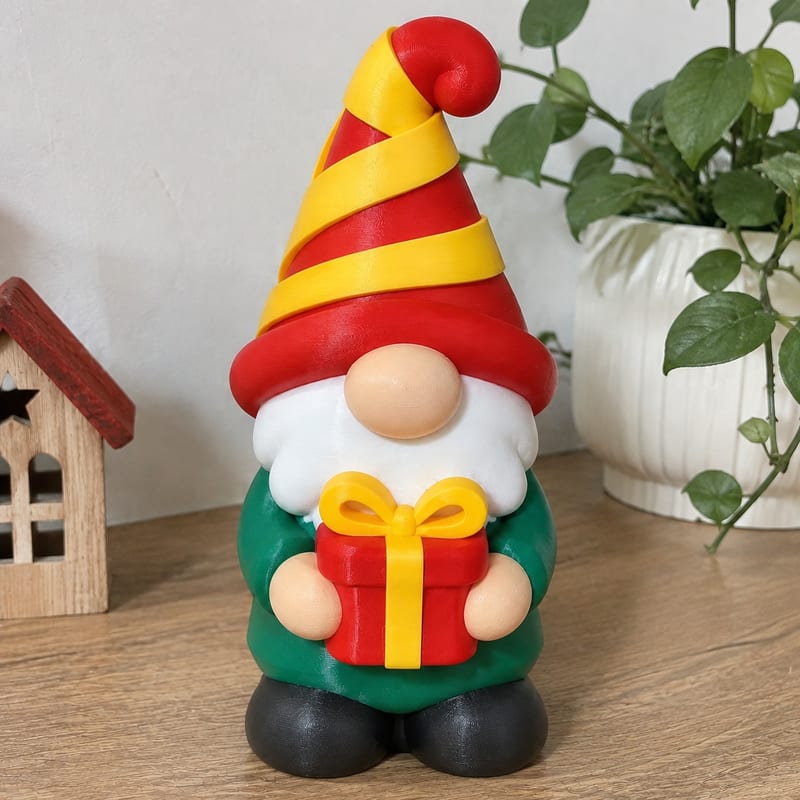
This is the best outdoor spot for printed decor. The roof keeps most rain and snow off, and the shade keeps sunny days from warming the plastic. A seasonal piece like the Curling Ribbon Christmas Garden Gnome belongs here, unless the maker confirms it's printed in a weather-rated material. Set it back from the edge where blown snow and drips land.
Open lawn or garden bed
This is the hardest job. Snow buries the piece, meltwater pools around the base, clear days bring sun, and shovels and snowblowers come close. Save this spot for PETG or ASA pieces, and expect some fading and wear over time.
Windowsill or entryway, indoors
This is the easiest spot. You get the winter look without the weather. Wipe off condensation from cold glass now and then, and don't set a piece directly on a radiator or heat vent. Entryways and mudrooms get wet boots and snowmelt, but a quick wipe is all most prints need.
How long will it last outside? Realistic expectations
- One holiday season, covered spot, standard PLA: should come through fine. This is the use JLC3DP describes as suitable.
- Year-round, open garden, standard PLA: expect it to get brittle. The forum report of PLA "pretty brittle after 12 months" is a fair warning.
- Year-round, shaded and sheltered, PLA: can go much longer. 3DPrinterly cites thick walls and shade as the key factors, and some users report PLA lasting more than five years outdoors.
- PETG or ASA outdoors: the longest-lasting of the common options. PETG may fade or yellow in strong sun.
For indoor care, cleaning and the general lifespan of printed pieces, see How Long Do 3D Printed Items Last?
Questions to ask a maker before buying outdoor decor
Most listings are written for indoor use. If you plan to put a piece outside, send a short message first:
- What filament is it printed in? Standard PLA, matte or weather-rated PLA, PETG or ASA.
- Is it meant for indoor, covered outdoor or open outdoor use? A good maker will tell you straight.
- How thick are the walls? Thicker walls leave less room for water to reach the infill.
- Is it painted or sealed, and how should I clean it?
- Is it one piece, or are parts glued together? Glued joints are another place for water to sit.
- Are there cups, hats, bowls or ledges that will collect water? If so, is there a drain hole?
- How heavy is it? Light, hollow pieces can blow over on an exposed porch, so ask about a weighted base or plan to anchor it.
Winter care: drain it, clear the snow, bring it in after the holidays
These habits make the biggest difference for printed decorations outdoors:
- Lift it off the ground. A brick, paver or plant stand keeps the base out of slush and meltwater.
- Don't let it get buried. Brush snow off with a soft brush after a storm rather than letting it melt and refreeze around the piece.
- Tip out standing water. Bowls, hats and planter tops fill with rain and melted snow, and that water then freezes.
- Keep it away from the shoveling zone. Pick a spot where shoveled snow, slush and de-icing grit won't be thrown at it.
- Never chip ice off with a scraper. Bring the piece inside and let it thaw at room temperature. Skip hair dryers and space heaters, since PLA softens at surprisingly low temperatures.
- Bring it in after the season. Let it dry fully indoors before storing it, then keep it somewhere dry. Avoid an attic that bakes in summer.
Gift ideas: outdoor pieces, and indoor pieces with a winter feel
For a porch, a seasonal statue in a covered spot is the classic choice. Just ask about the material and follow the care list above.
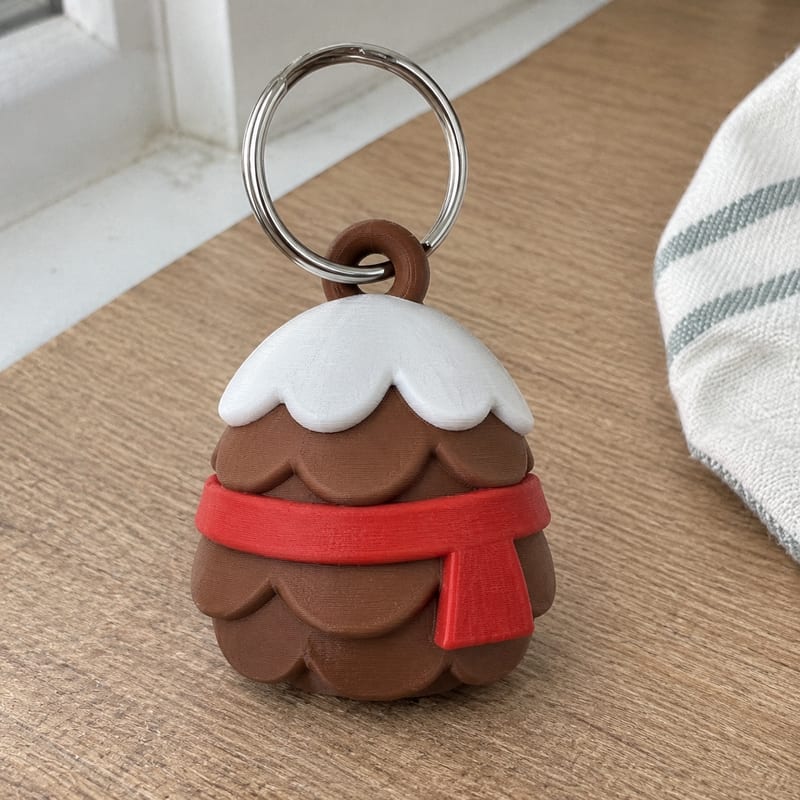
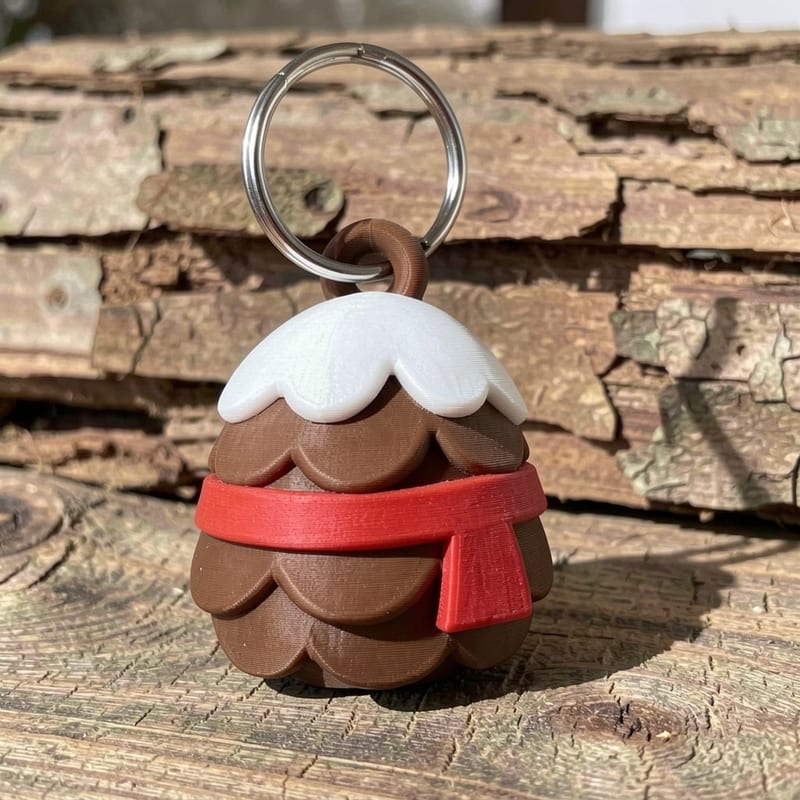
Small pieces that go out in the cold with you have an easier life than yard decor. A keychain like the Winter Pine Cone Keychain gets snowed on and rained on, but it rarely sits in standing water and spends most nights indoors drying out. The main winter risk is a hard drop on ice when the plastic is cold.
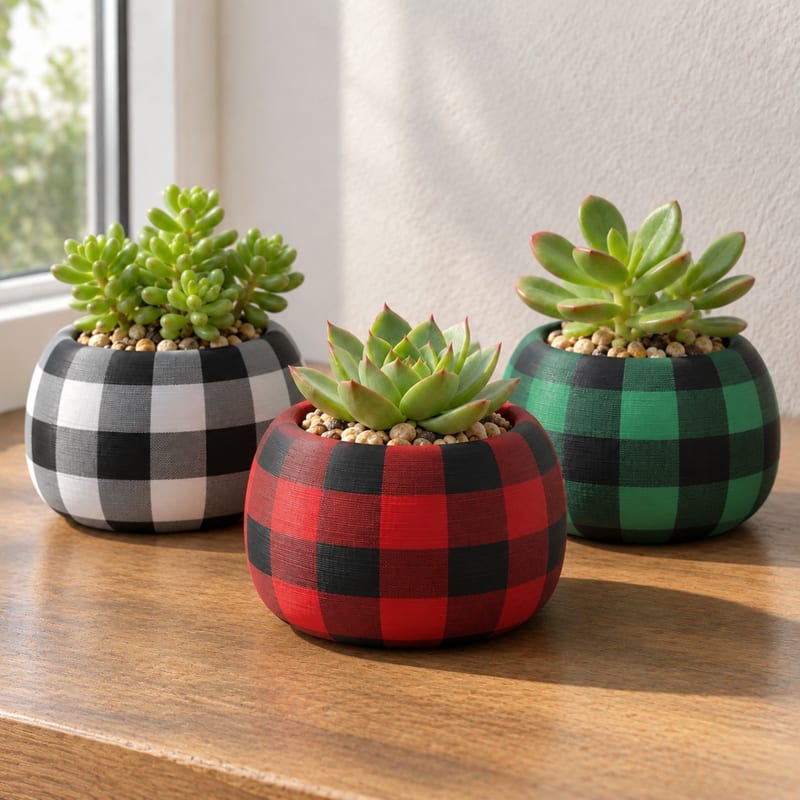
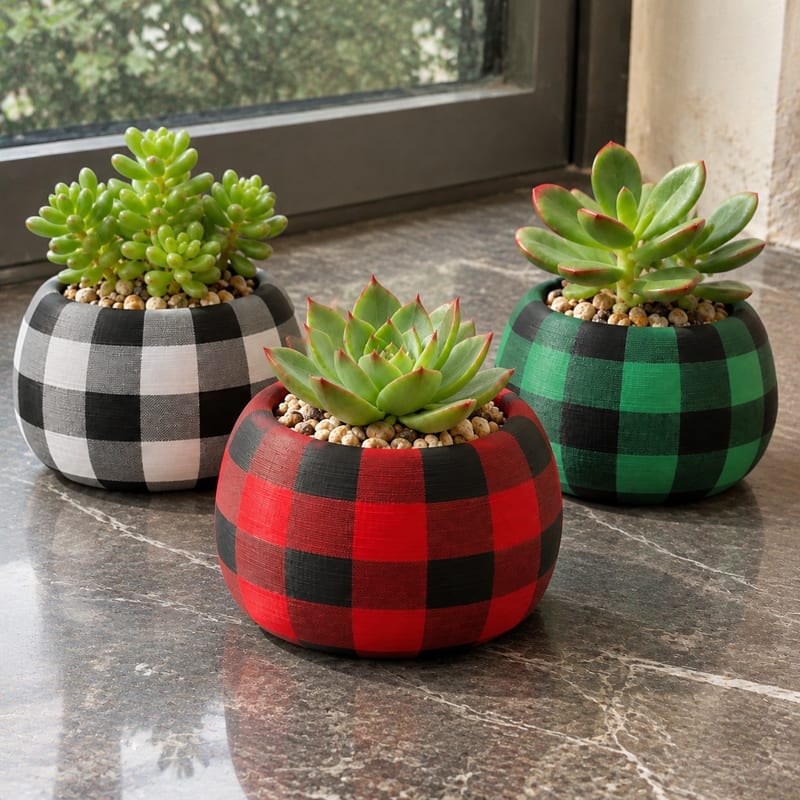
If you're shopping for a plant lover, keep the plants inside. A printed planter on a sunny windowsill gives you the winter look without frost and snowmelt. The Winter Plaid Succulent Planter Set is one example. Before watering, read Can a 3D Printed Vase Hold Water? for what printed pots can and can't do.
Filagora's makers print every piece to order, so you can ask about the material before you buy. Browse Garden & Outdoor for porch pieces, and message the maker with the questions above.
Frequently asked questions
Can PLA be used outside in winter?
Yes, for a holiday season in a covered, shaded spot. Cold itself doesn't harm PLA much; the risks are moisture soaking in and repeated freeze-thaw cycles, so avoid open lawns and standing water.
Does cold weather make 3D prints brittle?
Cold makes printed plastic less forgiving, so a knock that wouldn't matter in summer can chip a piece in winter. Even PETG tends to get brittle around –20 °C (–4 °F).
How long does PLA last outside?
It depends heavily on conditions. One user found garden PLA prints brittle after 12 months, while others report more than five years in shade sheltered from rain.
Is PETG better than PLA for outdoor decorations?
Generally yes. PETG handles water and weather better than PLA, though long sun exposure can fade or yellow it. For year-round full sun, ASA or a UV-stabilized grade is the better choice.
How do I protect a 3D printed decoration outside in winter?
Keep it under cover and off the ground, tip out standing water, brush off snow before it refreezes, and keep it away from shoveling. Bring it in after the season and let it dry before storing.
Pieces from this guide
Printed to order by makers on Filagora.