Are 3D Printed Dice Fair? What to Know Before Gifting a Set
Are 3D printed dice fair? How resin and filament dice compare, why the salt water test misleads, how to roll-test a set, and what to ask before gifting one.
By the Filagora team · November 14, 2026 · 9 min read
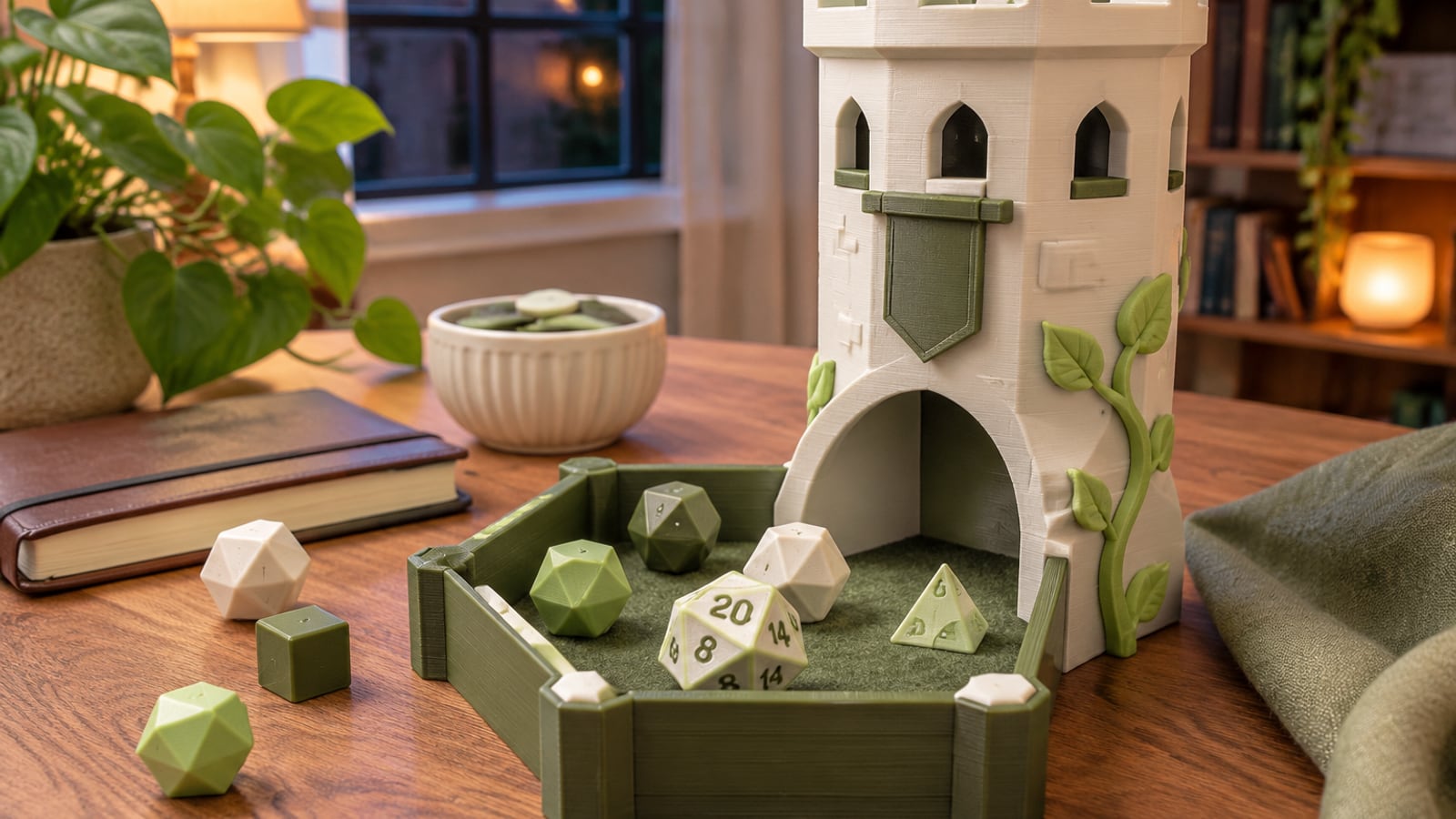
Well-made 3D printed dice are fair enough for a normal game night. They are not perfectly balanced, but neither are most store-bought dice. The real risks are specific and easy to ask about: hidden hollows, poor infill, careless sanding and an odd number layout. The printing process matters (resin vs filament), and the popular salt water test is not a reliable way to check a printed die.
If you're buying a dice set as a gift for a Dungeon Master or a player, here is what actually affects how a printed die rolls, and what to ask the maker before you order.
The short answer: fair enough for game night, with caveats
Even the guides written for people printing their own dice land in the same place. 3DPrinterly says printed dice "will be uneven, but to a very small degree if done correctly," and that how fair they are depends on the printing technology used.
The evidence is thin on both sides, so it helps to know what it is:
- A 2013 test on Joe's Makerbot found filament-printed dice "sufficiently balanced" by a chi-square test. But it rolled each die only 5 times per side, which is too few rolls to catch anything but a large bias.
- A Substack test of resin-printed custom dice rolled 145 times through a dice tower and got a chi-square of 1.10, well under the 5.99 threshold for its three-outcome die. It's a good result, but it was a custom die with three outcomes, not a d20.
- 3DPrinterly also passes along a story of someone who threw a few printed dice 100 times each and found them "very far from being fair." No data is shown, so treat that as a warning, not a measurement.
In short, a carefully printed die can roll true. A sloppy one can roll badly. The process and the maker's care decide which you get.
Why no dice are perfectly fair
It helps to know what you're comparing printed dice against. Most dice in a game store aren't perfect either. Dice maker Fox Epoxy Creations notes that "the majority of dice - including factory-made sets - are not perfectly 100% balanced." The only truly balanced dice are casino dice, and even those are considered balanced for only about 4 to 8 hours before they're swapped out.
For a d20, "fair" means each face comes up 1 time in 20, or 5% (Dice Dragons). No home game needs casino precision. What you want is no flaw big enough to tilt results over a campaign, and good printed dice can meet that bar.
The dice shop Dice Outpost names "bargain-bin resin and handmade pours, where bubbles and off-center inclusions hide" as the main risk, and says machined metal dice are the most consistently true. So the comparison isn't printed versus perfect. It's printed versus the cheap and handmade dice most people already roll.
Resin-printed vs filament-printed dice: what changes
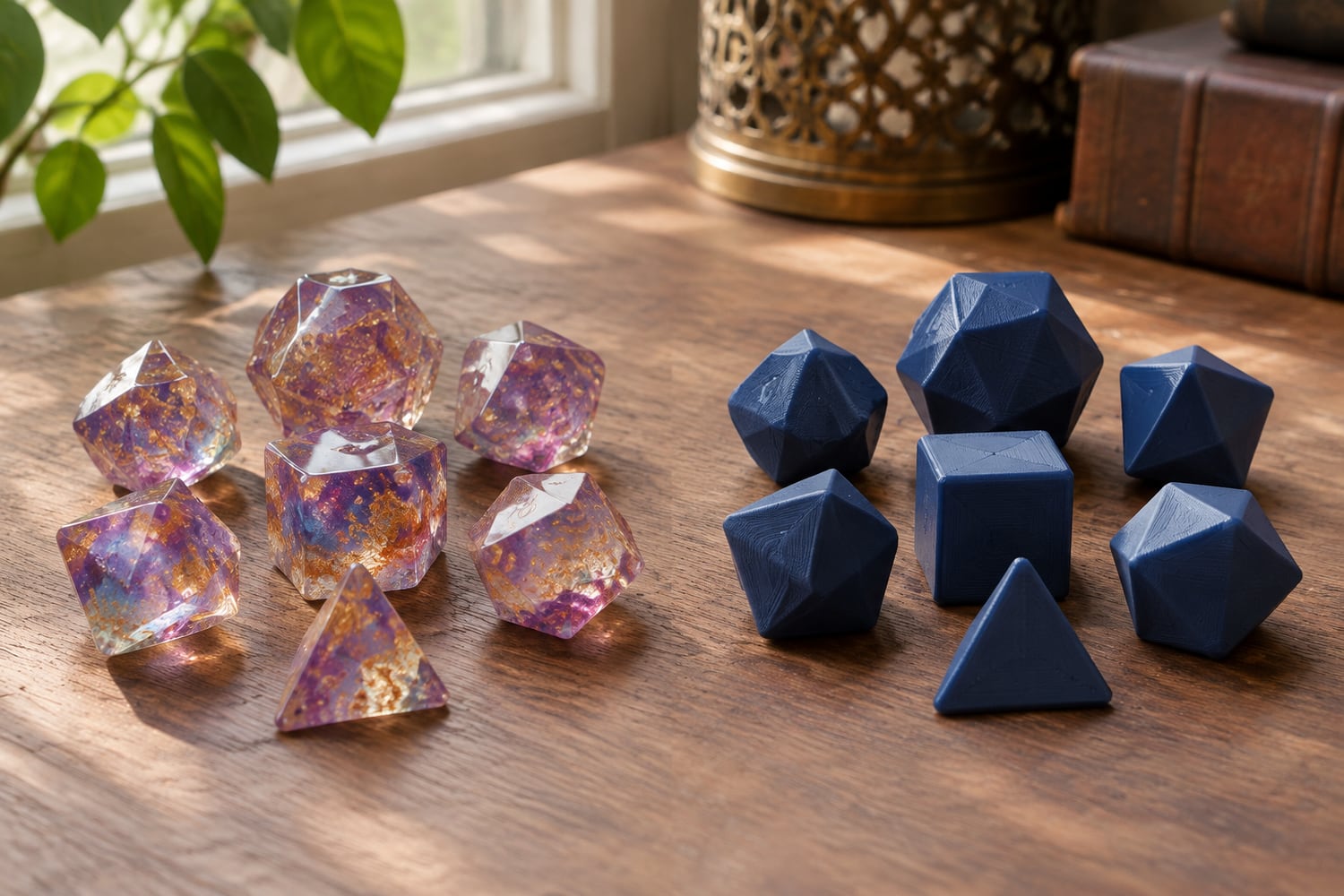
3D printed dice usually come from one of two processes. Resin printers (SLA and similar) cure liquid resin with light, one thin layer at a time. Filament printers (FDM) melt a plastic strand, usually PLA or PETG, and lay it down in lines.
| Resin-printed (SLA) | Filament-printed (FDM) | |
|---|---|---|
| Inside the die | Can be fully solid; some slicers offer a hollowing option, which you don't want for dice | Usually an infill pattern, partly hollow unless printed at 100% |
| Surface | Smooth, crisp numbers | Visible layer lines, softer detail |
| Main balance risks | Hollowing, support marks sanded unevenly | Uneven infill, seams, small dice losing detail |
| What guides recommend | 3DPrinterly suggests SLA or SLS for the fairest dice | GreatLight calls FDM "best for non-critical decorative dice" |
That last line comes from GreatLight, a metal printing company. It says professionally printed resin and metal dice can pass strict balance tests, while home FDM printing "can often suffer from inconsistent infill." It sells printing services, so take that as a vendor's view. Still, it matches what most makers would tell you. Resin is the safer choice when fairness matters most, and filament dice are fine for casual play and display.
What actually makes a die unfair
Hidden hollows and bubbles
The biggest problem is uneven mass. If one side of a die is lighter than the other, the heavy side tends to settle downward, and the face opposite it comes up more often. In poured dice that's an air bubble. In printed dice it's a hollowed interior or an infill pattern that ends up off-center.
Infill
Filament dice are rarely solid unless the maker sets them that way. The Joe's Makerbot test suggested that low-infill dice seemed more balanced, but with such a small sample I wouldn't build a rule on it. What matters is that the infill is even and symmetrical, and a good maker can tell you what they used.
Number layout
This one gets overlooked. On a standard d6, opposite faces add up to 7. On a standard d20, they add up to 21. That layout spreads the high and low numbers around the die, so a tiny weight bias doesn't push results all one way. If a design clusters high numbers on one side, any small imbalance turns into a real advantage or penalty.
Sharp edges are not the problem
Sharp-edge dice have a reputation for being unfair, but Fanroll puts it plainly: "Sharp edges alone do not make dice unfair." A large trapped bubble, an uneven mold or too much sanding can throw off any die, sharp or round. For printed dice, the sanding part is worth noting. Resin prints need their support marks cleaned up, and sanding one face harder than the others changes its shape.
Can you salt-water test 3D printed dice?
You can try, but don't trust the result. The salt water test works like this: dissolve salt in warm water until the die floats, often about a third of a cup per glass, with Epsom salt for stubborn dice (Dice Outpost). Then spin the die a few times. If the same face keeps floating to the top, that side is light.
The catch, according to D20 Collective, is that the test "only works on solid, non-porous dice." Resin and acrylic float fine, but 3D printed dice "can absorb water or trap air in layer lines and give false readings." Filament dice with infill are the worst case, because air trapped inside or in surface lines can make any face pop up.
Even on dice where it works, the test catches only gross problems, like a big air bubble, an off-center core or a hollow chamber, "but not subtle bias that only shows up over hundreds of rolls" (same source). Dice Dragons also calls it not "a fully accurate or scientific way" to check balance.
If you test a resin-printed die this way, rinse it with fresh water and dry it afterward. For filament dice, skip it and use a roll test.
A simple roll test anyone can do
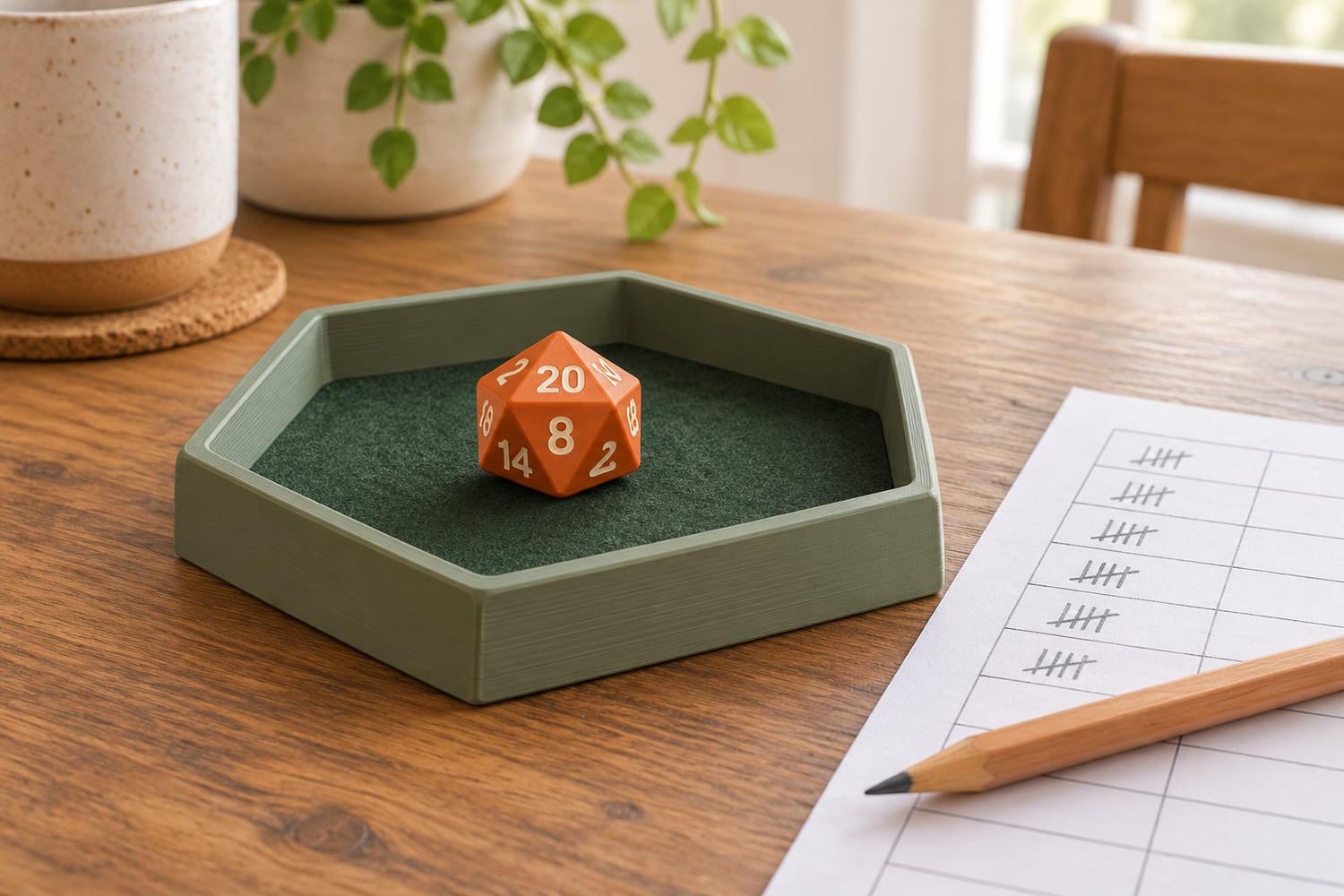
A tally sheet and some patience tell you more than any float test. Here's the plain-words version of a chi-square test.
- Pick a number of rolls. You need at least 5 expected results per face, and more is much better. For a d6, 120 rolls gives 20 expected per face. For a d20, 200 rolls gives 10 per face, and several hundred is better.
- Roll the same way every time. Use the same tray or tower and the same surface.
- Tally each result.
- Do the math for each face. Take (count minus expected), square it, then divide by expected. For a d6 rolled 120 times, a face that came up 26 times gives (26 − 20)² ÷ 20 = 1.8.
- Add up all the faces. That total is your chi-square number.
- Compare it to the threshold. At the usual 5% level, the cutoff is about 11.07 for a d6 and about 30.14 for a d20. Below the cutoff means no sign of bias. Well above it means the die is worth a second look.
Two honest limits apply. Passing doesn't prove a die is perfect, it only means you didn't find a big bias. And with a small number of rolls, only large problems will show up. That's why the 5-rolls-per-face test from 2013 isn't strong evidence either way.
Can a 3D printed die be loaded?
Yes, and some groups worry about it for good reason. A Printables designer published a deliberately unfair d20 to show how easy it is. The unfair versions have an internal hollow on one side, and the numbers are arranged so all the high values sit on one half and the lows on the other. The designer's own rule: "I would never, ever allow a player bring a 3D-printed d20 to any of my games! It's just too easy to load the dice if you print 'em yourself."
That isn't a reason to avoid printed dice. It's a reason to buy from makers who use standard layouts and solid prints, and to be open about it at the table. If your group is strict, a printed set that passes a roll test in front of everyone settles the question quickly. Many groups also keep printed dice for themed sessions or display and roll a shared set for big moments.
Buying a 3D printed dice set as a gift
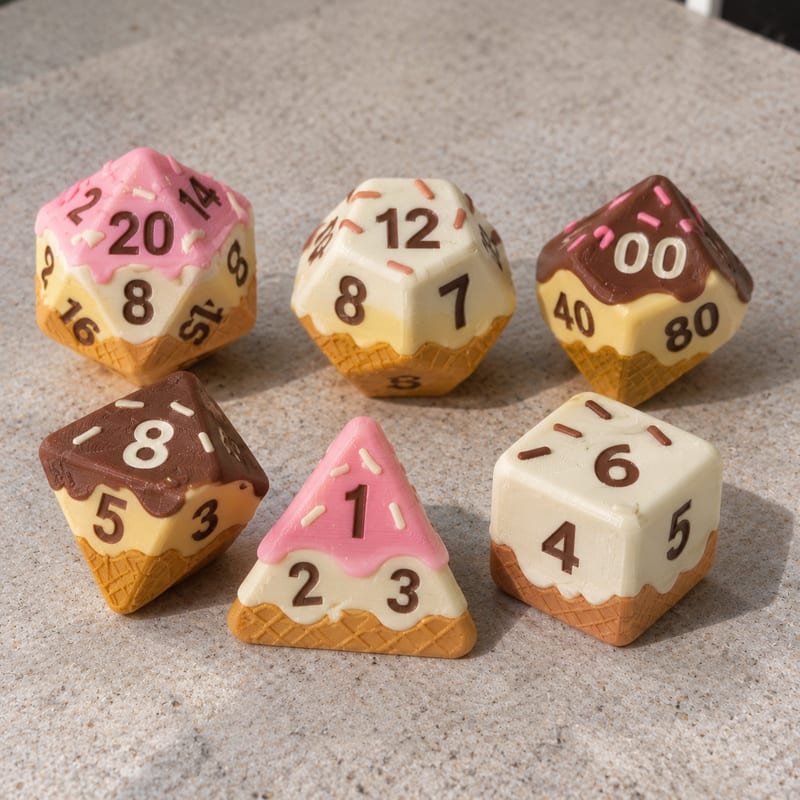
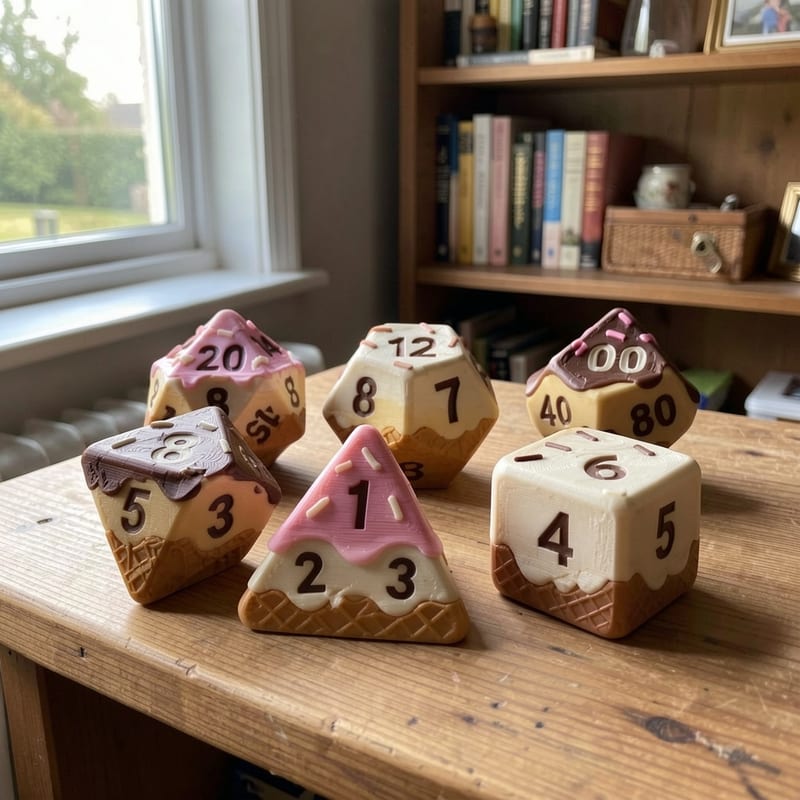
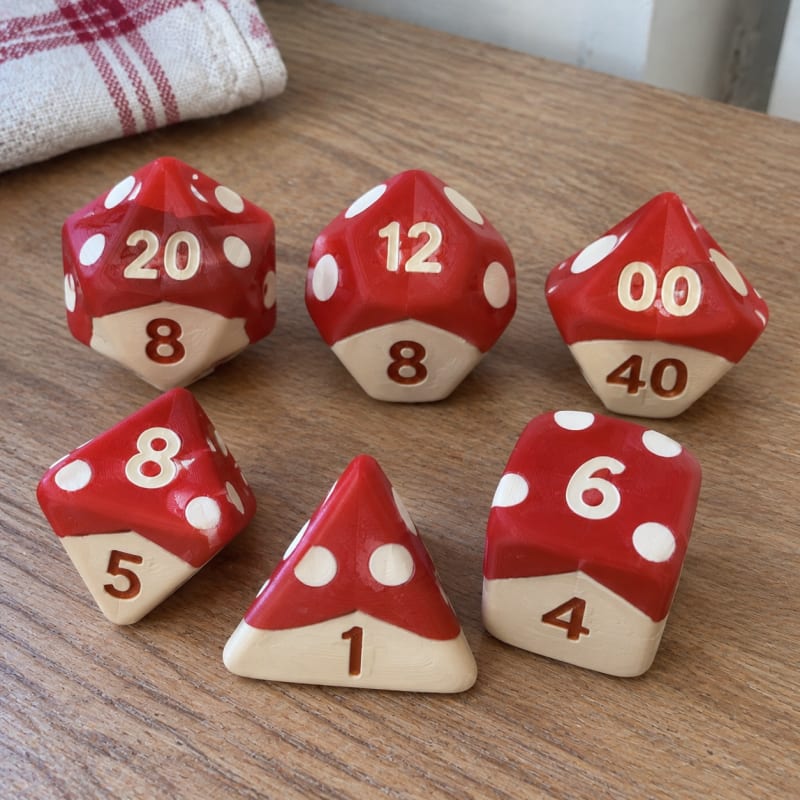
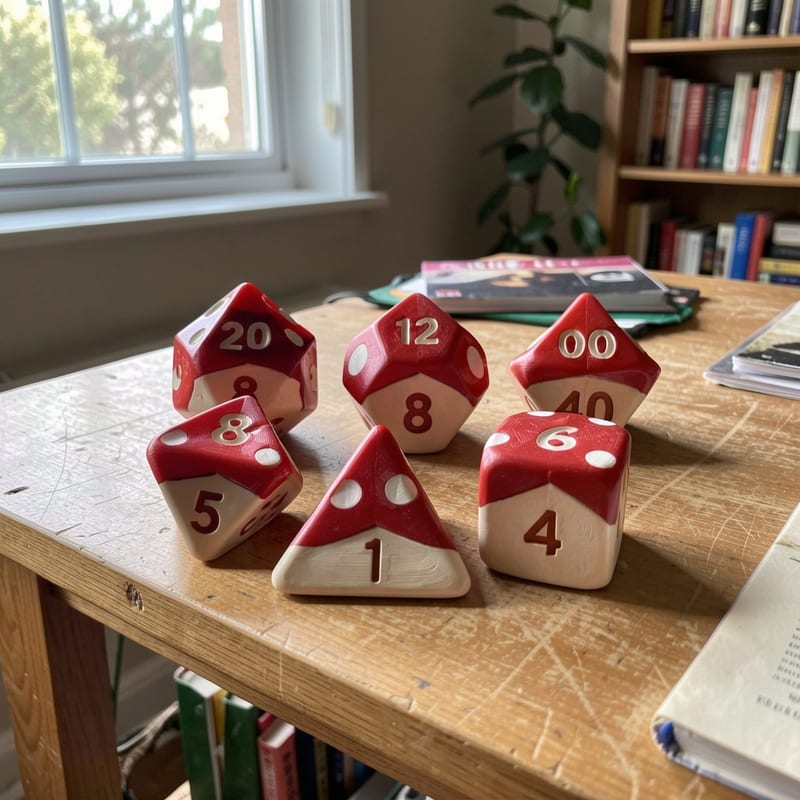
Printed dice sets make good gifts because they can look like nothing in a game store, from ice cream scoops to holiday mushrooms. Before you order, a few questions to the maker help:
- Resin or filament? Resin usually gives crisper numbers and a solid interior. Filament dice can be lovely but are best treated as casual or display dice.
- Solid or infill? Ask whether resin dice are printed solid (not hollowed) and what infill filament dice use.
- Standard number layout? Opposite faces on a d20 should add to 21, and on a d6 to 7.
- Have they been roll-tested? Don't assume a set is tested or "certified fair" unless the maker says so and can tell you how. Most handmade dice, poured or printed, aren't.
A set like the Round Scoop Ice Cream Dice Set is a seven-piece polyhedral set, the standard kit for most tabletop RPGs. Check the listing or message the maker for the material and infill before you buy.
One practical note: dice are small pieces and a choking hazard. A dice set is a gift for teen and adult players, not for children under 12. Our guide on whether 3D printed toys are safe for kids covers the small-parts issue in more detail.
Dice towers, trays and rolling surface: do they help?
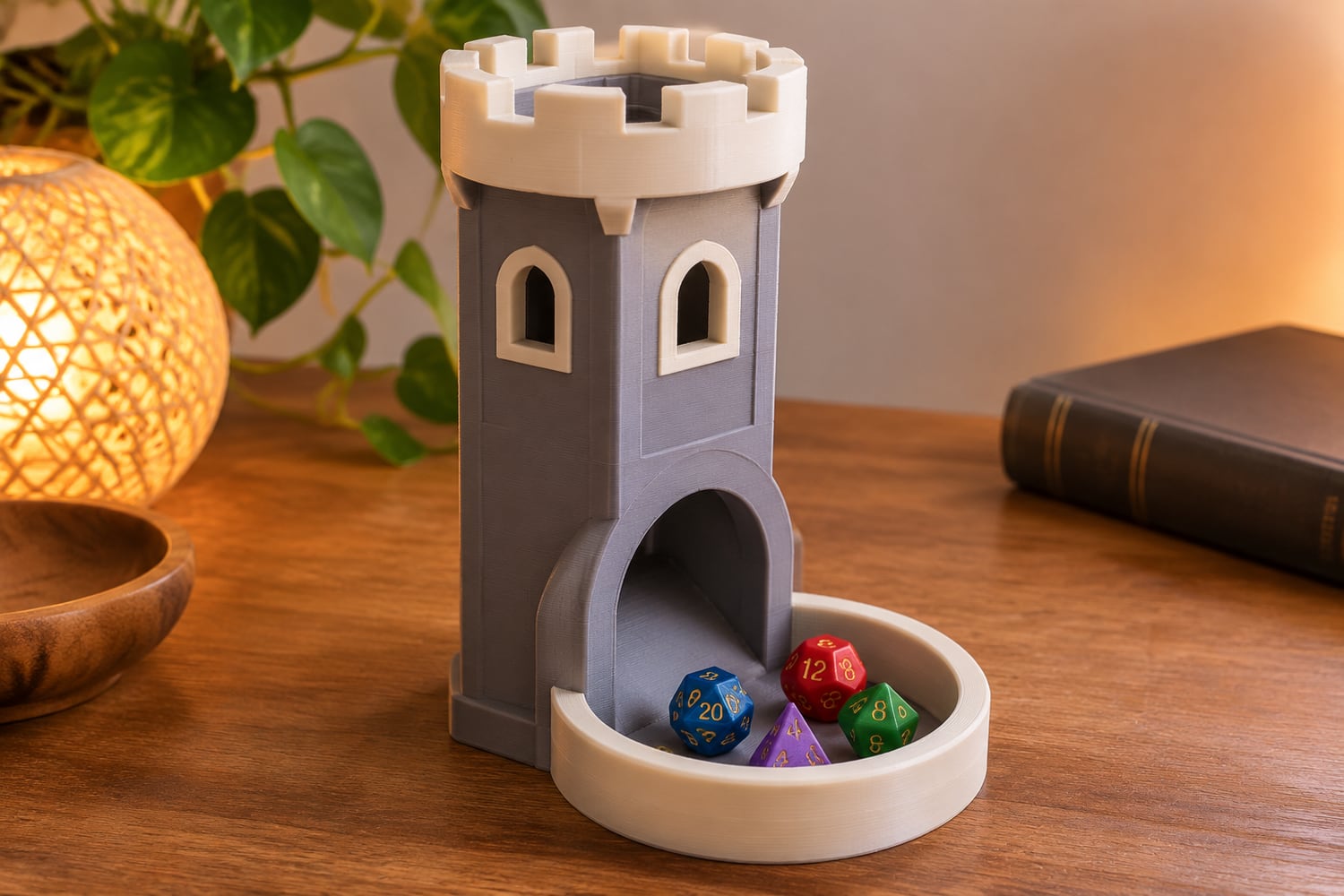
A dice tower doesn't fix an unbalanced die, but it does make rolls more consistent. Fox Epoxy Creations points out that towers, cups and other rolling devices "will also yield different results" than rolling by hand. A tower takes the wrist out of it. No one can practice a "lucky" flick, and the die tumbles off several baffles before it lands. The Substack tester rolled everything through a tower for exactly this reason.
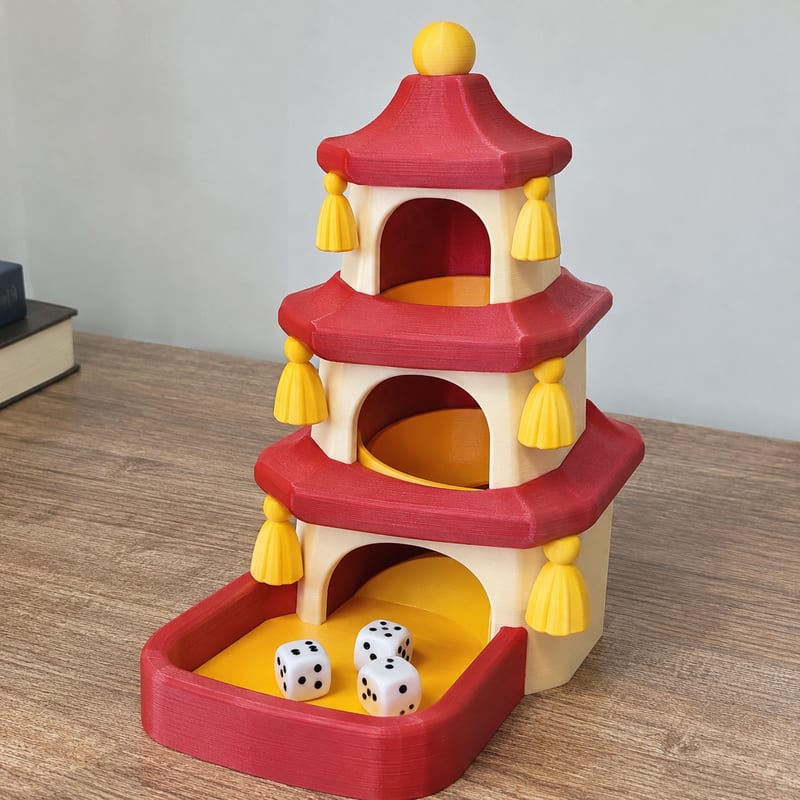
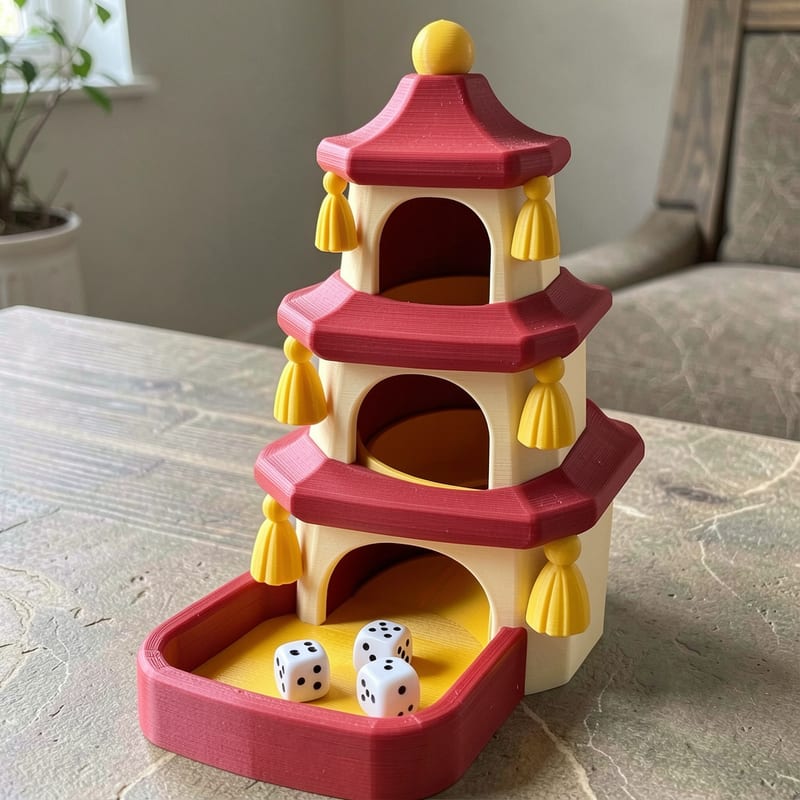
The surface matters too. Hard tables send dice bouncing off the edge, while a felt-lined tray gives them room to tumble and stop. For a gift, a tower pairs well with a dice set. A printed one like the Tiered Lantern Dice Tower doubles as table decor between sessions.
A last care tip that also affects fairness: keep printed dice away from hot cars and sunny windowsills. PLA can soften in heat and warp, and a warped die is an unfair die. Our post on whether PLA melts has the details.
If you're shopping for game night this season, Filagora's miniatures and tabletop section has printed dice sets, towers and accessories made to order by independent makers, and you can message them about materials before you buy.
Frequently asked questions
Are 3D printed dice fair enough for D&D?
Well-made 3D printed dice are fair enough for normal play, though no dice outside a casino are perfectly balanced. Resin-printed dice printed solid with a standard number layout are the safest choice.
Are resin dice more balanced than filament dice?
Resin-printed dice are generally considered more reliable because they can be printed fully solid with crisp detail. Filament dice use infill, which can be uneven, so they suit casual play and display better.
Does the salt water test work on 3D printed dice?
Not reliably. Printed dice, especially filament ones, can trap air or absorb water in their layer lines, which gives false readings. A roll test with a tally is a better check.
Do sharp-edge dice roll unfairly?
Sharp edges alone don't make a die unfair. Balance comes down to manufacturing quality, such as trapped bubbles, hollows or uneven sanding, not edge style.
Does a dice tower make rolls fairer?
A dice tower can't fix an unbalanced die, but it removes the roller's technique and makes every roll more consistent, which is why many groups use one.
Pieces from this guide
Printed to order by makers on Filagora.