How Much Weight Can a 3D Printed Hook Hold? A Buyer's Guide
A 3D printed hook can hold under 1 kg or over 10 kg depending on design, material and mounting. What to check before hanging coats, bags or a guitar.
By the Filagora team · November 28, 2026 · 9 min read
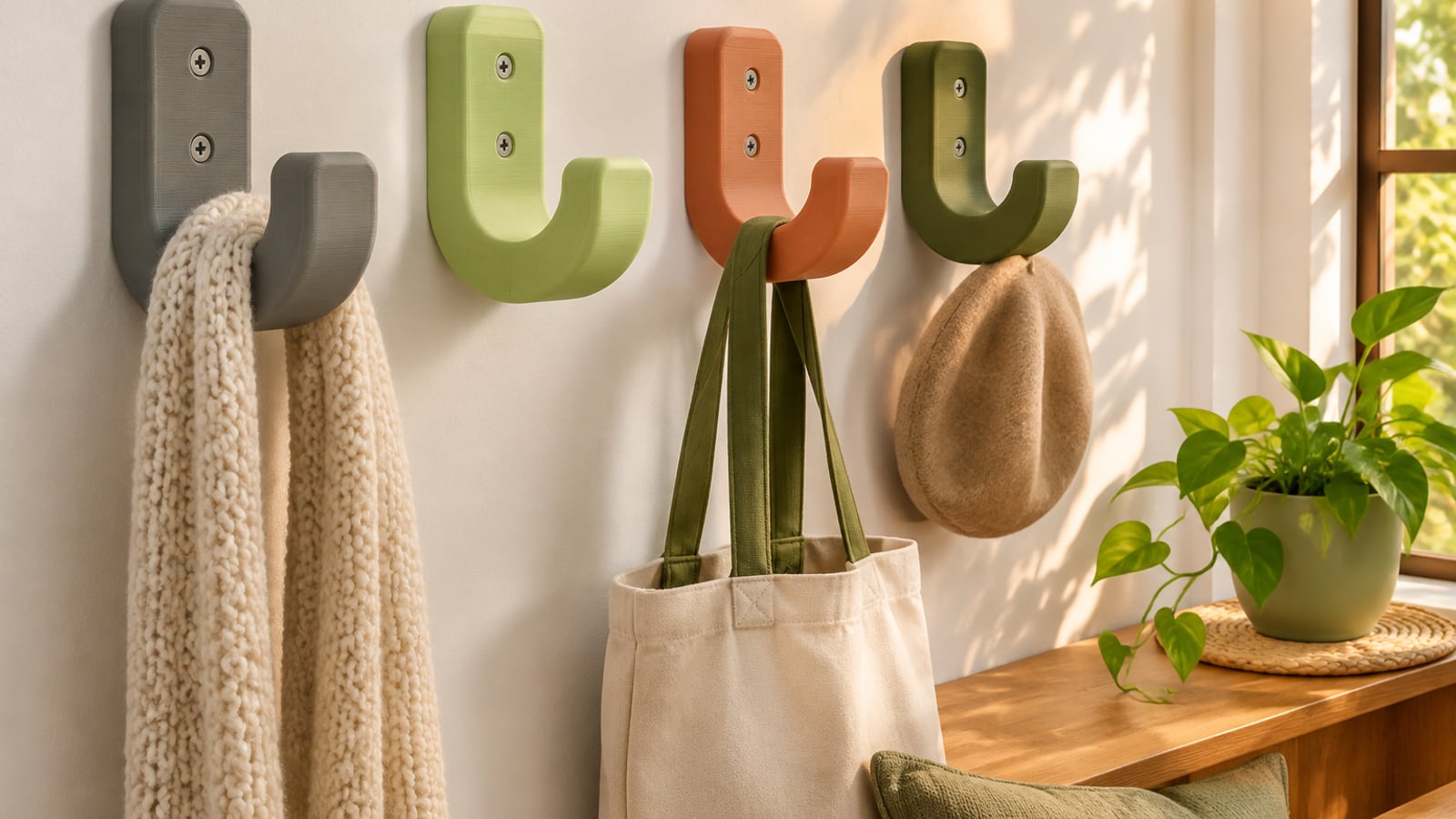
A well-designed 3D printed hook can hold a lot more than most people expect. One maker guide says a simple PLA wall hook weighing only a few grams can comfortably hold 10–20 kg if it is printed in the right orientation (Zerocore). A thin decorative hook, on the other hand, may hold less than 1 kg (Loftsmith).
Those two numbers aren't contradicting each other. They describe two different kinds of hook. What a printed hook can actually carry comes down to four things: how thick it is at the base, which way it was printed, what plastic it's made from, and how it's attached to your wall. As a buyer, you can only see some of these, so this guide covers what to look for and how to mount a hook so it stays put.
The short answer
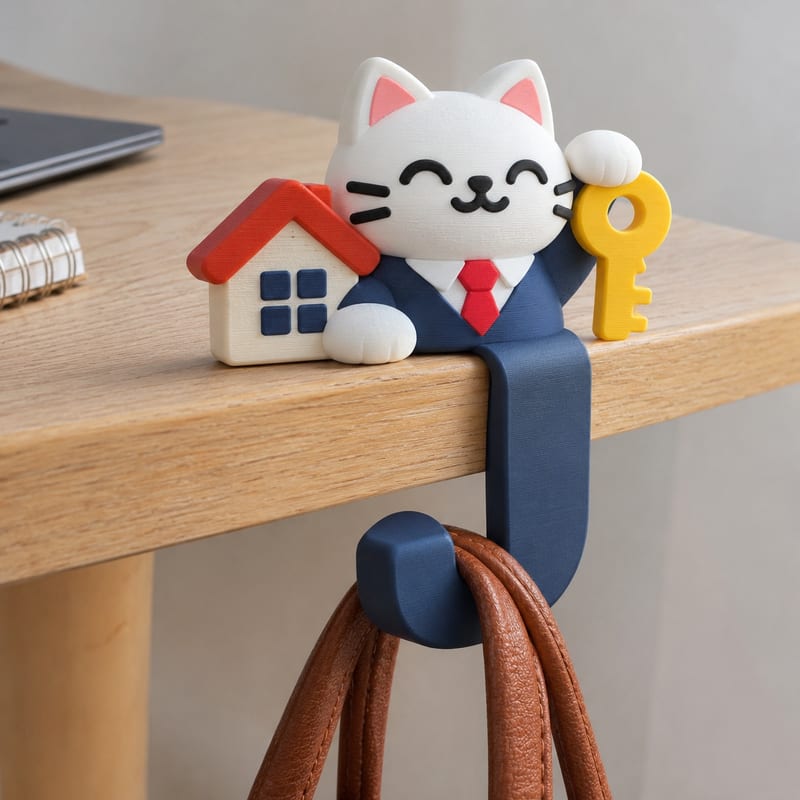
- Small decorative hooks (a figurine with a little hook built in) are best for light things: keys, a leash, a scarf, a hat, a tote bag.
- Chunky utility-style hooks with a thick base and a short reach can take coats and bags, if they're screwed into something solid.
- Anything heavy or valuable, like a loaded backpack or a guitar, needs a hook the maker has actually rated for that job, plus proper mounting.
- The wall fixing usually fails before the plastic does. A printed hook can be stronger than the plywood it's screwed to, and vastly stronger than an adhesive pad on a painted wall (Latencot).
Decorative hooks and utility hooks are different products
A 4 mm thick decorative hook and a 10 mm thick utility hook, printed from the same spool, can differ in strength by a factor of six (Loftsmith). Same plastic, same printer, very different jobs.
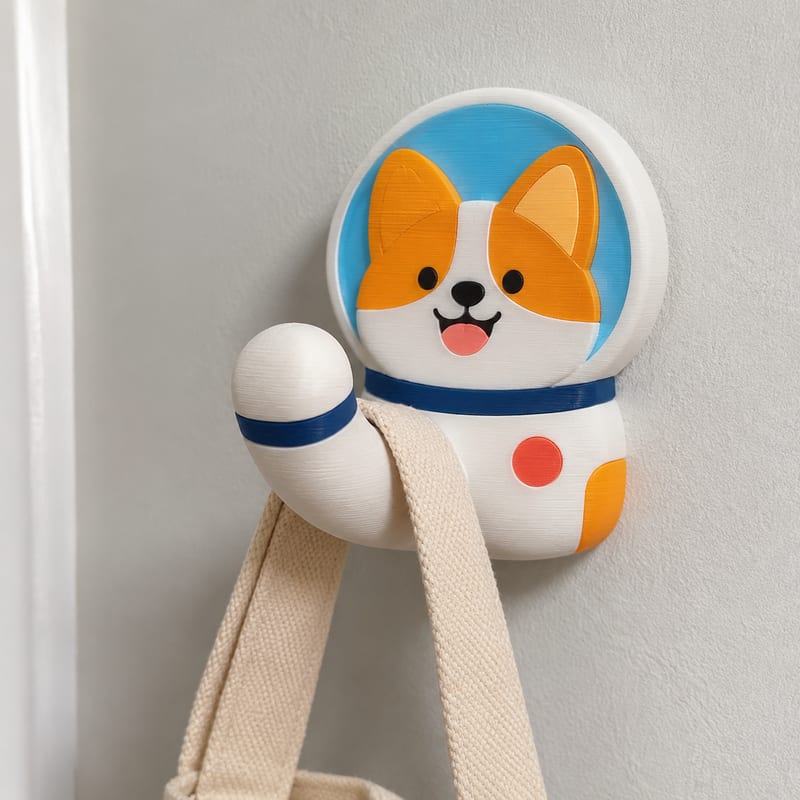
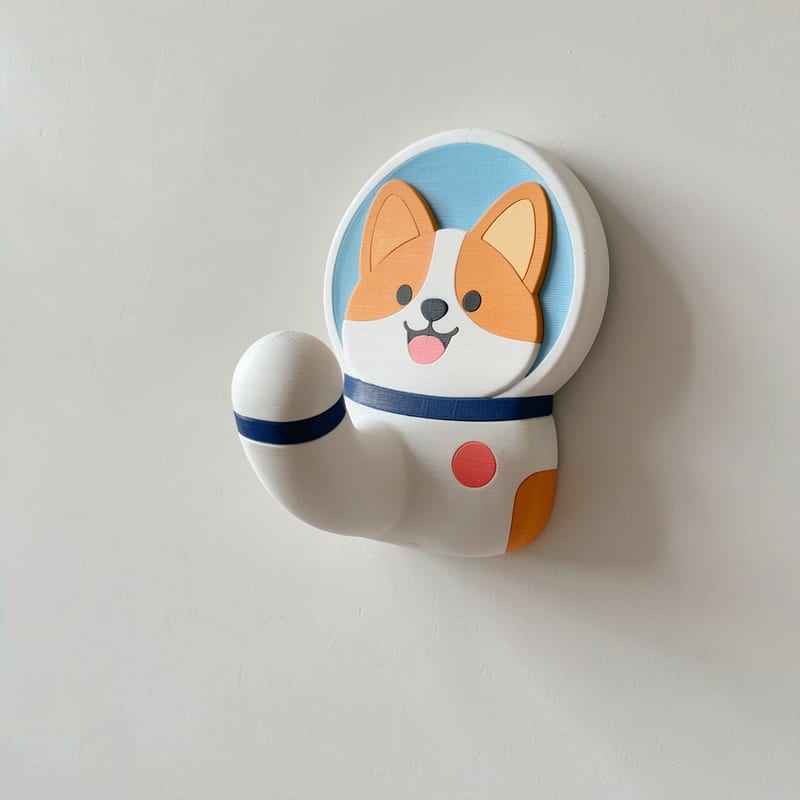
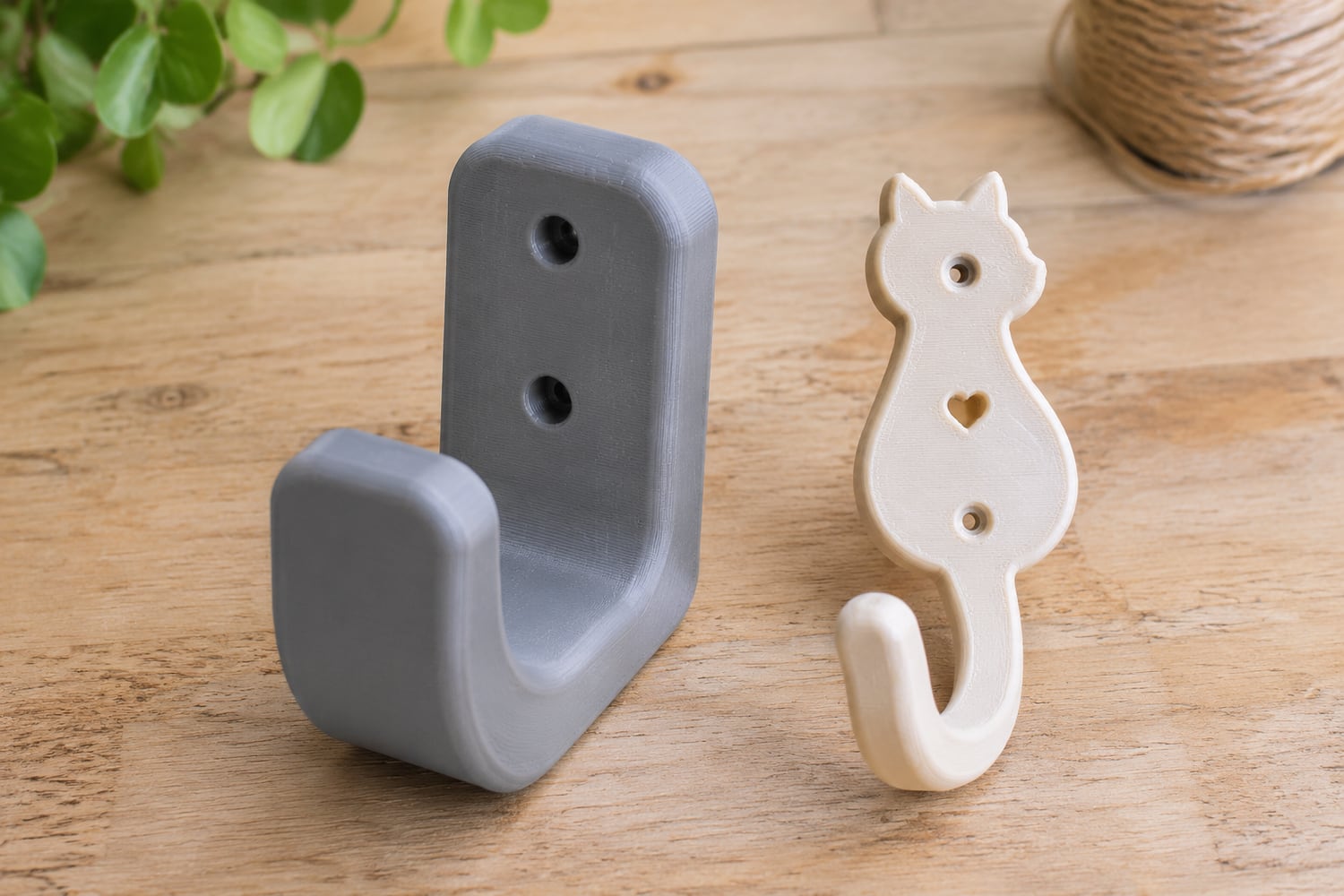
Decorative hooks are designed around a character or a scene. The sculpture is the point, and the hook is often a slim arm or curl that fits the design. That's fine for what they're meant to hold. A piece like the Corgi Astronaut wall hook is the kind of thing you'd hang keys, a cap or a light bag on by the door, not a wet winter parka.
Utility hooks look plain because every millimeter is working: a wide back plate, a thick arm that's short from wall to tip, and a rounded inside curve with no sharp corners where cracks start.
What makes a printed hook strong, in plain English
Printed hooks almost never snap at the tip. They fail by bending at the root, where the arm meets the back plate. Engineers estimate the stress there as 6 × load × reach ÷ (width × thickness²) (Loftsmith). You don't need to calculate anything, but the formula tells you three useful things:
Thickness matters most
Thickness is squared in that formula. Make the arm twice as thick at the root and the stress drops to a quarter. That's why a chunky hook is so much stronger than a slender one.
Reach works against you
The farther the load hangs from the wall, the more leverage it has. Double the reach and you double the stress at the root. A short, deep hook beats a long, elegant one.
Layer direction is the hidden factor
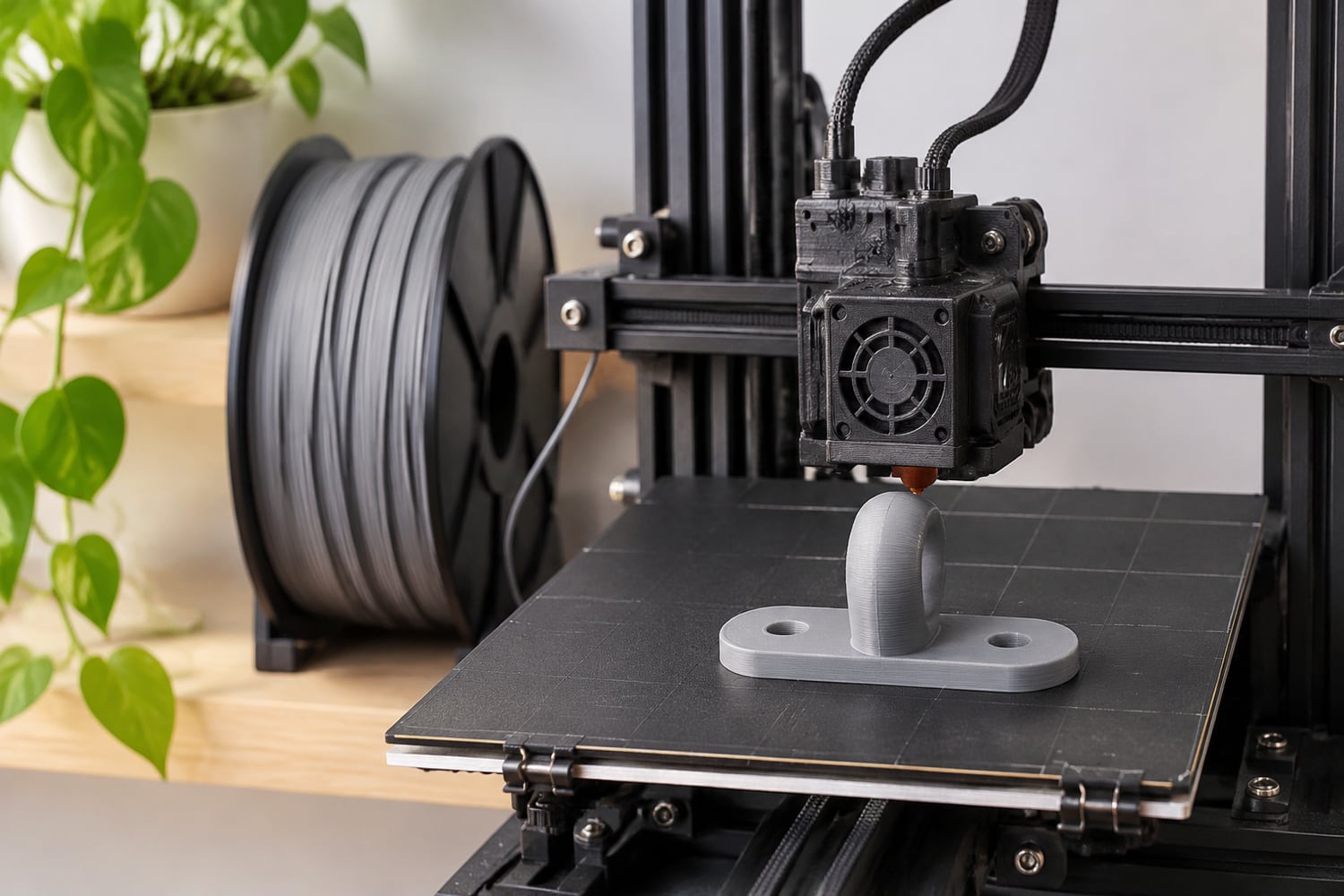
A 3D print is built in layers. It is strong along those layers and much weaker across them, because the bond between two layers is never as good as one continuous line of plastic (Loftsmith). In one set of tests, samples printed lying flat averaged 63 MPa, while identical samples printed standing up failed at 31 MPa, roughly half (Latencot). One designer puts it bluntly: the same hook can hold five kilos or snap under one, depending purely on which way it was printed (Cadio).
As a buyer you can't see orientation on a finished piece. The layer lines give a clue. If they run along the hook's arm, that's good. If they cross the arm like rungs on a ladder, the arm is weaker there. Our post on why 3D prints have lines explains how to read them. For a figurine hook, the honest answer is that the maker chose an orientation for looks and printability first, which is one more reason to keep loads light.
The weak link is usually the wall, not the plastic
Sources agree on this, and it matches what makers see when hooks come back: the mounting goes first.
- Adhesive pads and strips are convenient but usually can't bear much weight (3D Printed Decor). They also depend on the paint staying stuck to the wall, which you can't control.
- Screws into wood or masonry give the most stability and can bear greater weight (3D Printed Decor).
- Two screws, never one. A single screw lets the hook rotate under load (Cadio). Once it twists, the load pulls at an angle the hook wasn't designed for.
Drywall needs help
A plain screw in drywall holds very little. Either find a stud with a stud finder and screw into that, or use wall anchors rated well above what you plan to hang. For anything you'd be upset to see on the floor, go for the stud.
Don't overtighten
Printed plastic can crack if you crank a screw down hard against it, especially PLA. Tighten until the back plate sits flat and firm, then stop. If the screw head is much smaller than the hole, a washer spreads the pressure.
Will it still hold next month? Creep, heat and constant loads
A hook isn't like a shelf bracket you test once. It carries the same weight for weeks or months, and plastic slowly deforms under a constant pull. That's called creep. For constant loads, you should leave a much larger margin than for a short pull (Loftsmith).
PLA hooks tend to fail gradually through creep rather than by sudden fracture. When PLA gets warm, the constant pull of a heavy load will slowly straighten the hook until the object slides off (QIDI). Places to be careful:
- Above a radiator or heating vent. Warm air rises straight onto the hook.
- On or beside a fireplace mantel. Stocking hooks are the seasonal classic here. A stocking full of gifts is heavier than an empty one, and the mantel can get warm. See Will PLA melt? for more on heat.
- In a sunny entryway or window. Direct sun warms dark plastic more than you'd think.
- Wet coats and bags. A soaked coat weighs more than a dry one, and it stays there all evening.
Warning signs to watch for
- The tip of the hook has dropped or the curve has opened up.
- Things that used to stay on now slide off.
- A pale or whitish line, or a fine crack, at the root where the arm meets the plate.
- The hook has rotated or the plate gaps away from the wall.
If you see any of these, move the heavy item to a stronger hook. A cracked hook is worth replacing rather than gluing if it carries real weight. Glue is fine for a decorative chip, as covered in how to fix a broken 3D print.
PLA vs PETG hooks for the home
Most printed decor is PLA, and some makers offer PETG. Each has a place.
| PLA | PETG | |
|---|---|---|
| Stiffness | Stiff and strong, roughly 50–60 MPa (Zerocore) | Can "give" slightly under stress without failing (QIDI) |
| When overloaded | Brittle: snaps rather than bends (Zerocore) | Tends to flex before it breaks |
| In warm spots | Prone to slow creep under heavy loads (QIDI) | Better choice near heat |
| Best for | Climate-controlled rooms, where its stiffness keeps a hook from sagging under a 2 kg bag (QIDI) | Entryways that get warm, utility hooks, heavier everyday loads |
For a hallway hook holding keys and a hat, PLA is perfectly fine. For a heavy-duty hook, PETG is a common pick. One heavy-duty design is rated around 5 kg in PETG, printed back-plate-down with five perimeters and mounted into something solid (Cadio). Our PLA vs PETG guide covers the differences beyond strength.
What to hang on which hook
We're not going to give you a list of what coats and bags weigh, because it varies too much. The easy way to know: hold the item, step on a bathroom scale, then subtract your own weight. Then match it to the hook.
Light: keys, hats, scarves, leashes, headphones
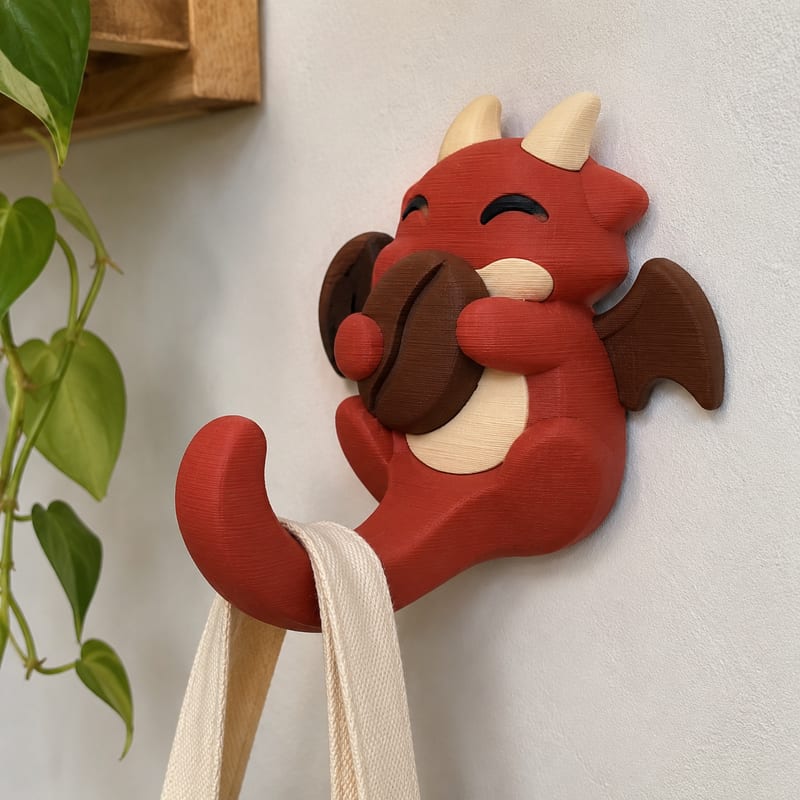
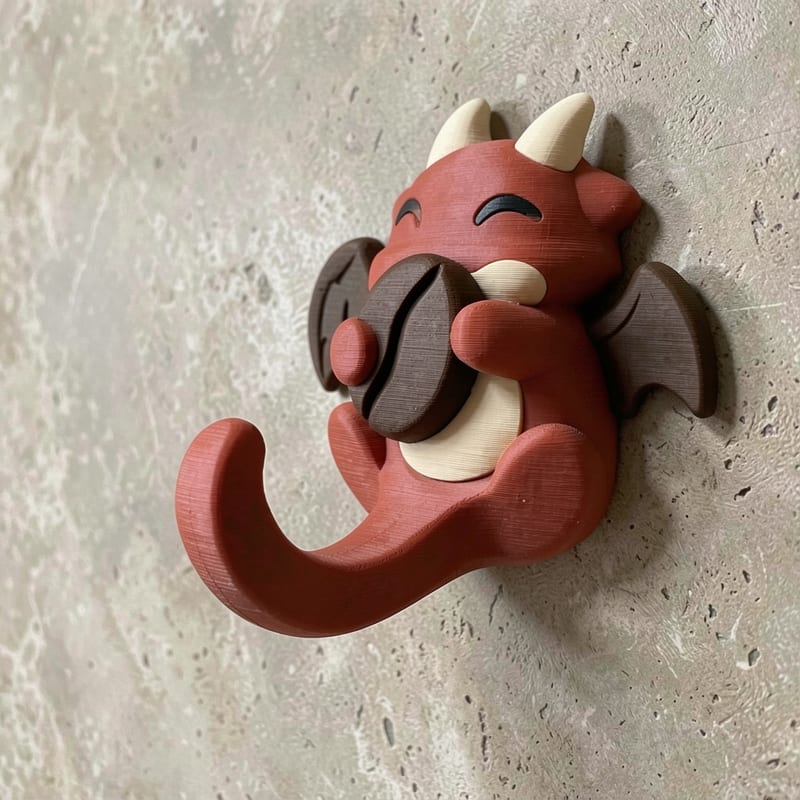
Almost any decorative printed hook can handle these, mounted with screws or a good adhesive pad on a smooth surface. A playful piece like the Dragon Coffee Bean Hoard wall hook suits this kind of everyday job in a kitchen or entryway.
Medium: everyday coats, handbags, a light backpack
Look for a thick arm, a short reach and a back plate with two screw holes. Skip adhesive pads. Screw into a stud, wood or masonry. Hang one item per hook rather than piling three coats on one.
Heavy or valuable: loaded backpacks, tool bags, guitars
Only use a printed hook here if the maker states a weight it's designed for. A specific figure, like a screw wall hook rated to 5 kg or a heavy-duty U-shaped hook rated to 15 kg, tells you more than any material name (Latencot).
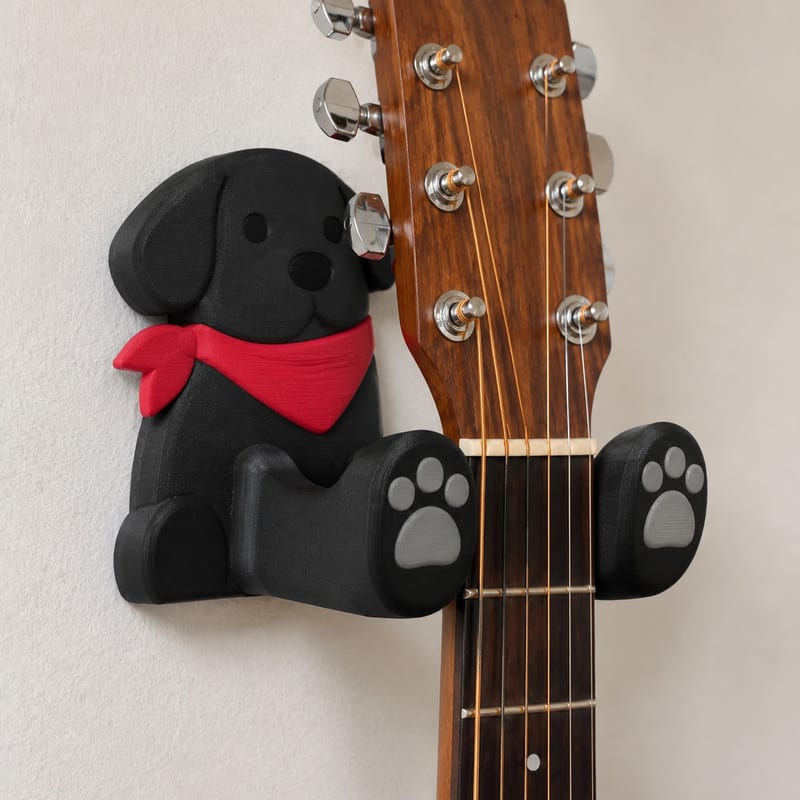
Are 3D printed guitar hangers safe?
They can be, but treat them with the same caution you'd give any hanger for an expensive instrument. Before you buy one:
- Ask the maker what material it's printed in, how thick the arms are, and whether they've tested it with a guitar like yours.
- Check the mounting. It should take at least two screws, and those screws should go into a stud or solid wood, not bare drywall.
- Keep it away from heat. No radiators, vents or sunny walls, especially if it's PLA.
- Check it now and then. Look at the arms from the side. If they've started to tilt down or open up, take the guitar off.
If you'd rather not take any risk with a valuable guitar, use a decorative printed hanger for a lighter instrument or as display art, and keep the expensive one on a stand.
How to read a listing before you buy
- Look for a stated weight or use. "Holds keys and hats" is useful. No guidance at all means treat it as decorative.
- Check the material. PLA, PETG or something else. Each handles heat and load differently.
- Look at the shape in photos. Thick root, short reach and a rounded inside curve are good signs. A thin arm sticking far out is for light things.
- See how it mounts. Screw holes, keyhole slots or adhesive. Two screw holes is the best sign for anything heavier than a hat.
- Message the maker. People who print to order can often tell you the orientation, wall count and material, and some can print a sturdier version.
If you're browsing for hooks, hangers and wall pieces, Filagora's home decor section is a good place to start, and every listing comes from a maker you can message with questions before you hang anything that matters.
Frequently asked questions
Can a 3D printed hook hold a coat?
A chunky printed hook with a thick arm and short reach can hold an everyday coat if it's screwed into a stud, wood or masonry with two screws. Small decorative hooks are better suited to hats, keys and scarves.
Do 3D printed hooks bend over time?
They can. PLA hooks under a constant heavy load, especially in warm spots like above a radiator, slowly straighten through creep until the item slides off. Leave a large margin and keep heavy hooks away from heat.
Is PLA or PETG better for a wall hook?
PLA is stiffer and works well in climate-controlled rooms for moderate loads. PETG flexes slightly instead of snapping and handles warmer spots better, so it's a common choice for heavier-duty hooks.
Are adhesive strips strong enough for 3D printed hooks?
Only for light items. Adhesive pads usually can't bear much weight and depend on the paint staying on the wall, so use two screws into something solid for coats, bags or anything valuable.
Is a 3D printed guitar hanger safe?
It can be if the maker designed and tested it for guitars, it's mounted with at least two screws into a stud or solid wood, and it's kept away from heat. Check the arms occasionally for drooping or cracks.
Pieces from this guide
Printed to order by makers on Filagora.